Hibiscus sabdariffa
L.
Roselle, Rosella
iNaturalist· cc0
no rights reserved, uploaded by 葉子
iNaturalist· cc-by-nc
(c) nikkimetz, some rights reserved (CC BY-NC), uploaded by nikkimetz
iNaturalist· cc0
no rights reserved, uploaded by 葉子
Summary
Source: WikipediaAn annual or perennial growing to 3 m tall by 2 m wide at a fast rate. Hardy to UK zone 10 and frost tender. Flowers August to October with seeds ripening October to November. Hermaphroditic, self-fertile flowers pollinated by insects. Attracts wildlife. Accommodates light sandy, medium loamy, or heavy clay soils with good drainage. Tolerates mildly acidic to mildly alkaline pH. Requires full sun and prefers moist soil.
Description
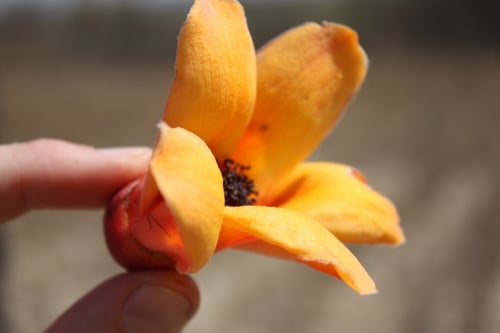
A branched shrub up to 2 m high. It has reddish stems, leaves and fruit. Different types vary in their height, shape and leafiness. The leaves are 7-10 cm across and lobed. The upper leaves often have more lobes than the lower leaves. The flowers are large and yellow and in the axils of the leaves. They are carried singly. The bracts at the base of the flower are enlarged and form a fleshy red fruit. This capsule is 3 cm long and contains 22-34 seeds. The seeds are dark brown and 4-6 mm long. 1000 seeds weigh about 25 g.
Edible Uses
The fresh calyx (the outer whorl of the flower) can be eaten raw in salads, cooked as a flavouring in cakes, or used in jellies, soups, sauces, pickles, puddings and similar dishes. It is rich in citric acid and pectin, making it particularly useful for jams and jellies. It can also be used to add red colour and flavour to herb teas, or roasted as a coffee substitute. A popular refreshing drink is made by boiling the calyx, sweetening with sugar and adding ginger. Tender young leaves and stems can be eaten raw or cooked — in salads, as a potherb, or as a seasoning in curries — and have an acid, rhubarb-like flavour. Seeds can be roasted, ground into a powder, and used in oily soups and sauces; roasted seeds have also been used as a coffee substitute said to have aphrodisiac properties. The roots are edible but highly fibrous, with a mucilaginous texture and little flavour. The seed yields 20% oil, which is likely edible.
Traditional Uses
The swollen bases of the flowers are used for jams or drinks. The young leaves can be cooked and eaten. They can also be dried and used later. The flowers can be used to flavour drinks. The seeds can be eaten. They can be dried and ground. They can be pressed for oil. They are also fermented. The dried ground seeds are used for coffee.
Medicinal Uses
Roselle is an aromatic, astringent, cooling herb widely used in tropical regions. It is reported to have diuretic effects, to help lower fevers, and to be antiscorbutic. The leaves are antiscorbutic, emollient, diuretic, refrigerant and sedative; their high mucilage content makes them useful as an emollient and soothing cough remedy, and they are applied externally as a poultice on abscesses. The fruits are antiscorbutic. The flowers contain gossypetin, anthocyanin and the glycoside hibiscin, which may exert diuretic and choleretic effects, decrease blood viscosity, reduce blood pressure and stimulate intestinal peristalsis. Experimentally, a flower infusion has been shown to decrease blood viscosity, reduce blood pressure and stimulate intestinal peristalsis. Leaves and flowers are used internally as a tonic tea supporting digestive and kidney function. The ripe calyces are diuretic and antiscorbutic; boiled in water, the succulent calyx is used as a drink to treat bilious attacks. The seeds are diuretic, laxative and tonic, and are used in the treatment of debility. The bitter root is aperitif and tonic. The plant is also reported to be antiseptic, aphrodisiac, astringent, cholagogue, demulcent, digestive, purgative and resolvent, and is used as a folk remedy for abscesses, bilious conditions, cancer, cough, debility, dyspepsia, dysuria, fever, hangover, heart ailments, hypertension, neurosis, scurvy and strangury. One report indicates value in treating arteriosclerosis and as an intestinal antiseptic, though the specific plant part is not identified. Simulated ingestion of the plant extract in chickens decreased the rate of alcohol absorption, lessening the intensity of its effects.
Known Hazards
The oil might contain toxic substances.
Distribution
A tropical plant. It grows from sea level up to about 1,700 m altitude. It will tolerate a range of soils. It requires short days for flowering. They will grow in semi arid locations. It grows best where average temperatures are in the range 25-30°. It needs a temperature above 10-13°C. It is very sensitive to frost. Plants will tolerate high temperatures. They grow up to 800 m altitude in Africa. A rainfall of 450-550 mm distributed over a 90-120 day growing period is required. It cannot tolerate waterlogged soils. It can grow in arid places. It suits hardiness zones 10-12. In XTBG Yunnan.
Where It Grows
Africa, Amazon, Andamans, Angola, Antigua and Barbuda, Asia, Australia, Bangladesh, Benin, Brazil, Burkina Faso, Burundi, Cambodia, Cameroon, Cape Verde, Central Africa, Central African Republic, CAR, Central America, Chad, China, Congo DR, Congo R, Costa Rica, Côte d'Ivoire, Cuba, Dominica, Dominican Republic, East Africa, East Timor, Egypt, Equatorial-Guinea, Ethiopia, Europe, Fiji, Gabon, Gambia, Ghana, Grenada, Guatemala, Guiana, Guianas, Guinea, Guinée, Guinea-Bissau, Guyana, Haiti, Hawaii, Himalayas, India, Indochina, Indonesia, Ivory Coast, Jamaica, Kenya, Laos, Madagascar, Malawi, Malaysia, Mali, Mauritania, Mauritius, Mexico, Middle East, Mozambique, Myanmar, Namibia, Nepal, Nicaragua, Niger, Nigeria, Niue, North Africa, North America, Northeastern India, Pacific, Pakistan, Panama, Papua New Guinea, PNG, Philippines, Rotuma, Rwanda, Sahel, Sao Tome and Principe, Saudi Arabia, SE Asia, Senegal, Seychelles, Sierra Leone, Singapore, Slovenia, Somalia, South Africa, Southern Africa, South America, South Sudan, Spain, Sri Lanka, Sudan, Suriname, Taiwan, Tanzania, Thailand, Timor-Leste, Togo, Tonga, Uganda, USA, Vanuatu, Venezuela, Vietnam, West Africa, West Indies, Zambia, Zimbabwe,
Cultivation
Prefers a well-drained humus rich fertile soil in full sun. Roselle requires a permeable soil, a friable sandy loam with humus being preferable; however, it will adapt to a variety of soils. It is not shade tolerant and must be kept weed-free. It will tolerate floods, heavy winds or stagnant water. Roselle is reported to tolerate an annual precipitation of 64 to 429cm, an annual temperature in the range of 12.5 to 27.5°C and a pH of 4.5 to 8.0. This species is not hardy in Britain, but it can be grown as a half-hardy annual, flowering in its first year from seed. Plants are sensitive to the length of daylight and do not flower if there are more than 13 hours of light in the day. Roselle is widely cultivated in the Tropical and Sub-tropical zones for its fibre and edible calyx, there are some named varieties. Roselle is best suited to tropical climates with a well-distributed rainfall of 1500 - 2000 mm yearly, from sea-level to about 600 m altitude. It tolerates a warmer and more humid climate than kenaf (Hibiscus cannabinus), but is more susceptible to damage from frost and fog. Plants exhibit marked photoperiodism, not flowering at shortening days of 13.5 hours, but flowering at 11 hours. In the United States plants do not flower until short days of late fall or early winter. Since flowering is not necessary for fibre production, long light days for 3 - 4 months is the critical factor. There are two main forms of the plant:- var. sabdariffa has red or pale yellow inflated edible calyces but a poor quality fibre; var. altissima is grown for its fibre but has inedible calyces. Plants have a deep penetrating taproot. Roselle is self-fertile. The calyxes are typically harvested in late summer to early autumn when they are bright red and fully developed. Roselle usually flowers in summer. Roselle grows rapidly and, depending on the climate and growing conditions, matures in about 90 to 150 days after planting.
Propagation
Sow seed in early spring in a warm greenhouse; germination is usually fairly rapid. Prick seedlings into individual pots when large enough to handle. For annual cultivation, plant out in early summer with frame or cloche protection until established. For perennial cultivation, grow on in the greenhouse for the first year and plant out in early summer of the following year. Half-ripe cuttings taken in July or August can be rooted in a frame, overwintered in a warm greenhouse, and planted out after the last expected frosts.
Other Uses
Roselle can be used as a companion plant to attract pollinators and beneficial insects, and as a hedge owing to its height and dense foliage. A strong stem fibre known as rosella hemp is used for sackcloth, twine and cord. A yellow dye obtained from the petals is used in medicines and other products. The seeds yield 20% oil. The nectar- and pollen-rich flowers attract bees and butterflies, and the plant provides some wildlife habitat through its foliage and leaf litter, though it is not a primary nesting site for birds.
Production
Fruit are ready 12-15 weeks after sowing. The bracts are picked 15-20 days after flowering. They can produce about 1 kg per plant. The yield of leaves can be 10 tons per hectare. Young leaves are plucked from the plant.
Other Information
It is a commercially cultivated vegetable. The leaves and flowers are sold in markets in India. In Papua New Guinea, not common except in areas where people have been encouraged to grow it. eg Sepik. Leaves are sold in local markets. They are commonly eaten in Senegal.
Notes
There are about 220 Hibiscus species. Chemical composition (calyx): Protein (crude) = 10.9% (dry). Fat = 1.1% (dry). Fibre (crude) = 10.7% (dry). Ash (insoluble) = 11.5% (dry). Carbohydrate (soluble): Starch = 2.8% (dry). Sucrose = Ø %. D-glucose = 3.5% (dry). D-fructose = 0.9% (dry). Amino acids (g [16g N]-1): Aspartic acid = 39.0g. Threonine = 1.8g. Serine = 2.0g. Glutamic acid = 6.9g. Proline = 3.9g. Glycine = 2.4g. Alanine = 2.4g. Valine = 2.4g. Cysteine = 0.3g. Methionine = 0.7g. Isoleucine = 2.0g. Leucine = 3.0g. Tyrosine = 1.1g. Lysine = 2.6g. Phenylalanine = 1.7g. Lysine = 2.6g. Histidine = 1.5g. Arginine = 2.5g. Minerals: Sulphur = 0.13% (dry). Potassium = 0.13% (dry). Magnesium = 0.33% (dry). Calcium = 1.29% (dry). Na = 0.01% (dry). K = 2.53% (dry). Zinc = 41 mg/kg-1 (dry). Iron = 97 mg/kg-1 (dry). Manganese = 416 mg/kg-1 (dry). Copper = 5 mg/kg-1 (dry). Aluminium = 66 mg/kg-1 (dry).
Nutrition
| Part | Moisture | kJ | kcal | Protein | Vit A | Vit C | Iron | Zinc |
|---|---|---|---|---|---|---|---|---|
| Seeds | 8.2 | 1718 | 411 | 19.6 | — | — | 4.2 | — |
| Leaves | 86.4 | 185 | 44 | 10.9 | 58 | 35 | 1.5 | 4.1 |
| Calyces | 86 | 185 | 44 | 1.6 | 29 | 14 | 3.8 | — |
| Flowers | — | — | — | — | — | — | — | — |
Synonyms
Also Known As
Abema, Abin kan iyaakaa, Amukan, Ankpama, Asam ruso, Asam susur, Bamya, Bare-see, Beet, Bilat-chinbaung, Bissap, Carcade, Cay bup giam, Chhuka, Chidede, Chinbaung-ni, Chinbaung ywet, Chinebaune, Chukar, Chukiar, Dah, Divay, Ekiganga, Ekikenke, Emalakany, Emelakwang, Essang, Fol-lere, Folere, Florida cranberry, Gamet walanda, Gisima, Gisma, Gurguzu, Hanserong, Hasip, Indian sorrel, Jajewdet, Kahcieb priew, Kalabi, Karcade, Karkady, Ka-santhor, Kasturi roriha, Kata bahaji petua, Khatabhaji, Khirmoishak, Kpakpala, Krachiap-daeng, Krachiap, Kubab, Kudiass, Kuluba, Labog, Lakher-anthur, Lal-ambadi, Lal-ambari, Lal mesta, Lal-mista, Langkamit, Lokeke, Malakwang, Mei gui qie, Mesta tenga, Mphesya, Ngayi-ngayi, Ojo, Oseilla rouge, Oseille, Patwa, Phakkengkheng, Phat-swon-pan, Polechi, Pulichchai, Pulincha kira, Pundibija, Quimbombo chino, Rata bilincha, Red Sorrel, Roozera, Rosel, Rosela, Sakpa, Sangume, Sato, Sawa-sawa, Shan qie zi, Shilot sougree, Slok chu, Sodo, Som pho di, Sorel, Sour-sour, Sum-bawng, Sununkru, Sure, Talingsiag, Tenga more, Thakhlao maikhri, Tikonn'te, Tikwouann'ti, Tropical cranberry, Vaianthuh, Vai anthuk, Vinagreira, Yakuwa, Yakwa, Yerra gogu
References (160)
- Roselle references Hibiscus sabdariffa
- ABDELMUTI,
- Achigan-Dako, E, et al (Eds), 2009, Catalogue of Traditional Vegetables in Benin. International Foundation for Science.
- Agea, J. G., et al 2011, Wild and Semi-wild Food Plants of Bunyoro-Kitara Kingdom of Uganda: etc. Environmental Research Journal 5(2) 74-86
- Alice, L. & O'Quinn, T., Australian Bush Superfoods. Explore Australia p 138
Show all 160 references Hide references
- Altschul, S.V.R., 1973, Drugs and Foods from Little-known Plants. Notes in Harvard University Herbaria. Harvard Univ. Press. Massachusetts. no. 2756
- Amagloh, F. K. & Nyarko, E. S., 2012, Mineral Nutrient Content of Commonly Consumed Leafy Vegetables in Northern Ghana. African Hournal of Food, Agriculture, Nutrition and Development. Vol. 12(3).
- Ambasta, S.P. (Ed.), 2000, The Useful Plants of India. CSIR India. p 267
- Anderson, E. F., 1993, Plants and people of the Golden Triangle. Dioscorides Press. p 212
- Arora, R. K., 2014, Diversity in Underutilized Plant Species - An Asia-Pacific Perspective. Bioversity International. p 103
- Batawila, K., et al, 2007, Diversite et gestion des legumes de cueillete au Togo. African Journal of Food, Agriculture, Nutrition and Development 7( 3& 4): 66
- Benvenuti, S. & Mazzoncini, M., 2021, The Biodiversity of Edible Flowers: Discovering New Tastes and New Health Benefits. Frontiers in Plant Science Article 569499.
- Bernholt, H. et al, 2009, Plant species richness and diversity in urban and peri-urban gardens of Niamey, Niger. Agroforestry Systems 77:159-179
- Billong Fils, P. E., et al, 2020, Ethnobotanical survey of wild edible plants used by Baka people in southeastern Cameroon. Journal or Ethnobiology and Ethnomedicine. 16:64 p 8
- Bodkin, F., 1991, Encyclopedia Botanica. Cornstalk publishing, p 558
- Bonney, N., 2012, Edible Wild Native Plants for Southern Australia. p 110
- Borrell, O.W., 1989, An Annotated Checklist of the Flora of Kairiru Island, New Guinea. Marcellin College, Victoria Australia. p 97, 196
- Boulanger, J., 1989, In Rehm. S. (Ed.) Handbook of agriculture and nutrition in underdeveloped countries. Vol. 4. Special plant cultivation in the tropics and subtropics. 2nd ed. Eugen Ulmer, Stuttgart, Germany pp. 568-573.
- Bourke, R. M., Altitudinal limits of 230 economic crop species in Papua New Guinea. Terra australis 32.
- Bremness, L., 1994, Herbs. Collins Eyewitness Handbooks. Harper Collins. p 107
- Brouk, B., 1975, Plants Consumed by Man. Academic Press, London. p 137, 319
- Brown, D., 2002, The Royal Horticultural Society encyclopedia of Herbs and their uses. DK Books. p 235
- Burkill, H. M., 1985, The useful plants of west tropical Africa, Vol. 4. Kew.
- Burkill, I.H., 1966, A Dictionary of the Economic Products of the Malay Peninsula. Ministry of Agriculture and Cooperatives, Kuala Lumpur, Malaysia. Vol 1 (A-H) p 1189
- Catarino, L. et al, 2019, Edible Leafy Vegetables from West Africa (Guinea-Bissau): Consumption, Trade and Food Potential. Foods 2019, 8, 493
- Cisse, M. et al, 2009, Le bissap (Hibiscus sabdariffa L.): composition et principles utilisations. Fruits, Vol. 64, p 179-193
- Coe, F. G. & Anderson, G. J., 1997, Ethnobotany of the Miskitu of Eastern Nicaragua. Journal of Ethnobiology 17(2): 171-214
- Coronel, R.E., 1982, Fruit Collections in the Philippines. IBPGR Newsletter p 10
- Dalziel, J. M., 1937, The Useful plants of west tropical Africa. Crown Agents for the Colonies London.
- Dansi, A., et al, 2008, Traditional leafy vegetables and their use in the Benin Republic. Genet Resour Crop Evol (2008) 55:1239–1256
- Devi, O.S., P. Komor & D. Das, 2010, A checklist of traditional edible bio-resources from Ima markets of Imphal Valley, Manipur, India. Journal of Threatened Taxa 2(11): 1291-1296
- Diarra, N. et al, 2016, Etude ethnobotanique des plantes alimentaires utilisées en période de soudure dans les régions Sud du Mali. Int. J. Biol. Chem. Sci. 10(1): 184-197
- Diouf, M., et al, Leafy Vegetables in Senegal. Bioversity webite
- Duarte, M. C., et al, 2022, Diversity of Useful Plants in Cabo Verde Islands: A Biogeographic and Conservation Perspective. Plants 2022, 11, 1313 p 14
- Edwards. S., et al, (Eds), 1995, Flora of Ethiopia and Eritrea. Vol.2, Part 2 Canellaceae to Euphorbiaceae. Uppsala, Sweden. p 162
- Engel, D.H., & Phummai, S., 2000, A Field Guide to Tropical Plants of Asia. Timber Press. p 188
- Epenhuijsen C.W. van., 1974, Growing Native vegetables in Nigeria. FAO Rome, p 68
- Facciola, S., 1998, Cornucopia 2: a Source Book of Edible Plants. Kampong Publications, p 148
- FAO, 1988, Traditional Food Plants, FAO Food and Nutrition Paper 42. FAO Rome p 328
- Flora of China. www.eFloras.org
- Flora of Pakistan. www.eFloras.org
- Flowerdew, B., 2000, Complete Fruit Book. Kyle Cathie Ltd., London. p 112
- Food Composition Tables for use in Africa FAO http://www.fao.org/infoods/directory No. 793
- Fowler, D. G., 2007, Zambian Plants: Their Vernacular Names and Uses. Kew. p 46
- Fox, F. W. & Young, M. E. N., 1982, Food from the Veld. Delta Books. p 262
- Freiberger, C. E., et al, 1998, Nutrient content of the edible leaves of seven wild plants from Niger. Plant Foods for Human Nutrition 53: 57–69
- French, B.R., 1986, Food Plants of Papua New Guinea, A Compendium. Asia Pacific Science Foundation p 269
- Gangte, H. E., et al, 2013, Wild Edible Plants used by the Zou Tribe in Manipur, India. International Journal of Scientific and Research Publications, Volume 3, Issue 5
- Gautam, R. S., et al, 2020, Wild Edible Fruits of Nepal. Int. J. Appl. Sci. Biotechnol. Vol 8(3): 289-304
- Glew, R. H., et al, 1997, Amino Acid, Fatty Avid and Mineral Composition of 24 Indigenous Plants of Burkina Faso. Journal of Food Composition and Analysis 10, 205-217
- Godfrey, J. et al, 2013, Harvesting, preparation and preservation of commonly consumed wild and semi-wild food plants in Bunyoro-Kitara Kingdom, Uganda. Int. J. Med. Arom. Plants. Vol.3 No.2 pp 262-282
- Godfrey, J., et al, 2013, Market Structure of Wild and Semi-Wild Food Plants Traded in Bunyoro-Kitara Kingdom, Uganda. Int. J. Med. Arom. Plants. Vol. 3 No. 2 pp 300-316
- Goode, P., 1989, Edible Plants of Uganda. FAO p 30
- Goode, P., 1989, Edible Plants of Uganda. FAO p 36
- Goode, P., 1989, Edible Plants of Uganda. FAO p 39
- Grubben, G. J. H. and Denton, O. A. (eds), 2004, Plant Resources of Tropical Africa 2. Vegetables. PROTA, Wageningen, Netherlands. p 321
- Guite, C., 2016, A study of wild edible plants associated with the Paite tribe of Manipur, India, International Journal of Current Research. Vol. 8, Issue, 11, pp. 40927-40932
- Hardwick, G., 2001, Economically Useful Plants for Northern Australia: Master Species List. Crusader eBooks.
- Harris, F. M. A. and Mohammed, S., 2003, Relying on Nature: Wild Foods in Northern Nigeria. Ambio Vol. 32 No. 1. p 25-30
- Hiddins, L., 1999, Explore Wild Australia with the Bush Tucker Man. Penguin Books/ABC Books. p 155
- Hossain, U. & Rahman, A., 2018, Study and quantitative analysis of wild vegetable floral diversity available in Barisal district, Bangladesh. Asian J. Med. Biol. Res. 2018, 4 (4), 362-371
- Hussey, B.M.J., Keighery, G.J., Cousens, R.D., Dodd, J., Lloyd, S.G., 1997, Western Weeds. A guide to the weeds of Western Australia. Plant Protection Society of Western Australia. p 174
- Hu, Shiu-ying, 2005, Food Plants of China. The Chinese University Press. p 540
- Jacquat, C., 1990, Plants from the Markets of Thailand. D.K. Book House p 70
- Japanese International Research Centre for Agricultural Science www.jircas.affrc.go.jp/project/value_addition/Vegetables
- Jardin, C., 1970, List of Foods Used In Africa, FAO Nutrition Information Document Series No 2.p 43, 82
- John, L., & Stevenson, V., 1979, The Complete Book of Fruit. Angus & Robertson p 260
- Kar, A., et al, 2013, Wild Edible Plant Resources used by the Mizos of Mizoram, India. Kathmandu University Journal of Science, Engineering and Technology. Vol. 9, No. 1, July, 2013, 106-126
- Katz, E., et al, 2012, No greens in the forest? Note on the limited consumption of greens in the Amazon. Acta Soc Bot Pol 81(4):283–293
- Kays, S. J., and Dias, J. C. S., 1995, Common Names of Commercially Cultivated Vegetables of the World in 15 languages. Economic Botany, Vol. 49, No. 2, pp. 115-152
- Kenneally, K.E., Edinger, D. C., and Willing T., 1996, Broome and Beyond, Plants and People of the Dampier Peninsula, Kimberley, Western Australia. Department of Conservation and Land Management. p 123
- Khodram,S. D., et al, 2019, Local knowledge of edible flowers used in Mizoram. Indian Journal of Traditional Knowledge Vol 18(40 pp 715-723
- Kiple, K.F. & Ornelas, K.C., (eds), 2000, The Cambridge World History of Food. CUP p 1844
- Lazarides, M. & Hince, B., 1993, Handbook of Economic Plants of Australia, CSIRO. p 132
- Leger, S., 1997, A Description of Today's Use of Plants in West Bushmanland (Namibia). German Development Service. PO Box 220035, 14061 Berlin, Germany. http://www.sigridleger.de/book/
- Liu, Yi-tao, & Long, Chun-Lin, 2002, Studies on Edible Flowers Consumed by Ethnic Groups in Yunnan. Acta Botanica Yunnanica. 24(1):41-56
- Llamas, K.A., 2003, Tropical Flowering Plants. Timber Press. p 257
- Low, T., 1991, Wild Food Plants of Australia. Australian Nature FieldGuide, Angus & Robertson. p 144
- Luczaj, L., et al, 2021, Wild food plants and fungi sold in the markets of Luang Prabang, Lao PDR. Journal of Ethnobiology and Ethnomedicine (2021) 17:6
- Lugod, G.C. and de Padua L.S., 1979, Wild Food Plants in the Philippines. Vol. 1. Univ. of Philippines Los Banos. p 50
- Lykke, A. M., Mertz, O, and Ganaba, S., 2002, Food Consumption in Rural Burkina Faso, Ecology of Food and Nutrition, 41:119-152
- Lyle, S., 2006, Discovering fruit and nuts. Land Links. p 238
- Macmillan, H.F. (Revised Barlow, H.S., et al) 1991, Tropical Planting and Gardening. Sixth edition. Malayan Nature Society. Kuala Lumpur. p 302, 355
- Maganha, A. G., et al, 2010, Pharmacological evidences for the extracts and secondary metabolites from plants of the genus Hibiscus. Food Chemistry 118: 1-10
- Maghirang, R. G., et al, 2018. Ethnobotanical Studies of Some Plants Commonly Used as Vegetables in Selected Provinces of the Philippines. Journal of Nature Studies. 17(2), 30-43.
- Maiga, A., et al, 2005, Determination of Some Toxic and Essential Metal Ions in Medicinal and Edible Plants from Mali. Journal of Agricultural and Food Chemistry 53: 2316-2321
- Manandhar, N.P., 2002, Plants and People of Nepal. Timber Press. Portland, Oregon. p 261
- Martin, F.W., & Ruberte, R.M., 1979, Edible Leaves of the Tropics. Antillian College Press, Mayaguez, Puerto Rico. p 37, 204
- McClintock, N.C. & El Tahir, I.M., 2004. Hibiscus sabdariffa L. [Internet] Record from Protabase. Grubben, G.J.H. & Denton, O.A. (Editors). PROTA (Plant Resources of Tropical Africa), Wageningen, Netherlands. < http://database.prota.org/search.htm>. Accessed 16 October 2009.
- McMakin, P.D., 2000, Flowering Plants of Thailand. A Field Guide. White Lotus. p 98
- Medhi, P. & Borthakur, S. K., 2012, Phytoresources from North Cachur Hills of Assam -3: Edible plants sold at Hflong market. Indian Journal or Natural Products and Resources. 3(1) pp 84-109
- Menninger, E.A., 1977, Edible Nuts of the World. Horticultural Books. Florida p 65
- Mertz, O., Lykke, A. M., and Reenberg, A., 2001, Importance and Seasonality of Vegetable Consumption and Marketing in Burkina Faso. Economic Botany, 55(2):276-289
- Miguel, E., et al, 1989, A checklist of the cultivated plants of Cuba. Kulturpflanze 37. 1989, 211-357
- Morton, J. F., 1987, Fruits of Warm Climates. Wipf & Stock Publishers p 281
- Norrington, L., & Campbell, C., 2001, Tropical Food Gardens. Bloomings Books. p 72
- Ochse, J.J. et al, 1931, Vegetables of the Dutch East Indies. Asher reprint. p 475
- Okigbo, B.N., Vegetables in Tropical Africa, in Opena, R.T. & Kyomo, M.L., 1990, Vegetable Research and development in SADCC countries. Asian Vegetable Research and development Centre. Taiwan. p 44
- Omawale, 1973, Guyana's edible plants. Guyana University, Georgetown p 44
- Oomen, H.A.P.C., & Grubben, G.J.H., 1978, Tropical Leaf Vegetables in Human Nutrition, Communication 69, Department of Agricultural research, RTI Amsterdam, p 23, 36, 83
- Paczkowska, G. & Chapman, A.R., 2000, The Western Australian Flora. A Descriptive Catalogue. Western Australian Herbarium. p 290
- Pasha, M. K. & Uddin, S. B., 2019, Minor Edible Fruits of Bangladesh. Bangladesh J. Plant Taxon. 26(2): 299–313
- Patiri, B. & Borah, A., 2007, Wild Edible Plants of Assam. Geethaki Publishers. p 14
- Pawera, L., et al, 2020, Wild Food Plants and Trends in Their Use: From Knowledge and Perceptions to Drivers of Change in West Sumatra, Indonesia, Foods. 2020, 9, 1240
- Peekel, P.G., 1984, (Translation E.E.Henty), Flora of the Bismarck Archipelago for Naturalists, Division of Botany, Lae, PNG. p 363, 362
- Peters, C. R., O'Brien, E. M., and Drummond, R.B., 1992, Edible Wild plants of Sub-saharan Africa. Kew. p 145
- Pham-Hoang Ho, 1999, An Illustrated Flora of Vietnam. Nha Xuat Ban Tre. p 525
- Phawa, G. M., Dkhar, E. K. & Marbaniang, D., 2019, Indigenous Wild Edible Plants of Bataw Village, East Jaintia Hills District, Meghalaya. International Journal of Arts, Science and Humanities. 7(2)
- Phon, P., 2000, Plants used in Cambodia. © Pauline Dy Phon, Phnom Penh, Cambodia. p 343
- Plants for a Future database, The Field, Penpol, Lostwithiel, Cornwall, PL22 0NG, UK. http://www.scs.leeds.ac.uk/pfaf/
- Plants of Haiti Smithsonian Institute http://botany.si.edu/antilles/West Indies
- Purseglove, J.W., 1968, Tropical Crops Dicotyledons, Longmans. p 370
- Rashid, H. E., 1977, Geography of Bangladesh. Westview. p 348 (As Habiscus sabdariffa)
- Robins, J., 1996, Wild Lime. Cooking from the Bush food garden. Allen & Unwin p 41
- Royal Botanic Gardens, Kew (1999). Survey of Economic Plants for Arid and Semi-Arid Lands (SEPASAL) database. Published on the Internet; http://www.rbgkew.org.uk/ceb/sepasal/internet [Accessed 3rd May 2011]
- Rubaihayo, E. B., Conservation and use of traditional vegetables in Uganda. Bioversity International.
- Ruiters-Welcome, A. K., 2019, Food plants of southern Africa. Ph.D. thesis. Univ. of Johannesburg p 76
- Saidulu, P. et al, 2015, Ethnobotanical Knowledge Studied in Pocharam Wildlife Sanctuary, Telangana, India. Not Sci Biol, 2015, 7(2):164 -170
- Salako, V. K. et al, 2013, Home gardens: an assessment of their biodiversity and potential contribution to conservation of threatened species and crop wild relatives in Benin. Genet Resour Crop Evol
- Sang, D. T., & Mizoue, K. O. N., 2012, Use of Edible Forest Plants among Indigenous Ethnic Minorities in Cat Tien Biosphere Reserve, Vietnam. Asian Journal of Biodiversity Vol. 3 (1), p 23-49
- Segnon, A. C. & Achigan-Dako, E. G., 2014, Comparative analysis of diversity and utilization of edible plants in arid and semi-arid areas in Benin. Journal of Ethnobiology and Ethnomedicine 2014, 10:80
- Seidemann J., 2005, World Spice Plants. Economic Usage, Botany, Taxonomy. Springer. p 177
- Self, M., 199, Phoenix Seeds catalogue. p 16
- Sena, L. P., et al, 1998, Analysis of nutritional components of eight famine foods of the Republic of Niger. Plant Foods for Human Nutrition 52: 17–30
- Saikia, M., 2015, Wild edible vegetables consumed by Assamese people of Dhemaji District of Assam, NE India and their medicinal values. Archives of Applied Science Research, 2015, 7 (5):102-109
- Siemonsma, J. S. and Piluek, K. (Eds), 1994, Plant Resources of South-East Asia No. 8 Vegetables. Prosea Foundation, Bogor, Indonesia, p 178
- Smith, A.C., 1981, Flora Vitiensis Nova, Lawaii, Kuai, Hawaii, Volume 2 p 418
- Smith, F. I. and Eyzaquirre, P., 2007, African leafy vegetables: Their role in the World Health Organization's global Fruit and Vegetables Initiative. AJFAND, Vol. 7 No. 3
- Smith, K., 1998. Growing Uncommon Fruits and Vegetables. New Holland. p 11
- Smith, P.M., 1979, Roselle, in Simmonds, N.W., (ed), Crop Plant Evolution. Longmans. London. p 315
- Solomon, C., 2001, Encyclopedia of Asian Food. New Holland. p 316
- Sp. pl. 2:695. 1753
- Staples, G.W. and Herbst, D.R., 2005, A tropical Garden Flora. Bishop Museum Press, Honolulu, Hawaii. p 391
- Tanaka, Y & Van Ke, N., 2007, Edible Wild Plants of Vietnam. Orchid Press. p 91
- Tang ya, Malvaceae. Flora of China. p
- Termote, C., et al, 2011, Eating from the wild: Turumbu, Mbole and Bali traditional knowledge of non-cultivated edible plants, District Tshopo, DRCongo, Gen Resourc Crop Evol. 58:585-618
- Teron, R. & Borthakur, S. K., 2016, Edible Medicines: An Exploration of Medicinal Plants in Dietary Practices of Karbi Tribal Population of Assam, Northeast India. In Mondal, N. & Sen, J.(Ed.) Nutrition and Health among tribal populations of India. p 152
- Terra, G.J.A., 1973, Tropical Vegetables. Communication 54e Royal Tropical Institute, Amsterdam, p 52
- Thaman, R.R., 1976, The Tongan Agricultural System, University of the South Pacific, Suva, Fiji. p 404
- Tindall, H.D., & Williams, J.T., 1977, Tropical Vegetables and their Genetic Resources, International Board for Plant Genetic Resources, Rome, p 102
- Tindall, H.D., 1983, Vegetables in the Tropics, Macmillan p 332
- Ubom, R. M., 2010, Ethnobotany and Diversity Conservatioon in the Niger Delta, Nigeria. International Journal of Botany. 6(3): 310-322
- Ulian, T., et al, 2020, Unlocking plant resources to support food security and promote sustainable agriculture. Plants, People, Planet. 2020;2:421–445.
- USDA, ARS, National Genetic Resources Program. Germplasm Resources Information Network - (GRIN). [Online Database] National Germplasm Resources Laboratory, Beltsville, Maryland. Available: www.ars-grin.gov/cgi-bin/npgs/html/econ.pl (10 April 2000)
- Vanderjagt, F. J., et al, 2000, The trypsin inhibitor content of 61 wild edible plant foods of Niger. Plant Foods for Human Nutrition 55: 335–346, 2000.
- van Wyk, B., 2005, Food Plants of the World. An illustrated guide. Timber press. p 208
- Vickery, M.L. and Vickery, B., 1979, Plant Products of Tropical Africa, Macmillan. p 76
- Walter, A. & Lebot, V., 2007, Gardens of Oceania. ACIAR Monograph No. 122. CD-ROM minor species p 12
- Wehmeyer, A. S, 1986, Edible Wild Plants of Southern Africa. Data on the Nutrient Contents of over 300 species
- Welcome, A. K. & Van Wyk, B.-E., 2019, An inventory and analysis of the food plants of southern Africa. South African Journal of Botany 122 (2019) 136–179
- Wheeler, J.R.(ed.), 1992, Flora of the Kimberley Region. CALM, Western Australian Herbarium, p 220
- Wiersema, J. H. & Leon, B., 2013, World Economic Plants. A Standard Reference CRC Press. 2nd Ed. p 349
- Williamson, J., 2005, Useful Plants of Malawi. 3rd. Edition. Mdadzi Book Trust. p 132
- Woodward, P., 2000, Asian Herbs and Vegetables. Hyland House. p 78
- World Checklist of Useful Plant Species 2020. Royal Botanic Gardens, Kew
- www.worldagroforestrycentre.org/treedb/
- Yuncker, T. G., 1943, The Flora of Niue Island. Bernice P. Bishop Museum Bulletin 178 p 83
- Zeng, Y., et al, 2014, Evaluation of antioxidant activities of extracts from 19 Chinese edible flowers. SpringerPlus 2014, 3:315
- Zon, A.P.M. van der, Grubben, G.J.H., 1976, Les legumes-feuilles spontanes et cultives du Sud-Dahomey, Communication 65, Royal Tropical Institute, Amsterdam, p 68
- Zuchowski W., 2007, Tropical Plants of Costa Rica. A Zona Tropical Publication, Comstock Publishing. p 141