Abutilon theophrasti
Medik.
China jute
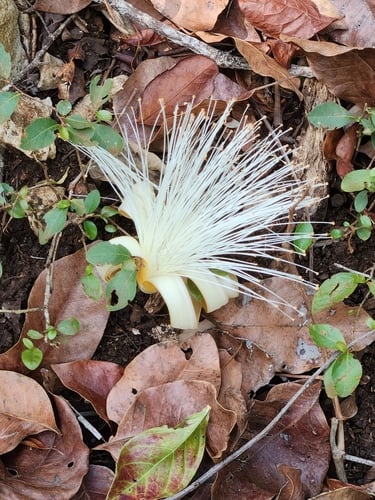
iNaturalist· cc-by-nc
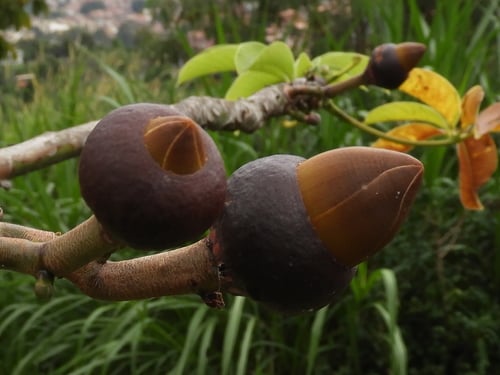
(c) Christian Gaisberger, some rights reserved (CC BY-NC), uploaded by Christian Gaisberger
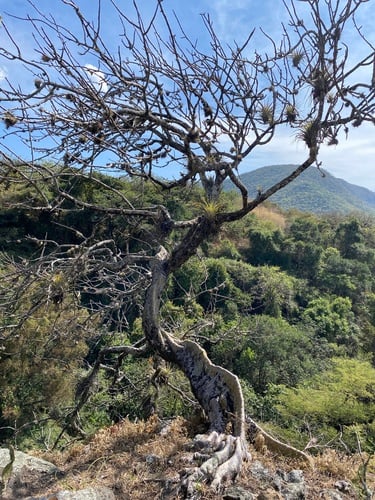
iNaturalist· cc-by-nc
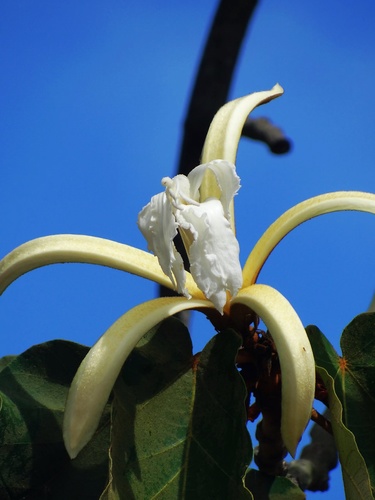
(c) Thomas Wrbka, some rights reserved (CC BY-NC), uploaded by Thomas Wrbka
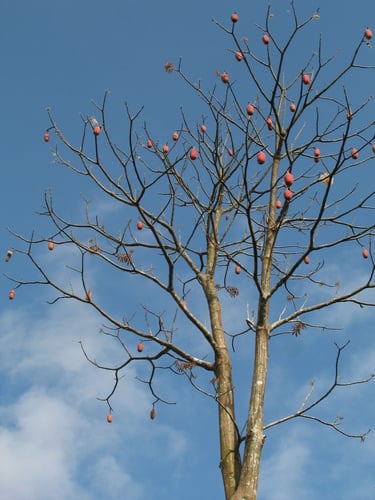
iNaturalist· cc-by-nc
(c) Martin Jiroušek, some rights reserved (CC BY-NC), uploaded by Martin Jiroušek
Summary
Source: WikipediaAbutilon theophrasti, also known as velvetleaf, velvet plant, velvetweed and the Chinese jute is an annual plant in the family Malvaceae that is native to Central and East Asia. It is the type species of the genus Abutilon. Its specific epithet, theophrasti, commemorates the ancient Greek botanist-philosopher Theophrastus.
Description
A shrub or small tree. It grows 5 m tall. There are prickles along the stem. The leaves are twice divided and there are 8-18 pairs of pinnae. There are up to 50 pairs of pinnules on each pinnae. The flowers are yellow. They are in large clusters at the ends of branches. The pods are flattened.
Edible Uses
The seeds can be eaten raw when under-ripe. Ripe seeds are dried, ground into a powder, washed to remove any bitterness, and then used in soups, bread, and similar preparations. The seed contains approximately 17.4% protein, 16% fat, 33.8% carbohydrate, and 4.4% ash. The unripe fruit — essentially a seedpod — can also be eaten raw.
Traditional Uses
The unripe seeds are eaten raw or cooked. The ripe seeds are ground into flour and used in soups and bread. Old seeds are washed to remove the bitter taste then sun dried and made into flour. The leaves have a nice taste but not good texture.
Medicinal Uses
The plant has ophthalmic, astringent, demulcent, diuretic, emollient, laxative, and stomachic properties and has been used in treating dysentery, fevers, urinary complaints, and opacity of the cornea. The leaves contain 0.01% rutin and are used as a demulcent; a tea made from dried leaves treats dysentery and fevers, and a poultice of the leaves is applied to ulcers. The bark is astringent and diuretic. A tea from the dried root is used for dysentery, urinary incontinence, and fevers. The powdered seed is eaten to treat dysentery and stomach-aches, and acts as a demulcent, diuretic, emollient, laxative, and stomachic.
Distribution
It grows in Mediterranean climates. It needs full sun and a fertile well drained soil. It can grow with a pH in the range 5 to 8.2. In Sichuan and Yunnan.
Where It Grows
Africa, Albania, Asia, Australia, Central Asia, China*, Europe, India*, Indochina, Japan, Kazakhstan, Korea, Kyrgyzstan, Mediterranean, Mongolia, North America, Pakistan, Russia, SE Asia, Slovenia, Taiwan, Tajikistan, Thailand, Turkmenistan, USA, Uzbekistan, Vietnam,
Cultivation
Plants are grown from seed. They germinate in 2-3 weeks. They can be put in a nursery and transplanted. In warm places seeds can be sown directly where they are to grow.
Propagation
Sow seed in early April in a greenhouse; germination should take place within 2–3 weeks. When large enough to handle, prick seedlings out into individual pots and plant out in May or June after the last expected frosts. An outdoor sowing in April to early May directly in situ is also worth trying, particularly in areas with warm summers.
Other Uses
A strong, coarse but flexible fibre obtained from the stems serves as a jute substitute and is also used in rope-making; it takes dyes well. This fibre can additionally be used to make paper — stems are harvested in summer, leaves removed, and the stems steamed to extract the fibres. The seeds yield approximately 19% of a semi-drying oil.
Notes
There are about 100-160 Abutilon species. Seed (Fresh weight) Protein: 17.4 Fat: 16 Carbohydrate: 33.8 Ash: 4.4 The plant is grown for its fibre.
Nutrition
| Part | Moisture | kJ | kcal | Protein | Vit A | Vit C | Iron | Zinc |
|---|---|---|---|---|---|---|---|---|
| Seeds | — | — | 17.4 | — | — | — | — | — |
Synonyms
Also Known As
Abutilon hemp, American jute, Baržunasti oslez, Button Print, Button Weed, Canapina, Chingma, Him-a, Ichibi, Indian mallow, Kanatnik, Maba, Paima, Qing ma, Tientsin Jute, Velvet Weed, Zaslazu
References (15)
- Ambasta S.P. (Ed.), 2000, The Useful Plants of India. CSIR India. p 4
- DARLINGTON & AMMAL, (As Abutilon avicennae)
- ecocrop.fao.org
- Flora of Pakistan. www.eFloras.org
- https://en.wikipedia.org/wiki/List of wild edible plants in Mongolian cuisine
Show all 15 references Hide references
- Malvenfam. 28. 1787
- Paczkowska, G. & Chapman, A.R., 2000, The Western Australian Flora. A Descriptive Catalogue. Western Australian Herbarium. p 288
- Plants for a Future database, The Field, Penpol, Lostwithiel, Cornwall, PL22 0NG, UK. http://www.scs.leeds.ac.uk/pfaf/
- Sachula, et al, 2020, Wild edible plants collected and consumed by the locals in Daqinggou, Inner Mongolia, China. Journal of Ethnobiology and Ethnomedicine (2020) 16:60
- READ, (As Abutilon avicennae)
- Tang ya, Malvaceae. Flora of China. p
- UPHOF, (As Abutilon avicennae)
- Urgamal, M., Oyuntsetseg, B., Nyambayar, D. & Dulamsuren, Ch. 2014. Conspectus of the vascular plants of Mongolia. (Editors: Sanchir, Ch. & Jamsran, Ts.). Ulaanbaatar, Mongolia. “Admon“ Press. 334pp. (p. 79-90).
- Wiersema, J. H. & Leon, B., 2013, World Economic Plants. A Standard Reference CFC Press. 2nd Ed. p 1
- World Checklist of Useful Plant Species 2020. Royal Botanic Gardens, Kew