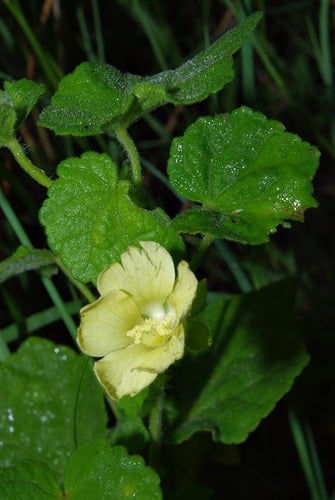
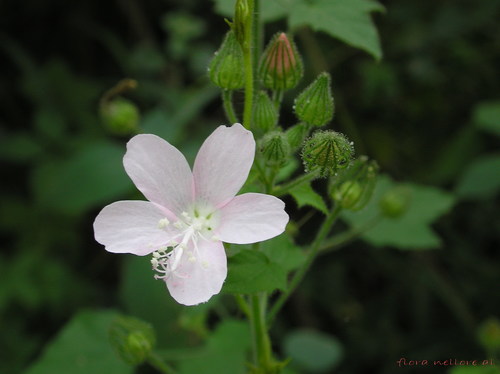
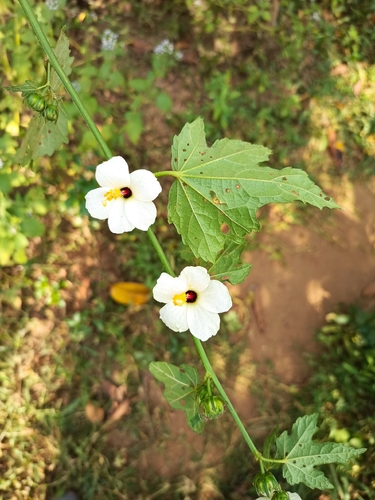
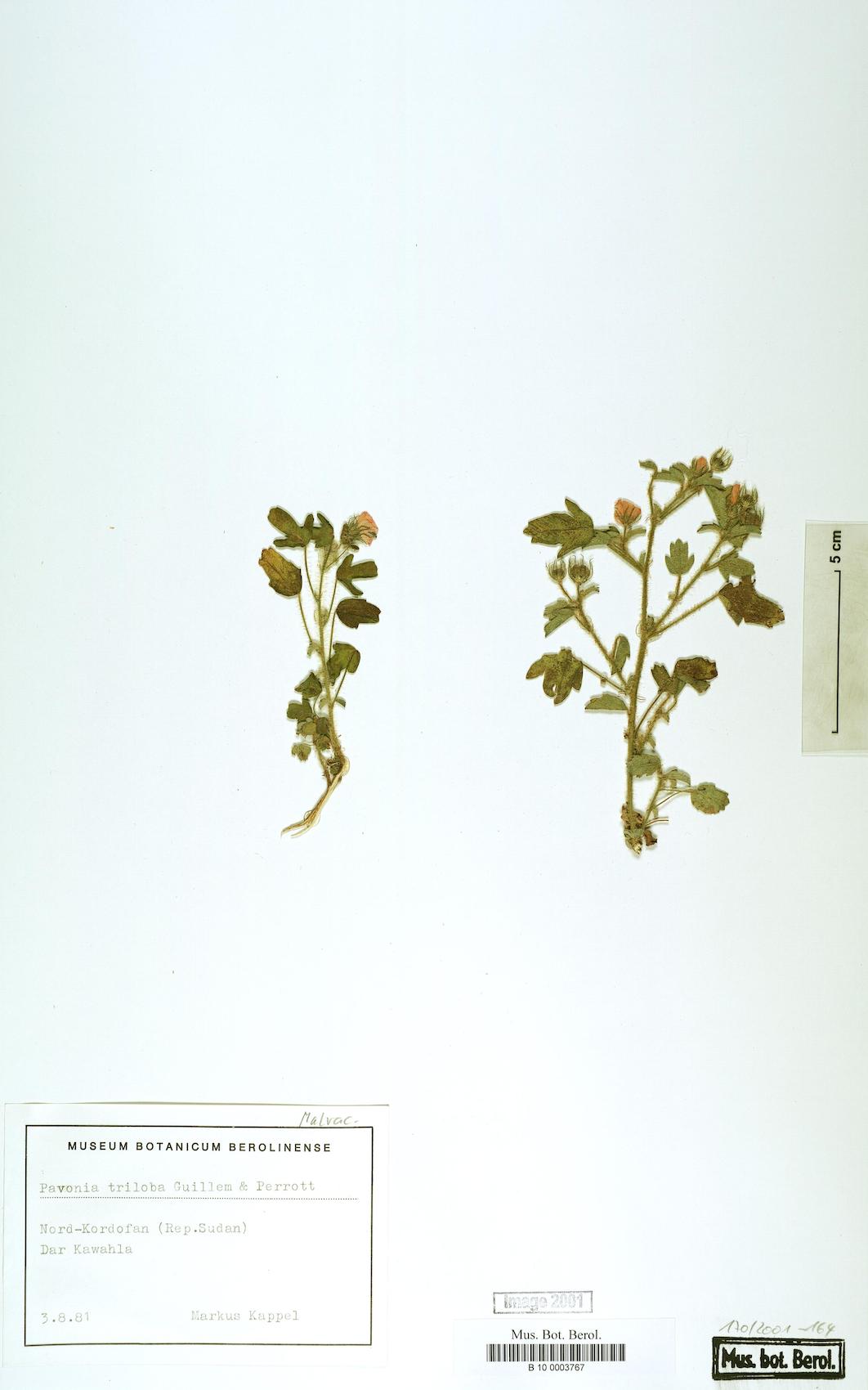
Abutilon ramosum
(Cav.) Guill. & Perr.
Monkey's sorrel
iNaturalist· cc-by-nc
(c) Mark Hyde, Bart Wursten and Petra Ballings, some rights reserved (CC BY-NC)
iNaturalist· cc-by-nc
(c) Mark Hyde, Bart Wursten and Petra Ballings, some rights reserved (CC BY-NC)
iNaturalist· cc-by-nc
(c) Mark Hyde, Bart Wursten and Petra Ballings, some rights reserved (CC BY-NC)
Description
A shrub or small tree. It grows 5 m tall. There are prickles along the stem. The leaves are twice divided and there are 8-18 pairs of pinnae. There are up to 50 pairs of pinnules on each pinnae. The flowers are yellow. They are in large clusters at the ends of branches. The pods are flattened.
Edible Uses
The leaves are edible.
Medicinal Uses
The powdered root is added to beer or porridge to be drunk for the treatment of stomach ailments.
Distribution
It is a tropical plant. It grows in the drier parts of tropical Africa. It grows in rocky places and often in light shade. It grows from sea level and up to 1,800 m above sea level.
Where It Grows
Africa, Asia, Benin, Botswana, Burkina Faso, East Africa, Eritrea, Ethiopia, Ghana, India, Malawi, Middle East, Mozambique, Namibia, Nigeria, Pakistan, Senegal, Southern Africa, Sudan, West Africa, Yemen, Zambia, Zimbabwe,
Other Uses
The bark yields fibre.
Other Information
It is not popular.
Notes
There are about 100-160 Abutilon species.
Synonyms
Also Known As
Bissab golo
References (3)
- Burkill, H. M., 1985, The useful plants of west tropical Africa, Vol. 4. Kew.
- Dalziel, 1937,
- World Checklist of Useful Plant Species 2020. Royal Botanic Gardens, Kew