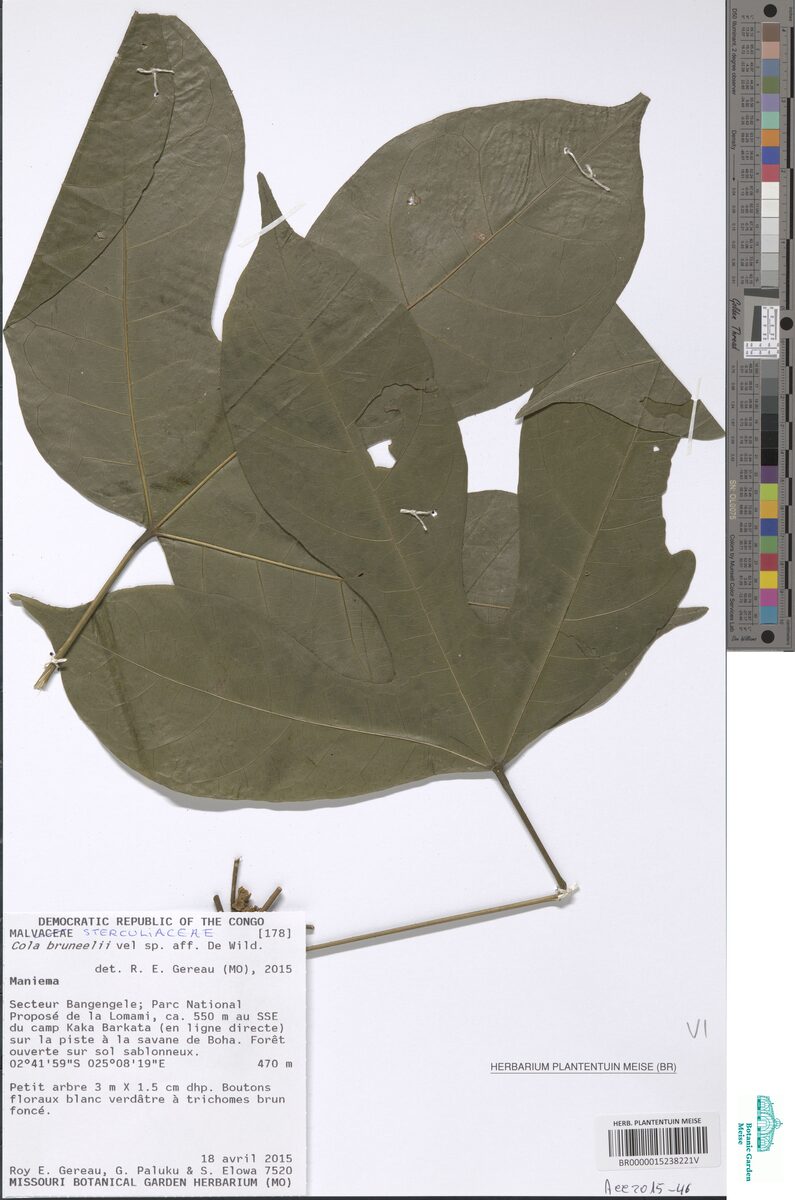
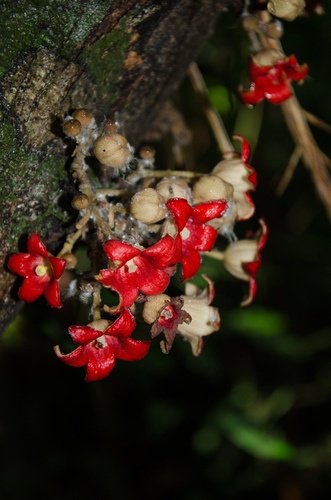
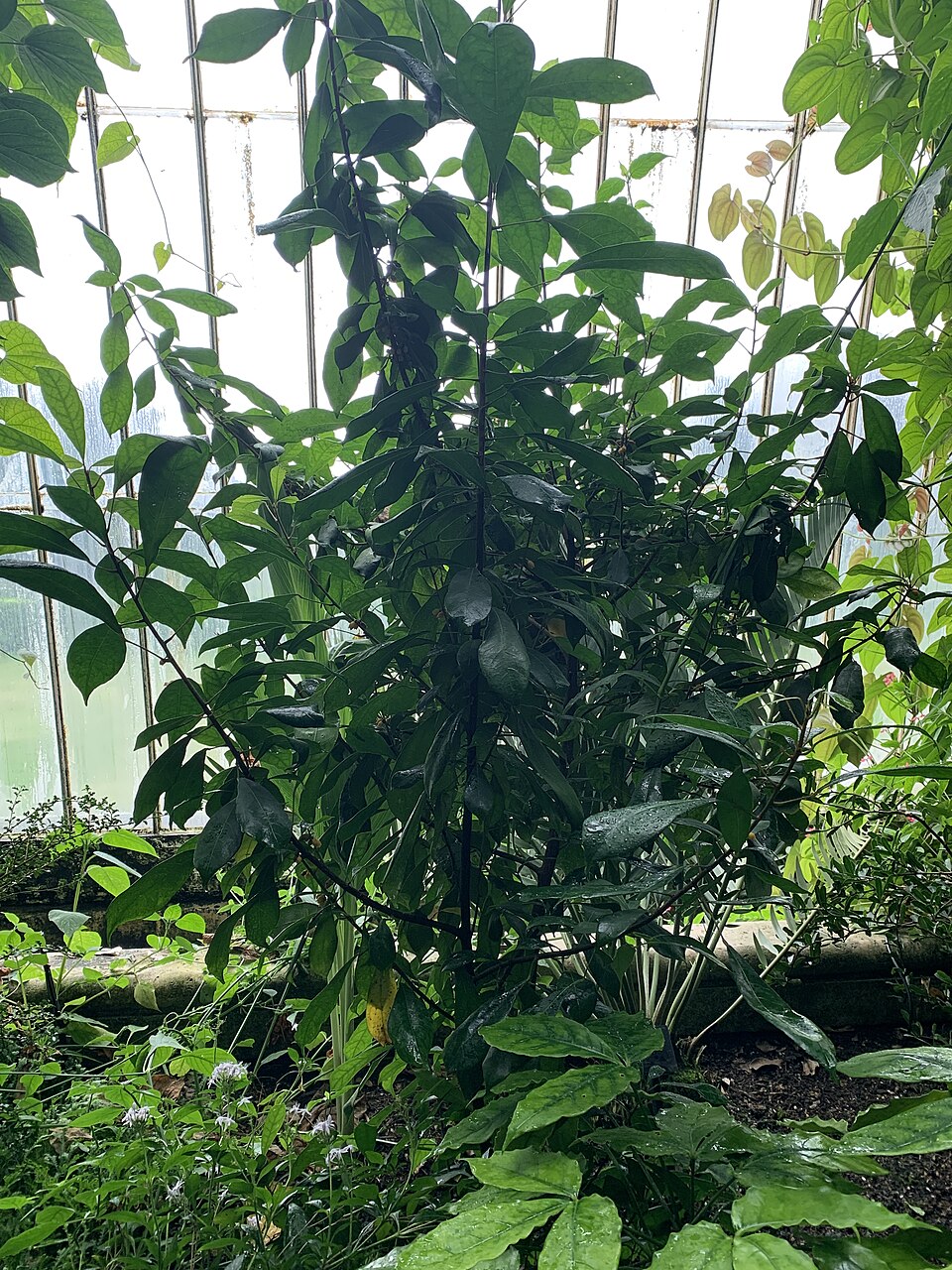
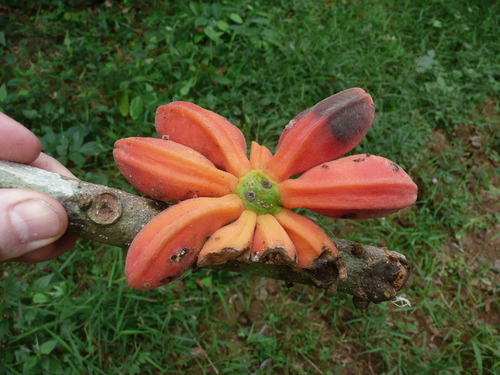
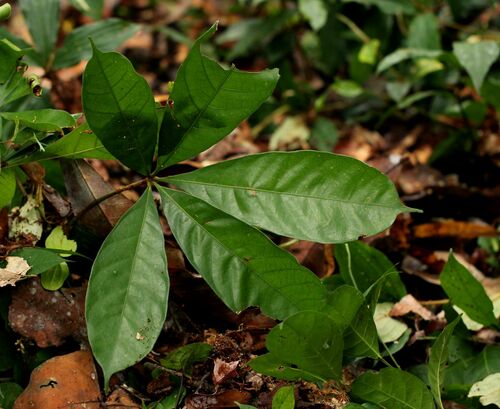
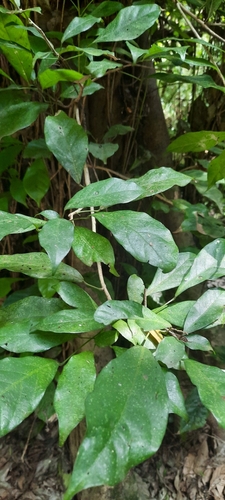
Tilia cordata
Mill.
Small-leaved lime, Little-leaf linden
iNaturalist· pd
AnRo0002, no known copyright restrictions (public domain)
iNaturalist· cc-by-nc
(c) Vytautas, some rights reserved (CC BY-NC), uploaded by Vytautas
iNaturalist· cc-by-sa
(c) Alreadyexist, some rights reserved (CC BY-SA)
Summary
Source: WikipediaTilia cordata, the small-leaved lime or small-leaved linden, is a species of tree in the family Malvaceae, native to much of Europe. Its other common names include little-leaf or littleleaf linden, or traditionally in South East England, pry or pry tree. Its range extends from Britain through mainland Europe to the Caucasus and western Asia. In the south of its range it is restricted to high elevations.
Description
A deciduous tree. It grows to 22 m high. The trunk is thick and short. The bark is brown and smooth at first but becomes dark and cracked. The branches arch downwards. The crown is dense and oval. The leaves are alternate and 4-8 cm long. They are dark green and shiny on top and with orange tufts of hair in the junctions of the veins underneath. They have teeth around the edge. The leaf stalk is not hairy. The flowers are greenish-yellow. They are in clusters of 7-8 on each leafy bract. The fruit are grey. They are neither ribbed nor hairy.
Edible Uses
Young leaves are excellent eaten raw and make a fine salad or sandwich filling — they are mild in taste and somewhat mucilaginous. Young growth from the base of the tree can be harvested from spring through to early autumn. A paste made from ground flowers and immature fruit produces a very acceptable chocolate substitute, though the product proved difficult to market as the paste is prone to decomposing. The flowers also make a popular herb tea with a sweet, fragrant, and pleasant flavour — some caution is advised, see notes on toxicity. Sap harvested in spring is sweet and can be drunk fresh or concentrated into a syrup.
Traditional Uses
The flowers were brewed for Linden tea. Young flowers should be used. The leaves are boiled with other vegetables. They can be used in salads. The leaves are used for sarma in Turkey. They are rolled around a filling of rice or minced meat. The nectar from the flowers is sucked by children.
Medicinal Uses
Lime flowers are a popular domestic remedy, particularly for colds and ailments where sweating is desirable. A tea from the fresh or dried flowers is antispasmodic, diaphoretic, expectorant, hypotensive, laxative, and sedative, and is also used for indigestion, hypertension, hardening of the arteries, hysteria, nervous vomiting, and palpitation. The flowers are harvested commercially and widely available in health shops. Lime flowers are said to develop narcotic properties as they age and should only be harvested when freshly opened. A charcoal made from the wood is used for gastric or dyspeptic disturbances and can also be powdered and applied to burns or sore areas.
Known Hazards
If the flowers used for making tea are too old, they may produce symptoms of narcotic intoxication.
Distribution
It is a temperate plant. It is native to W. Asia and Europe. It grows in the hills but not mountains in Europe. It needs cool, deep, moist loam soils. It suits hardiness zones 3-9. Arboretum Tasmania. Hobart Botanical Gardens.
Where It Grows
Armenia, Asia, Australia, Balkans, Belarus, Belgium, Bosnia, Britain, Canada, Caucasus, Eurasia, Europe*, Georgia, Greece, Hungary, India, Ireland, Italy, Kosovo, Latvia, Lithuania, Luxembourg, Macedonia, Mediterranean, North America, Norway, Poland, Portugal, Romania, Russia, Scandinavia, Slovakia, Slovenia, Spain, Sweden, Switzerland, Tasmania, Turkey, Türkiye, Ukraine, USA,
Cultivation
Prefers a good moist loamy alkaline to neutral soil but it also succeeds on slightly acid soils. Grows poorly on any very dry or very wet soil. Tolerates considerable exposure. Succeeds in sun or semi-shade. Plants can be transplanted quite easily, even when large, trees up to 60 years old have been moved successfully. Trees are very amenable to coppicing or pollarding. They produce numerous suckers from the base. Suckers are produced but not freely according to another report. This species produces far less suckers than T. platyphyllos or T. x vulgaris. This species grows well in Britain, but it rarely produces viable seed in areas with cool summers. Lime trees tend to hybridise freely if other members of the genus are growing nearby. If growing plants from seed it is important to ensure the seed came from a wild source or from an isolated clump of the single species. Grows best in a woodland situation, young plants tolerate a reasonable level of side shade. Mature trees cast a dense shade. A very valuable bee plant, producing an abundance of nectar. A valuable species for wildlife, there are 31 species of insects associated with this tree. The leaves are very attractive to leaf aphis and these aphis produce an abundance of sweet secretions which drip off the leaves to the ground below and also attract sooty mould fungus. This makes the tree unsuitable for street planting. This species, however, is less likely to become infested with aphis than T. platyphyllos or T. x vulgaris. There are some named varieties selected for their ornamental value. Plants in this genus are notably resistant to honey fungus.
Propagation
Much of the seed produced in Britain is not viable — cut a few seedcases open to check for a seed inside. Where possible, obtain fresh seed that is ripe but has not yet developed a hard seed coat and sow it immediately in a cold frame; it may germinate the following spring, though it could take 18 months. Stored seed can be very slow to germinate due to a combination of hard seed coat, embryo dormancy, and a hard coat on the pericarp, and may take up to 8 years. To shorten this, stratify the seed for 5 months at high temperatures (10°c at night, up to 30°c by day) followed by 5 months of cold stratification. Prick seedlings into individual pots when large enough and grow on in the greenhouse through the first winter. Plant out in late spring or early summer after the last expected frosts. Layering can be done in spring just before the leaves unfurl and takes 1–3 years. Suckers, when produced, can be removed with as much root as possible during the dormant season and replanted immediately.
Other Uses
Fibre from the inner bark — harvested from trunks 15–30cm in diameter — is used to make mats, shoes, baskets, and ropes, and is also suitable for cloth. The fibre can be used for papermaking: stems are harvested in spring or summer, leaves removed, and stems steamed until the fibres can be stripped. The outer bark is removed from the inner bark by peeling or scraping, the fibres are then cooked for 2 hours with lye and beaten in a ball mill, producing a beige-coloured paper. The wood is soft, white, and easily carved, well suited to domestic items and small non-durable objects. A charcoal made from the wood is used for drawing.
Other Information
A famine food. It is sold in local markets.
Notes
These have also been in the Tiliaceae.
Synonyms
Also Known As
Blini, Eglamur, Liepa, Lind, Lipa, Loreni, Sitnolisna lipa, Tiu, Tiyoel
References (37)
- Abbet, C., et al, 2014, Ethnobotanical survey on wild alpine food plants in Lower and Central Valais (Switzerland). Journal of Ethnopharmacology 151 (2014) 624–634
- Ambasta, S.P. (Ed.), 2000, The Useful Plants of India. CSIR India. p 639
- Brickell, C. (Ed.), 1999, The Royal Horticultural Society A-Z Encyclopedia of Garden Plants. Convent Garden Books. p 1013
- Cerne, M., 1992, Wild Plants from Slovenia used as Vegetables. Acta Horticulturae 318
- Coombes, A.J., 2000, Trees. Dorling Kindersley Handbooks. p 303
Show all 37 references Hide references
- Crawford, M., 2012, How to grow Perennial Vegetables. Green Books. p 127
- Cundall, P., (ed.), 2004, Gardening Australia: flora: the gardener's bible. ABC Books. p 1418
- Demir, I. & Ayaz, N., 2022, Wild edible plants contributing to the traditional foods of Mardin (Turkey) Province. Indian Journal of Traditional Knowledge Vol 21(3), July 2022, pp 569-582
- Denes, A., et al, 2012, Wild plants used for food by Hungarian ethnic groups living in the Carpathian Basin. Acta Societatis Botanicorum Poloniae 81 (4): 381-396
- Dogan, Y., et al, 2015, Of the importance of a leaf: the ethnobotany of sarma in Turkey and the Balkans. Journal of Ethnobiology and Ethnomedicine, 11:56
- Farrar, J.L., 1995, Trees of the Northern United States and Canada. Iowa State University press/Ames p 281
- Gard. dict. ed. 8: Tilia no. 1. 1768
- Girard, N. J., 2020, Sustainable Foraging of Wild Edible Plants in Norway. A Biocultural Approach. M. Sc. thesis Norwegian University. p 132
- Gouldstone, S., 1983, Growing your own Food-bearing Plants in Australia. Macmillan p 173
- Harris, E & J., 1983, Field Guide to the Trees and Shrubs of Britain. Reader's Digest. p 43
- Hibbert, M., 2002, The Aussie Plant Finder 2002, Florilegium. p 300
- Irving, M., 2009, The Forager Handbook, A Guide to the Edible Plants of Britain. Ebury Press p 201
- Lord, E.E., & Willis, J.H., 1999, Shrubs and Trees for Australian gardens. Lothian. p 74
- Luczaj, L., 2012, Ethnobotanical review of wild edible plants of Slovakia. Acta Societatis Botanicorum Poloniae 81(4):245-255
- Luczaj, L. et al, 2013, Wild edible plants of Belarus: from Rostakinski's questionnaire of 1883 to the present. Journal of Ethnobiology and Ethnomedicine 9:21
- Łukasz Łuczaj and Wojciech M Szymański, 2007, Wild vascular plants gathered for consumption in the Polish countryside: a review. J Ethnobiol Ethnomedicine. 3: 17
- Luczaj, L., et al, 2015, Wild food plants and fungi used by Ukrainians in the western part of the Maramureş region in Romania. Acta Soc Bot Pol 84(3):339–346
- Mattalia, G., et al, 2012, Traditional uses of wild food and medicinal plants among Brigasc, Kye ́, and Provenc ̧al communities on the Western Italian Alps. Genet Resour Crop Evol. Springer
- Miskoska-Milevska, E. et al, 2020, Traditional uses of wild edible plants in the Republic of North Macedonia. PHYTOLOGIA BALCANICA 26(1): 155–162, Sofia, 2020 p 159
- Nanagulyan, S., et al, 2020, Wild plants and fungi sold in the markets of Yerevan (Armenia). Journal of Ethnobiology and Ethnomedicine 16:26
- Pieroni, A. & Soukand, R., 2017, Are Borders more Important than Geographical Distance? The Wild Food Ethnobotany of the Boykos and its Overlap with that of the Bukovinian Hutsuls in Western Ukraine. Journal of Ethnobiology 37(2): 326–345
- Pieroni, A. & Soukand, R., 2018, Forest as Stronghold of Local Ecological Practice: Currently Used Wild Food Plants in Polesia, Northern Ukraine. Economic Botany, XX(X) pp. 1-21
- Prakofjewa, J., et al, 2023, Boundaries Are Blurred: Wild Food Plant Knowledge Circulation across the Polish-Lithuanian-Belarusian Borderland. Biology 2023, 12, 571.
- Pruse, B., et al, 2021, Active Wild Food Practices among Culturally Diverse Groups in the 21st Century across Latgale, Latvia. Biology 2021, 10, 551.
- Redzic, S. J., 2006, Wild Edible Plants and their Traditional Use in the Human Nutrition in Bosnia-Herzegovina. Ecology of Food and Nutrition, 45:189-232
- Ryan, S., 2008, Dicksonia. Rare Plants Manual. Hyland House. p 59
- Schuler, S., (Ed.), 1977, Simon & Schuster's Guide to Trees. Simon & Schuster. No. 177
- Self, M., 199, Phoenix Seeds catalogue. p 16
- Sfikas, G., 1984, Trees and shrubs of Greece. Efstathiadis Group. Athens. p 108
- Shikov, A. N. et al, 2017, Traditional and Current Food Use of Wild Plants Listed in the Russian Pharmacopoeia. Frontiers in Pharmacology. Vol. 8 Article 841
- Soukand, R., et al, 2017, Multi-functionality of the few: current and past uses of wild plants for food and healing in Liubań region, Belarus. Journal of Ethnobiology and Ethnomedicine (2017) 13:10
- Tardio, J., et al, Ethnobotanical review of wild edible plants in Spain. Botanical J. Linnean Soc. 152 (2006), 27-71