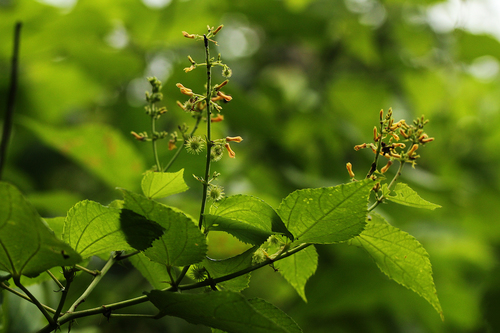
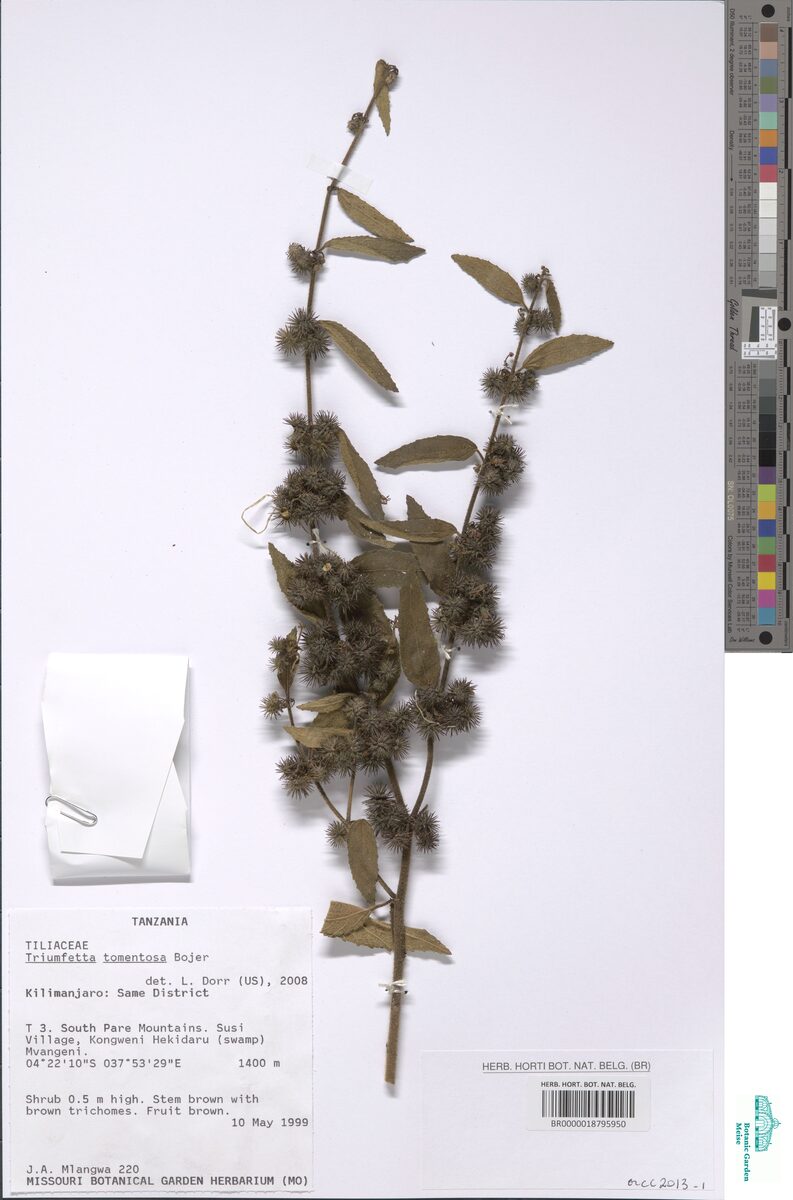
Tilia chinensis
Maxim.
Wikipedia· cc-by-sa
Wikimedia Commons - T_chinensis.jpg
wikimedia· cc-by-sa
Wikimedia Commons - MarekPogorzelec
Summary
Source: WikipediaTilia chinensis (Chinese linden, Chinese: 椴树) is a species of lime or linden tree that is endemic to China. It flowers in July or August when honey bees collect honey from its flowers. Especially famous is honey taken from the Chinese linden flowers in Changbai Mountain.
Description
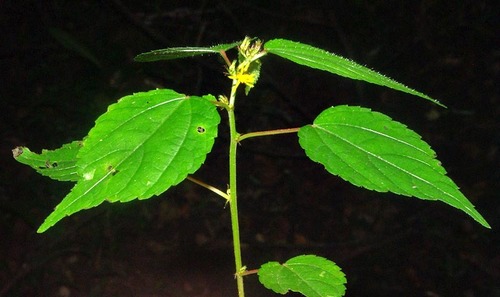
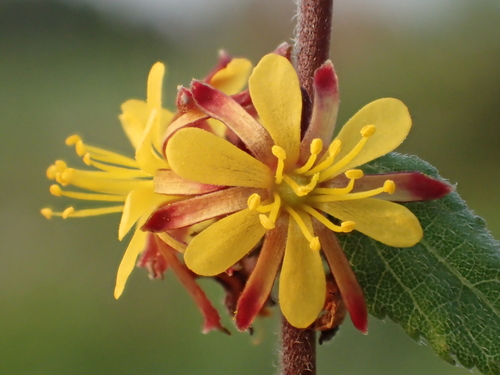
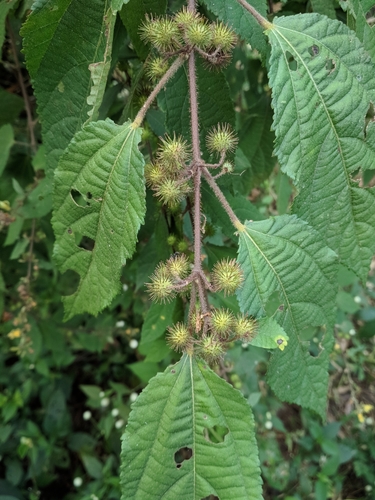
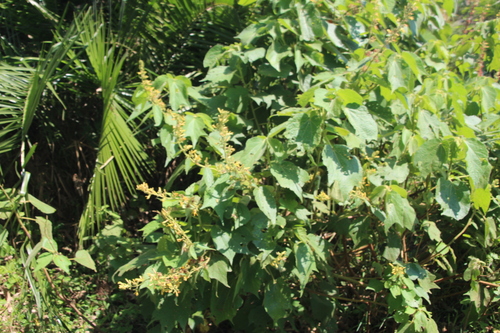
A tree. It grows 30 m tall. The leaves are broadly oval and 7-13 cm long by 6-9 cm wide. They are hairy underneath. Flowers are in groups of 1 to 3. The fruit is round or oval and 5 angled. It is 10-14 mm long by 8-9 mm wide.
Edible Uses
Young leaves can be eaten raw. A tea is made from the flowers. A very good chocolate substitute can be made from a paste of the ground fruits and flowers, though attempts to market the product failed because the paste decomposes readily.
Medicinal Uses
A tea made from the flowers is antispasmodic, diaphoretic, and sedative.
Distribution
It is a temperate plant. It grows in forests between 1,800-3,100 m above sea level. In Sichuan and Yunnan.
Where It Grows
Asia, China, Tibet,
Cultivation
Prefers a good moist loamy alkaline to neutral soil but succeeds on slightly acid soils. Grows poorly on any very dry or very wet soil. Dislikes exposed positions. Succeeds in sun or semi-shade. Grows best in a woodland situation, young plants tolerate a reasonable level of side shade. Prefers a continental climate, growing more slowly and not producing fertile seed in areas with cool summers. Lime trees tend to hybridise freely if other members of the genus are growing nearby. If growing plants from seed it is important to ensure the seed came from a wild source or from an isolated clump of the single species. Trees are usually attacked by aphids which cover the ground and the leaves with a sticky honeydew. Closely related to T. intonsa. Quite tolerant of root disturbance, semi-mature trees up to 5 metres tall have been transplanted successfully. Plants in this genus are notably resistant to honey fungus.
Propagation
Much of the seed produced in Britain is not viable — cut a few seedcases open to check for a seed inside. Where possible, obtain fresh seed that is ripe but has not yet developed a hard seed coat and sow it immediately in a cold frame; it may germinate the following spring, though it could take 18 months. Stored seed can be very slow to germinate due to a combination of hard seed coat, embryo dormancy, and a hard coat on the pericarp, and may take up to 8 years. To shorten this, stratify the seed for 5 months at high temperatures (10°c at night, up to 30°c by day) followed by 5 months of cold stratification. Prick seedlings into individual pots when large enough and grow on in the greenhouse through the first winter. Plant out in late spring or early summer after the last expected frosts. Layering can be done in spring just before the leaves unfurl and takes 1–3 years. Suckers, when produced, can be removed with as much root as possible during the dormant season and replanted immediately.
Other Uses
A fibre obtained from the inner bark is used for making sandals, nets, and similar items.
Notes
These have also been in the Tiliaceae.
References (2)
- Plants for a Future database, The Field, Penpol, Lostwithiel, Cornwall, PL22 0NG, UK. http://www.scs.leeds.ac.uk/pfaf/
- Trudy Imp. S.-Peterburgsk. Bot. Sada 11:83. 1890