Tilia japonica
(Miq.) Simonk.
Japanese lime
iNaturalist· cc-by-nc
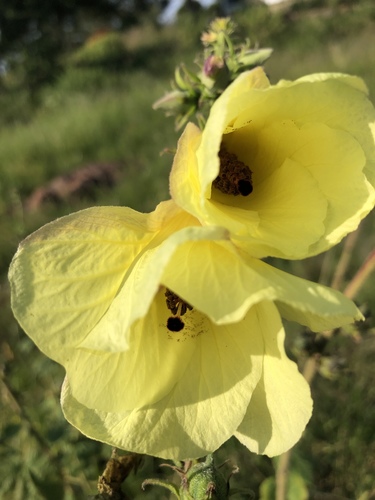
(c) Yao Li, some rights reserved (CC BY-NC), uploaded by Yao Li
iNaturalist· cc-by
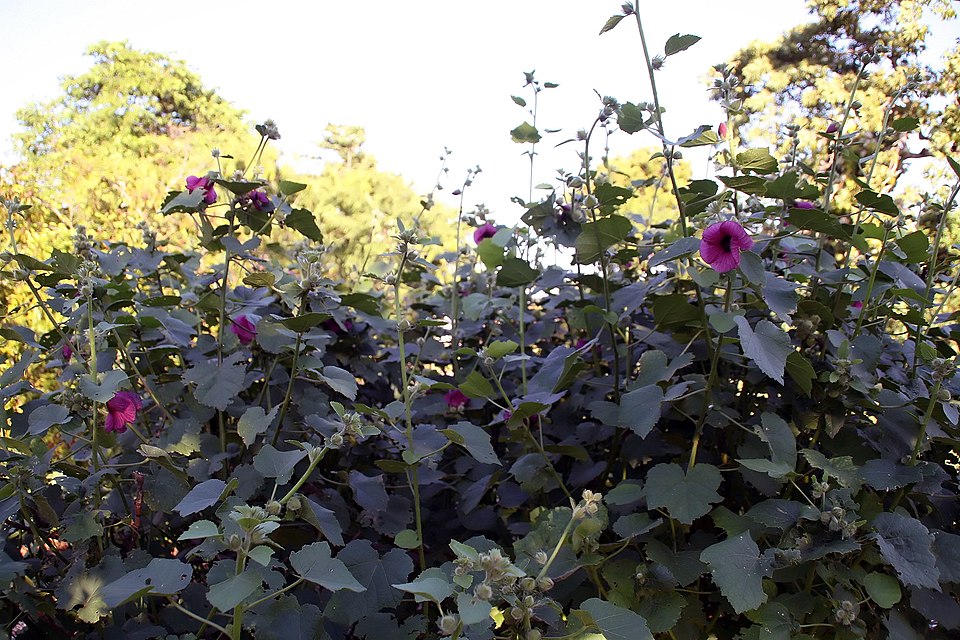
(c) Marco Mussita, some rights reserved (CC BY), uploaded by Marco Mussita
iNaturalist· cc-by
(c) Marco Mussita, some rights reserved (CC BY), uploaded by Marco Mussita
Summary
Source: WikipediaTilia japonica, the Japanese lime or Japanese linden, is a species of Tilia native to eastern China and Japan, preferring to grow in mountains up to 2000 m. It superficially resembles the better-known Tilia cordata, the small-leaved lime, and was originally described as Tilia cordata var. japonica. It differs from T. cordata in having 164 chromosomes instead of 82, and by some subtle differences in leaf and flower morphology. T. japonica inflorescences consistently have 5 staminodes, which is a reliable trait distinguishing it from T. cordata and T. amurensis. Recent studies indicate T.japonica to play an important role in maintaining the ectomycorrhizal networks in local forests it grows in Japan.
Description
A tree. It grows 15 m tall and spreads 6 m wide. The leaves are small and pointed. They are 5-10 cm long by 4-9 cm wide. They are a little waxy underneath. The flowers are creamy yellow and have a fragrance. They are 5-7 cm across. They are in groups of 6 to 16 flowers. The fruit is oval and not angled.
Edible Uses
Young leaves can be eaten raw or cooked. The flowers are best parboiled to remove bitterness before being used as greens or added to soups, and a tea can also be made from them. The fruit is edible, though no further details are given — this may relate to the fact that seeds and flowers of some Tilia species can be made into a chocolate substitute. Indeed, a very good chocolate substitute can be produced from a paste of the ground fruits and flowers, though attempts to market the product failed because the paste decomposes readily.
Medicinal Uses
A tea made from the flowers is antispasmodic, diaphoretic, and sedative.
Distribution
It is a temperate plant. It suits hardiness zones 6-10.
Where It Grows
Asia, Australia, China, Europe, Japan, Lithuania,
Propagation
Much of the seed produced in Britain is not viable — cut a few seedcases open to check for a seed inside. Where possible, obtain fresh seed that is ripe but has not yet developed a hard seed coat and sow it immediately in a cold frame; it may germinate the following spring, though it could take 18 months. Stored seed can be very slow to germinate due to a combination of hard seed coat, embryo dormancy, and a hard coat on the pericarp, and may take up to 8 years. To shorten this, stratify the seed for 5 months at high temperatures (10°c at night, up to 30°c by day) followed by 5 months of cold stratification. Prick seedlings into individual pots when large enough and grow on in the greenhouse through the first winter. Plant out in late spring or early summer after the last expected frosts. Layering can be done in spring just before the leaves unfurl and takes 1–3 years. Suckers, when produced, can be removed with as much root as possible during the dormant season and replanted immediately.
Other Uses
Fibre obtained from the inner bark is used for sandals, cordage, and similar items. The wood is light and soft, used for boxes, barrels, and comparable purposes.
Notes
These have also been in the Tiliaceae.
References (3)
- Cundall, P., (ed.), 2004, Gardening Australia: flora: the gardener's bible. ABC Books. p 1419
- Math. Termeszettud. Koezlem. 12:326. 1888
- Plants for a Future database, The Field, Penpol, Lostwithiel, Cornwall, PL22 0NG, UK. http://www.scs.leeds.ac.uk/pfaf/