Hexalobus crispiflorus
A. Rich.
wikimedia· cc0
Wikimedia Commons - Baillon, H. (1867). Histoire des plantes [History of plants] (in French). 1. Paris: Hachette and Co.
gbif· cc-by-sa
Gilles Dauby
Summary
Source: WikipediaHexalobus crispiflorus is a species of plant in the family Annonaceae. It is native to Angola, Benin, Cameroon, Central African Republic, Congo, DR Congo, Gabon, Ghana, Guinea, Guinea-Bissau, Ivory Coast, Liberia, Nigeria, Senegal, Sierra Leone, Sudan, Togo and Zaire. Achille Richard, the French botanist who first formally described the species, named it after its wavy (crispus in Latin) petals of its flowers.
Description
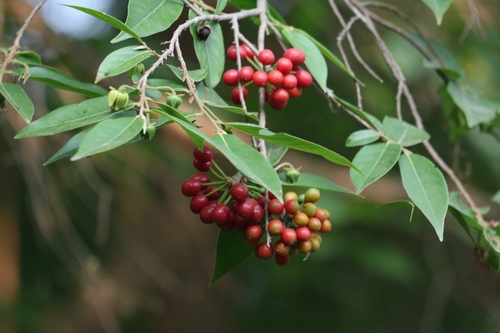
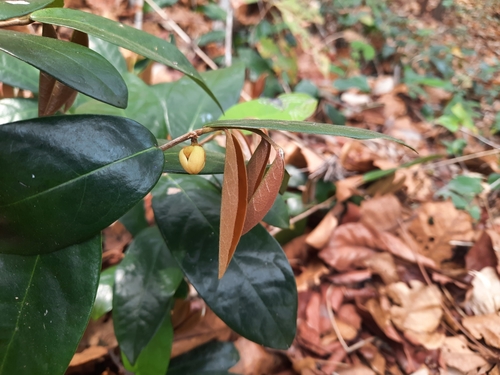
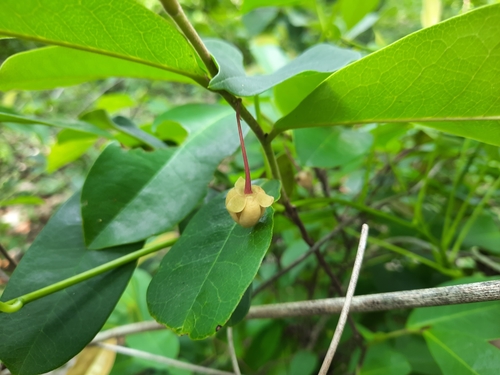
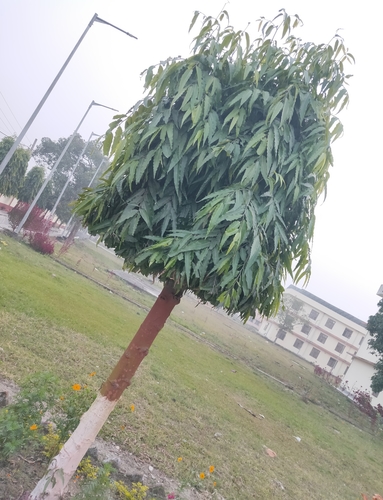
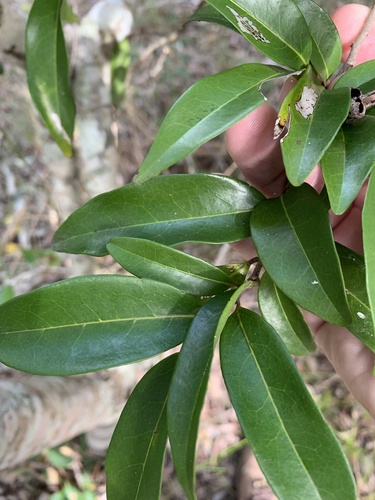
A medium sized tree. It grows about 25 m tall. The trunk is 1.5 m across. The buds are densely hairy. The leaves are 12-20 cm long and 3.5-7.5 cm across. The leaves are wedge shaped at the base. The leaf stalk is stout and 6 mm long. The flowers are pale yellow. They have a scent. They usually occur singly among the leaves. The fruit are 7.5 cm long and 5 cm across. They are banana shaped. They have 1-4 hard seeds.
Edible Uses
Fruit - raw. The flesh near the skin is firm with a tart flavour, whilst that near the seeds is jelly-like and very sweet. When eaten as one, the effect is said to be like that of eating golden apple (Spondias dulcis). It can be dried for later use. The fruit is banana-shaped. The inner bark is soft and yellowish, rapidly turning to orange on exposure. It is slightly scented. It is used as a masticatory with kola in Sierra Leone. The seed is a potential food source. It contains around 7% protein, 36% fats and 35% carohydrates, but there needs to be further work carried out to see if there are any antinutritional substances
Traditional Uses
The fruit are eaten fresh.
This uses section is brief — help expand it
Medicinal Uses
A decoction (of the inner bark?) is used as a vapour-bath for feverish children, and in draught and baths for skin-troubles. A bark-macerate is taken against venereal disease. Freshly pulped bark is applied as a wet dressing on wounds, buboes and furuncles. The bark and roots are reported to contain some saponin, but no alkaloid.
Known Hazards
The fruit contain 1-4 hard seeds.
Distribution
A tropical plant. It grows especially along the edges of forests. It is often along rivers banks.
Where It Grows
Africa, Angola, Benin, Cameroon, Central Africa, Central African Republic, CAR, Congo DR, Congo R, Côte d'Ivoire, Gabon, Ghana, Guinea, Guinée, Guinea-Bissau, Ivory Coast, Nigeria, Senegal, Sierra Leone, Sudan, Togo, West Africa,
Cultivation
Plants can be grown from seed.
Other Uses
The outer bark is dry and stringy and cracks longitudinally. While young it is stripped off for fibre. The white or pinkish wood is open-grained, not very dense and easy to work. It has an attractive appearance and, though it splits easily, it is used in joinery, for house-beams, knife-handles, paddles and tiles. The flutings of the base of the trunk are used to make gun-butts.
Production
Plants flower in February, April and May and fruit August and November.
Also Known As
Apara, Bonde kpilima, Bovonda, Etwa prada, Lapawe, Mbundja, Mobungu, Movonda, Mukandaka, Muvunda, Mvunda, Obondje, Ovonda, Owe, Owi
References (13)
- Abbiw, D.K., 1990, Useful Plants of Ghana. West African uses of wild and cultivated plants. Intermediate Technology Publications and the Royal Botanic Gardens, Kew. p 47
- Danforth, R.M., & Boren, P.D., 1997, Congo Native fruits. Twenty-five of the best. Privately published. p 53
- Facciola, S., 1998, Cornucopia 2: a Source Book of Edible Plants. Kampong Publications, p 14
- Harris, D. J., 2002, The vascular plants of the Dzanga-Sangha Reserve, Central African Republic. National Botanic Garden of Belgium, 2002. – 274 pages p 43
- Jardin, C., 1970, List of Foods Used In Africa, FAO Nutrition Information Document Series No 2.p 141
Show all 13 references Hide references
- Keay, R.W.J., 1989, Trees of Nigeria. Clarendon Press, Oxford. p 24
- Nkeoua, G. & Boundzanga, G. C., 1999, Donnees sur les produits forestieres non ligneux en Republique du Congo. FAO. p 28
- Oteng-Amoako, A. A. (Ed.), 2006, 100 Tropical African Timber Trees from Ghana. Forestry Research Institute of Ghana. p 156
- Raponda-Walker, A & Sillans, R., 1961, Les Plantes Utiles du Gabon. Editions Paul Lechevalier, Paris. p 66 (Drawing)
- Savill, P. S. & Fox, J. E. D., Trees of Sierra Leone. p 40
- Vivien, J. & Faure, J.J., 1985, Abres des forets dense d'Afrique Centrale. Agence de Cooperation Culturelle et Technique. Paris. p 16
- Vivien, J., & Faure, J.J., 1996, Fruitiers Sauvages d'Afrique. Especes du Cameroun. CTA p 42
- World Checklist of Useful Plant Species 2020. Royal Botanic Gardens, Kew