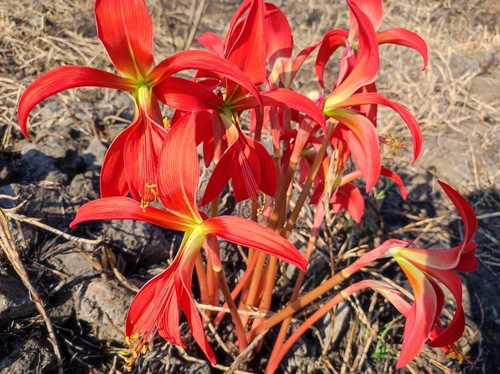
Allium consanguineum
Kunth
wikimedia· cc-by-sa
Zennora Brna (via Wikimedia Commons)
Summary
Source: WikipediaAllium consanguineum is a species of onion found high in the Himalayas of northern Pakistan and northern India. It is a perennial herb up to 35 cm tall, with an egg-shaped bulb. Leaves are flat, narrow. Umbels are hemispherical, densely crowded with many yellow or pink flowers.
Description
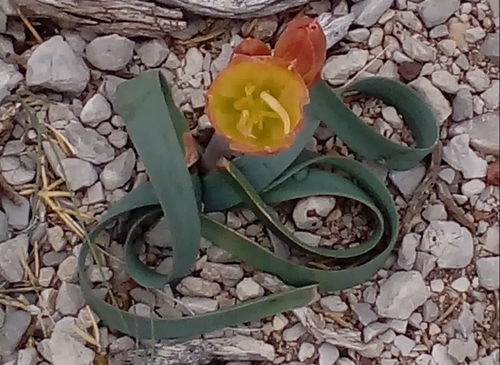
An onion family plant. The bulbs develop in clusters. There are 3-5 flat leaves. The flowers are golden-yellow.
This description is brief — help expand it
Edible Uses
The bulb is eaten raw or cooked and used as a spice. The leaves are used as a green vegetable fresh or dried as a condiment.
Traditional Uses
The leaves are used as a green vegetable. The dried leaves are used as a condiment. The bulb is eaten raw or cooked. It is used as a spice.
This uses section is brief — help expand it
Distribution
It grows in the subalpine and alpine zones in NW India. It grows between 2,500-4,000 m altitude.
Where It Grows
Asia, Himalayas, India,
Notes
There are about 300-700 Allium species. Most species of Allium are edible (Flora of China). All alliums are edible but they may not all be worth eating! They have also been put in the family Alliaceae.
References (2)
- Lim, T. K., 2015, Edible Medicinal and Non Medicinal Plants. Volume 9, Modified Stems, Roots, Bulbs. Springer p 3
- Negi, K. S., and Pant, K. C., 1992, Less-Known Wild Species of Allium L. (Amaryllidaceae) from Mountainous Regions of India. Economic Botany, Vol. 46, No. 1, pp. 112-114