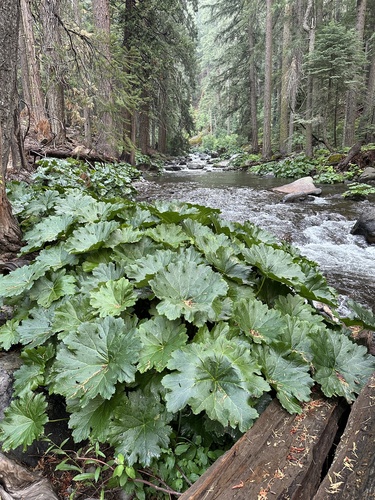
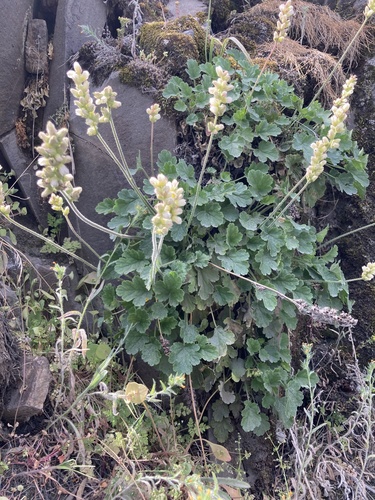
Tolmiea menziesii
(Pursh.) Torr. & A. Gray
Youth on age, Piggyback-plant, Thousand mothers
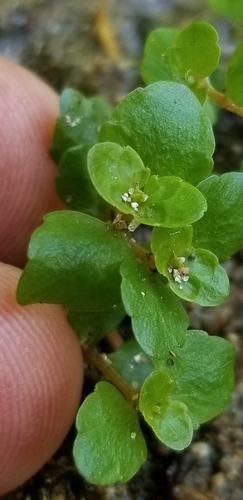
iNaturalist· cc-by-nc
(c) Lyn Jackson, some rights reserved (CC BY-NC), uploaded by Lyn Jackson
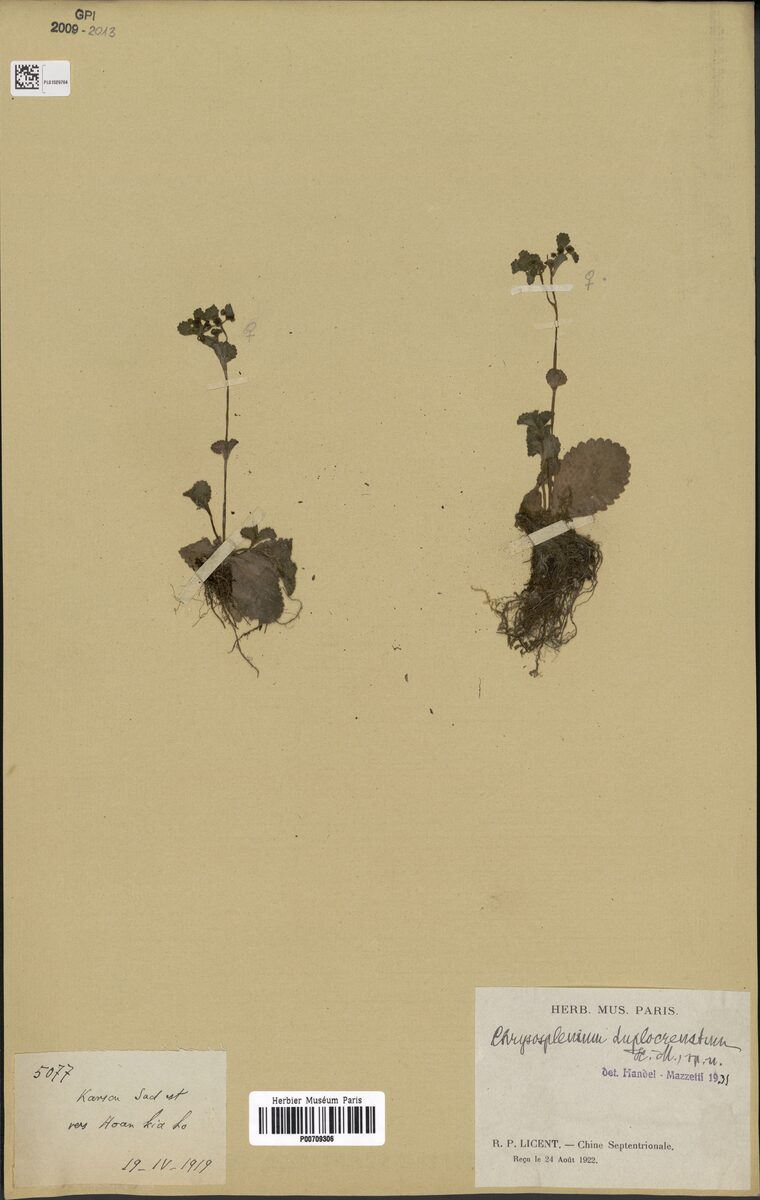
iNaturalist· cc-by
(c) elik03, some rights reserved (CC BY)
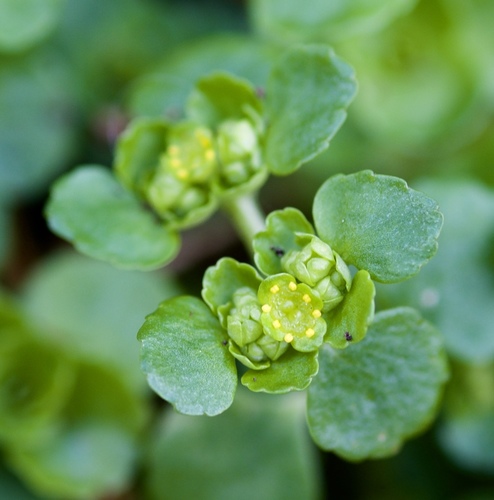
iNaturalist· cc-by-nc
(c) Ian Cruickshank, some rights reserved (CC BY-NC), uploaded by Ian Cruickshank
Summary
Source: WikipediaTolmiea menziesii () is a species of flowering plant in the family Saxifragaceae. It is known by the common names youth on age, pick-a-back-plant, piggyback plant, and thousand mothers. It is a perennial plant native to the West Coast of North America, occurring in northern California, Oregon, Washington, British Columbia and southern Alaska. It occurs as a naturalised plant or garden escapee in Scotland, parts of Wales, Northern Ireland and northern and western parts of England.
Description
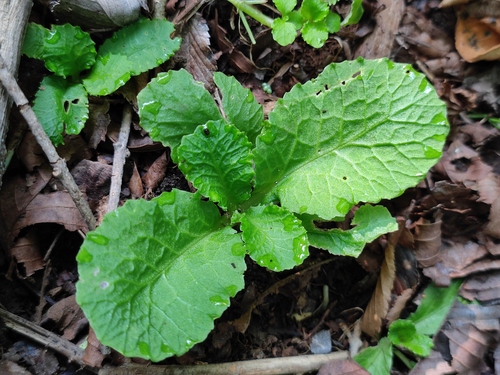
It is a perennial plant. It has a well developed underground stem or rhizome. Young plants are produced on the leaves. It grows 30-50 cm high and 45-60 cm wide. The leaves are hairy and lobed and with teeth around the edge. The leaves are 10 cm across. The flowers are small slightly fragrant purplish brown. The flower stems are 30-60 cm long. Small plantlets develop from the buds.
Edible Uses
Young shoots in spring can be eaten raw, though they are rather bitter.
Traditional Uses
The sprouts are eaten raw in early spring.
This uses section is brief — help expand it
Medicinal Uses
A poultice of fresh leaves has been used in the treatment of boils.
Distribution
It grows on the ground in conifer woodland. It needs protection from the sun. It needs cool moist soil rich in organic matter. It is frost hardy. It needs cool conditions and would only survive at higher altitudes in the tropics. It suits hardiness zones 6-9.
Where It Grows
Australia, Britain, Europe, Hawaii, North America*, Pacific, USA,
Cultivation
Plants can be grown by division. They can also be by removal of plantlets, and from seed.
Propagation
Sow seed in spring in a cold frame, barely covering it. When seedlings are large enough to handle, prick them out into individual pots and grow them on in the greenhouse through their first winter. Plant out into permanent positions in late spring or early summer, after the last expected frosts. Divide young plants in spring — larger divisions can go straight into their permanent positions, while smaller divisions are best potted up and grown on in light shade in a greenhouse or cold frame until growing well, then planted out in summer or the following spring.
Other Uses
Makes a useful ground cover plant for a shady position; plants are best spaced about 60cm apart each way.
Notes
There is only one Tolmiea species.
References (6)
- Cundall, P., (ed.), 2004, Gardening Australia: flora: the gardener's bible. ABC Books. p 1423
- Hibbert, M., 2002, The Aussie Plant Finder 2002, Florilegium. p 300
- Joyce, D., 1998, The Garden Plant Selector. Ryland, Peters and Small. p 274
- Moerman, D. F., 2010, Native American Ethnobotany. Timber Press. p 562
- Plants for a Future database, The Field, Penpol, Lostwithiel, Cornwall, PL22 0NG, UK. http://www.scs.leeds.ac.uk/pfaf/
Show all 6 references Hide references
- Staples, G.W. and Herbst, D.R., 2005, A tropical Garden Flora. Bishop Museum Press, Honolulu, Hawaii. p 523