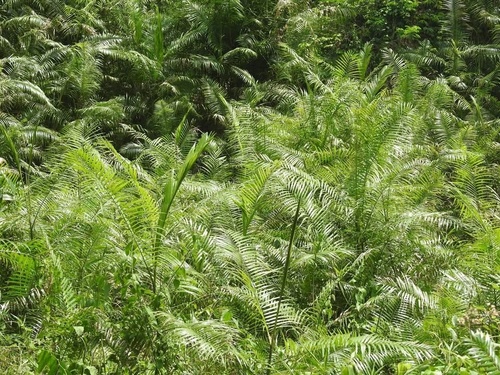
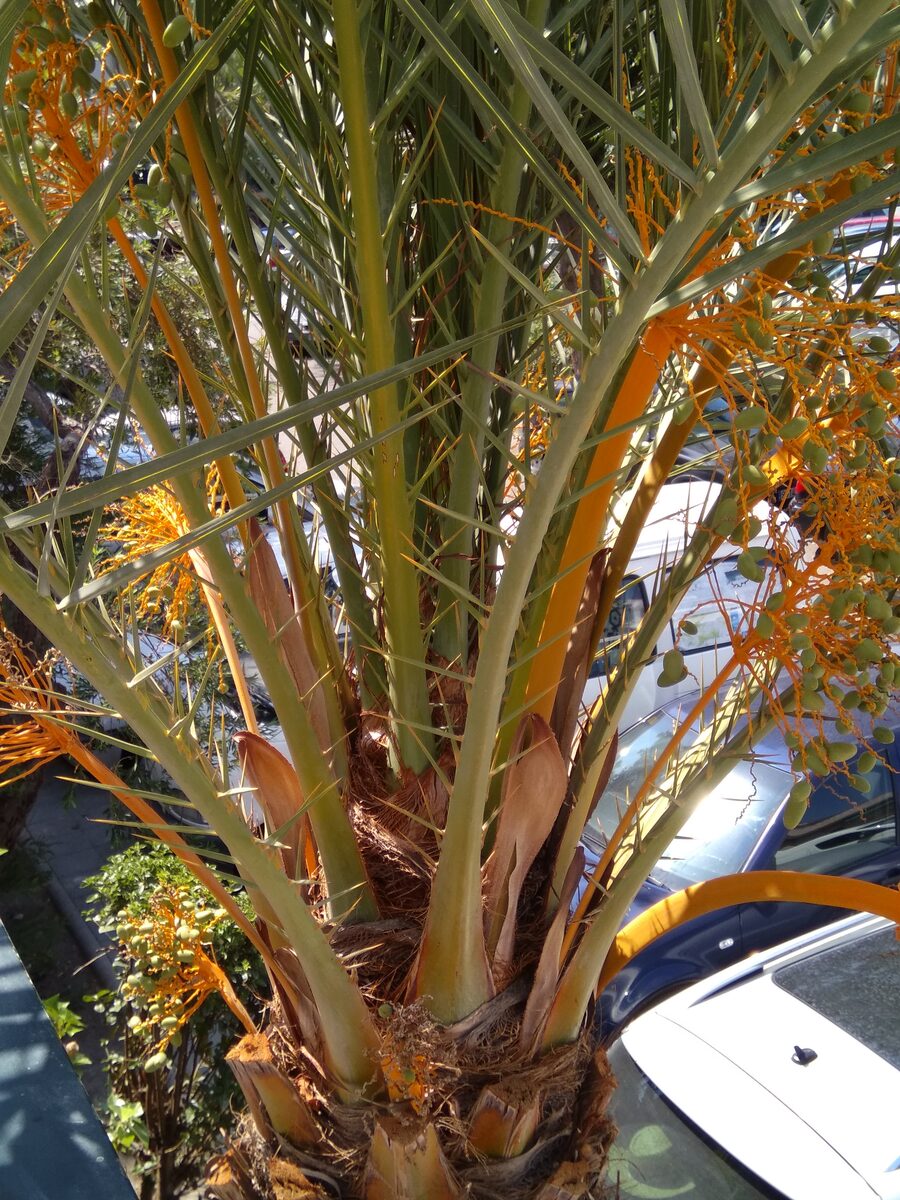
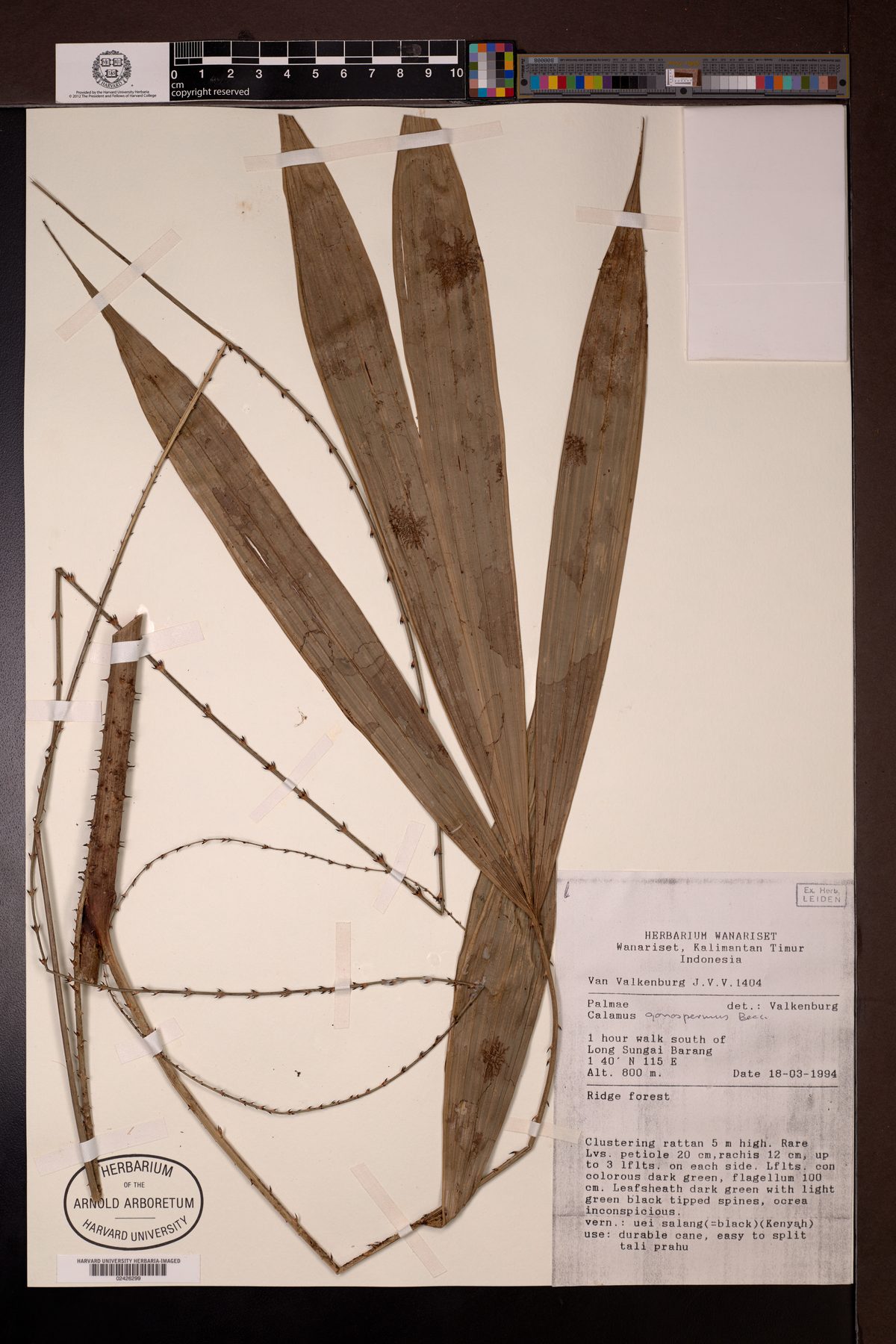
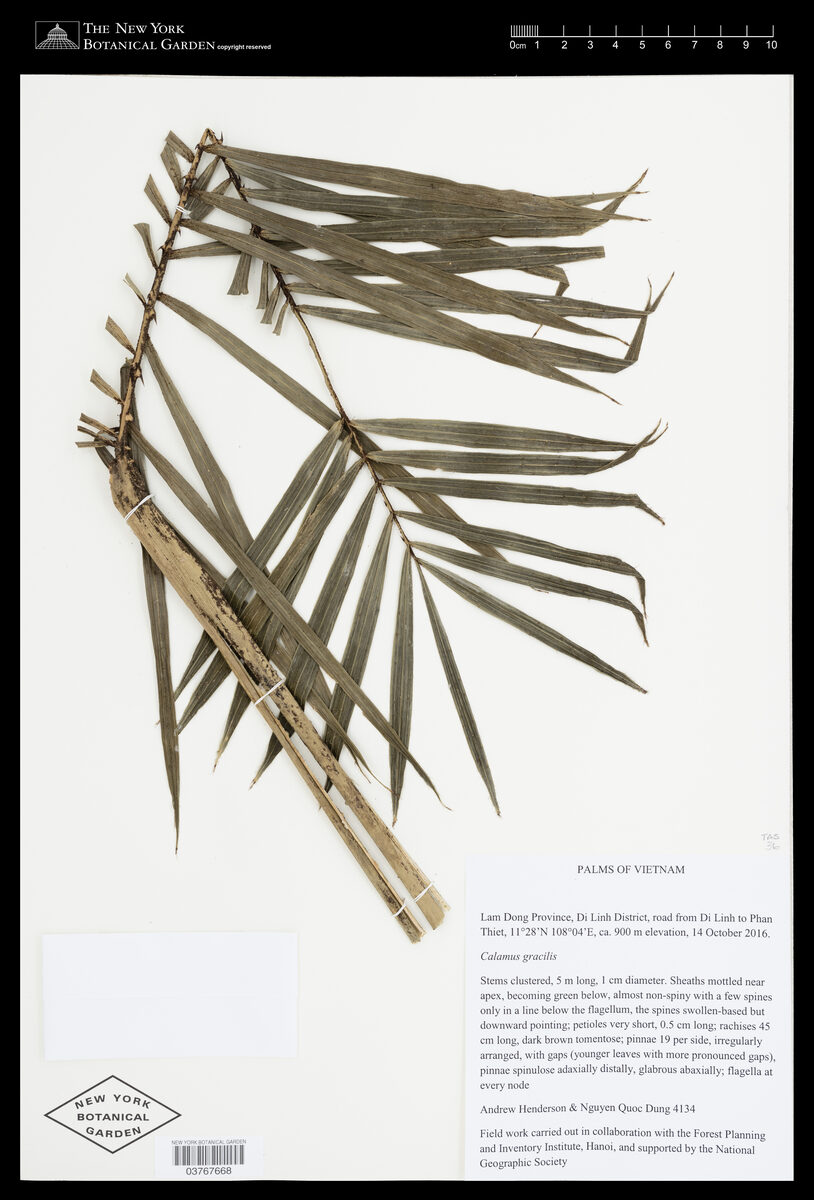
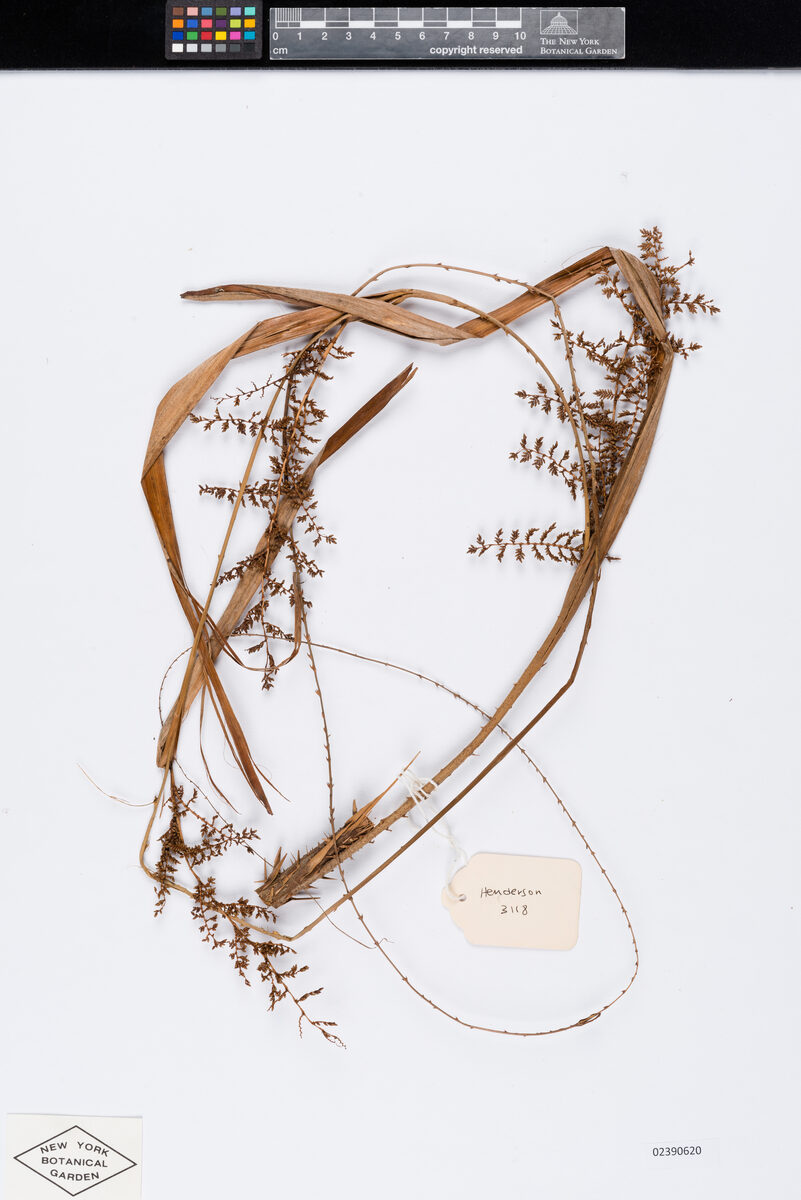
Heterospathe sibuyanensis
Elmer
Bilis
gbif· cc-by-nc
Field Museum of Natural History - Botany Department | NSF/Mellon - GPI
iNaturalist· cc-by-nc-sa
(c) Beth Hoffman, some rights reserved (CC BY-NC-SA)
iNaturalist· cc-by-nc
(c) christianhawn, some rights reserved (CC BY-NC)
Description
A tall palm up to 9-10 m high and 12 cm across the trunk. The leaflets have rather distinct secondary nerves. There are small brown scales underneath the leaflets. The flower arrangement is a spike of flowers closely arranged around a central axis and with 3 branches. The flower bearing branches are about 2.5 mm thick. The fruit is oval, 1 cm long, 7 mm thick and with a cone like point. The seed is oval and blunt.
Edible Uses
The palm heart (cabbage) and the edible bud are cooked and eaten as a vegetable.
Traditional Uses
The bud is cooked and eaten as a vegetable.
This uses section is brief — help expand it
Known Hazards
This species is now rare in the Philippines.
Distribution
A tropical plant. It suits tropical regions. It needs a shady moist site. They are widely distributed throughout the Philippines from Luzon to Mindanao.
Where It Grows
Asia, Australia, Pacific, Philippines, SE Asia,
Notes
There are about 32 Heterospathe species. It is now rare in the Philippines.
References (4)
- Jones, D.L., 1994, Palms throughout the World. Smithtonian Institution, Washington. p 222
- Monsalud, M.R., Tongacan, A.L., Lopez, F.R., & Lagrimas, M.Q., 1966, Edible Wild Plants in Philippine Forests. Philippine Journal of Science. p 516
- Riffle, R.L. & Craft, P., 2003, An Encyclopedia of Cultivated Palms. Timber Press. p
- World Checklist of Useful Plant Species 2020. Royal Botanic Gardens, Kew