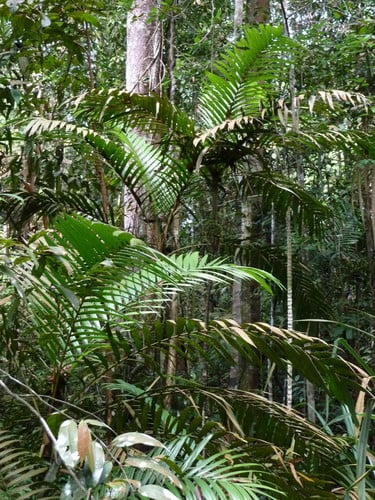
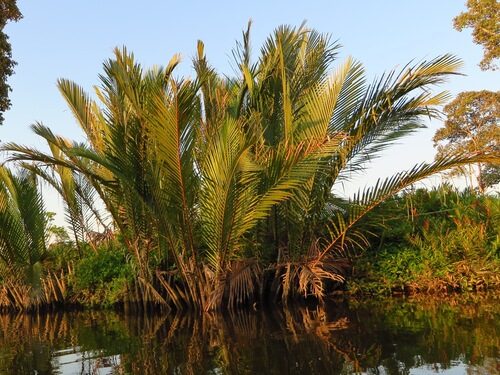
Oenocarpus minor
Mart.
Bacaba-miri, Bacabinha, Mispesillo
iNaturalist· cc-by-nc-sa
(c) Mateo Hernandez Schmidt, some rights reserved (CC BY-NC-SA), uploaded by Mateo Hernandez Schmidt
iNaturalist· cc-by
(c) Riley Pollom, some rights reserved (CC BY)
Description
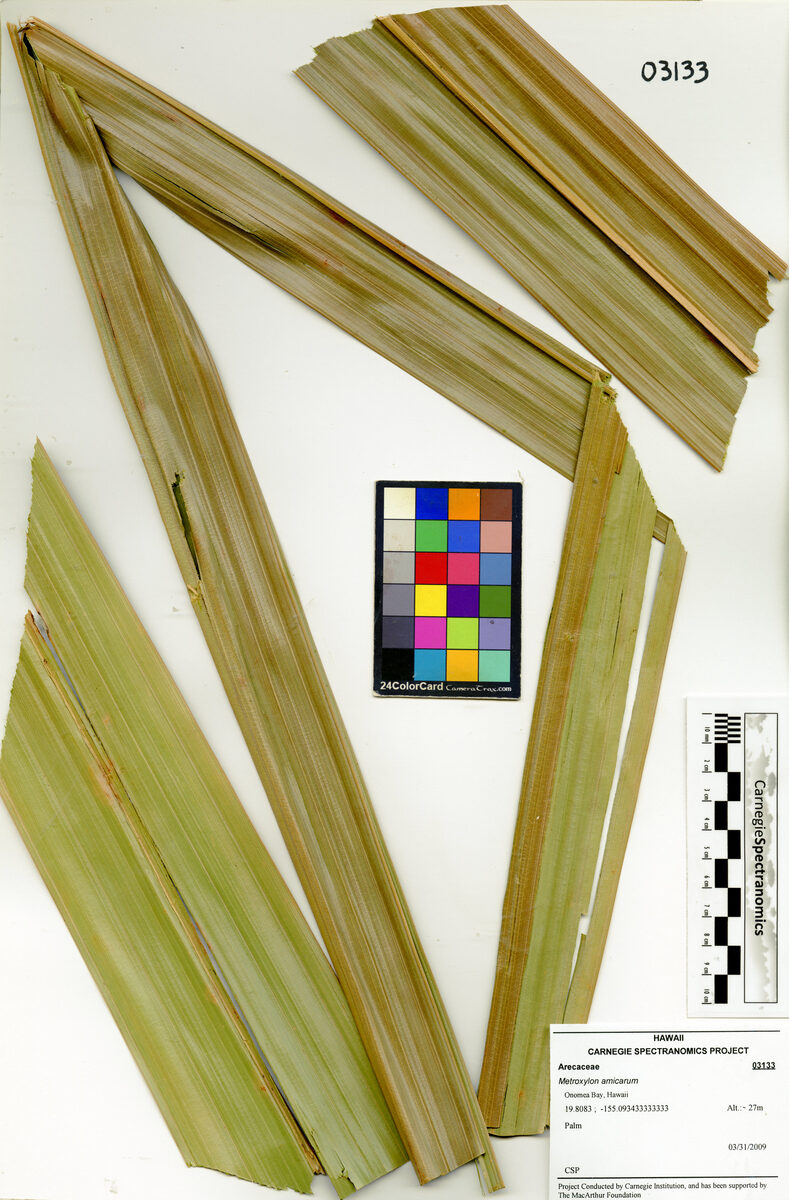
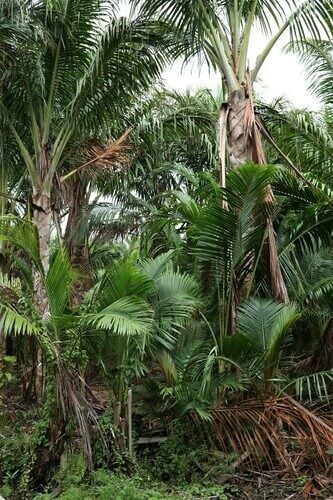
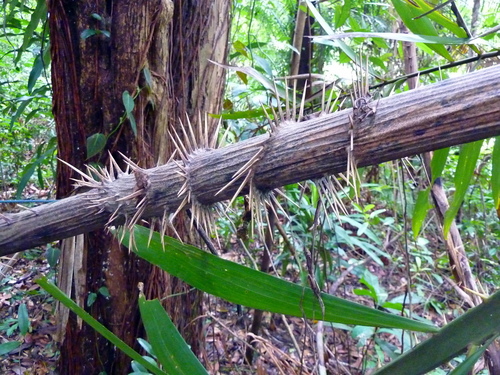
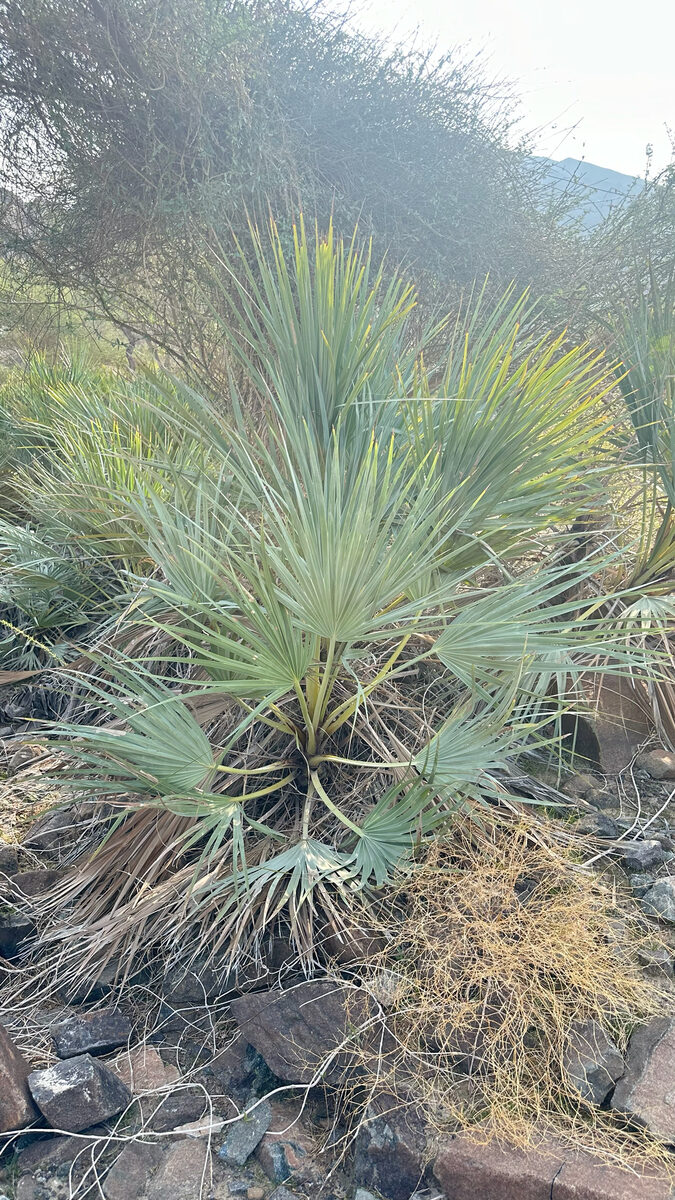
A palm. It can have one or more stems. It grows 2-8 m tall. The trunk is 4-7 cm across. There are 4-13 leaves. There are 50-70 leaflets on each side. They are narrow and arranged regularly. They spread in the same plane. Sometimes they are in clusters or 2-3. The flowering stalk is borne below the leaves. There are 29-72 flower stalks. The fruit are round. They are 1.5-2 cm long and 1.3-1.5 cm wide. They are purple-black. The seedling leaf spreads out like fingers on a hand.
Edible Uses
The fruit are eaten raw and used to make a drink.
Traditional Uses
The fruit are eaten raw. The fruit is used to make a drink.
This uses section is brief — help expand it
Distribution
A tropical plant. It grows in lowland rainforest. It is on non flooded soils.
Where It Grows
Amazon, Bolivia, Brazil, Colombia, Peru, South America,
Nutrition
| Part | Moisture | kJ | kcal | Protein | Vit A | Vit C | Iron | Zinc |
|---|---|---|---|---|---|---|---|---|
| Fruit | 83.5 | 362 | 88 | 1.3 | — | 1.5 | 0.4 | 0.3 |
Synonyms
Also Known As
Bacaba-mirim, Bacabai, Cinamillo, Don pedrito, Pusuy, Sinamillo
References (11)
- Asprilla-Perea, J., & Diaz-Puente, J.M., 2018, Traditional use of wild edible food in rural territories within tropical forest zones: A case study from the northwestern Colombia. New Trends and Issues Proceedings on Humanities and Social Sciences [Online]. 5(1), 162–181.
- Balick, M.J. and Beck, H.T., (Ed.), 1990, Useful palms of the World. A Synoptic Bibliography. Colombia p 161, 223,
- Brazil: Biodiversity for Food and Nutrition. http://www.b4fn.org/countries/brazil/
- Henderson, A., Galeano, G and Bernal, R., 1995, Field Guide to the Palms of the Americas. Princeton. p 132
- Kermath, B. M., et al, 2014, Food Plants in the Americas: A survey of the domesticated, cultivated and wild plants used for Human food in North, Central and South America and the Caribbean. On line draft. p 580
Show all 11 references Hide references
- Marcia, M. J., et al, 2011, Palm Uses in Northwestern South America: A Quantitative Review. Bot. Rev. (2011) 77:462-570
- Paz, F. S., et al, 2021, Edible Fruit Plant Species in the Amazon Forest Rely Mostly on Bees and Beetles as Pollinators. Journal of Economic Entomology, XX(XX), 2021, 1–13
- Roa, J. A. G. & Boada, D. S. G., 2018, Fundación para el Fortalecimiento de la Fruticultura y Plantas Alimenticias no Convencionales en Colombia.
- Tomchinsky, B., et al, 2021, Food Composition Data: Edible Plants from the Amazon. in M. C. M. Jacob, U. P. Albuquerque (eds.), Local Food Plants of Brazil, Ethnobiology, Springer p 275
- Vasquez, R. and Gentry, A. H., 1989, Use and Misuse of Forest-harvested Fruits in the Iquitos Area. Conservation Biology 3(4): 350f
- World Checklist of Useful Plant Species 2020. Royal Botanic Gardens, Kew