Heterodendrum oleifolium
Desf.
Minga Bush, Western Rosewood, Cattle Bush, Bullock Rose
iNaturalist· cc-by-nc
(c) Harvey Perkins, some rights reserved (CC BY-NC)
iNaturalist· cc-by-nc
(c) Harvey Perkins, some rights reserved (CC BY-NC)
iNaturalist· cc-by-nc
(c) Harvey Perkins, some rights reserved (CC BY-NC)
Description
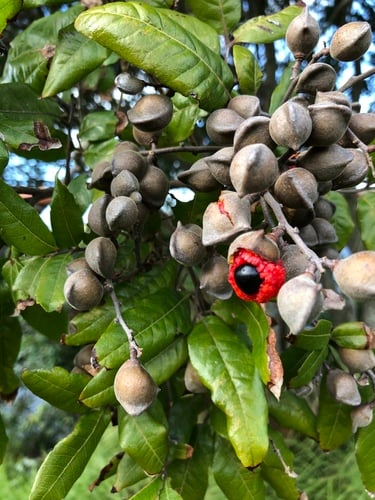
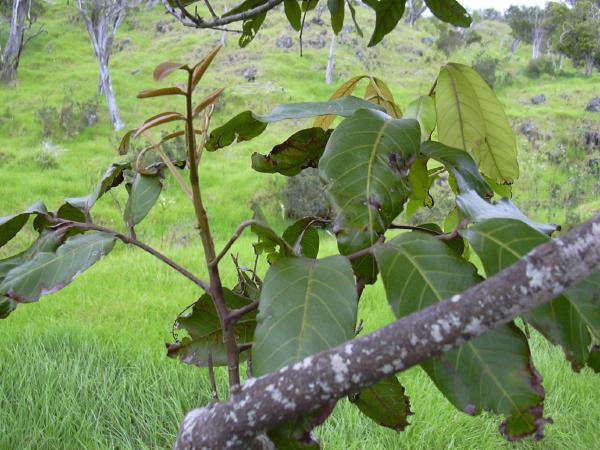
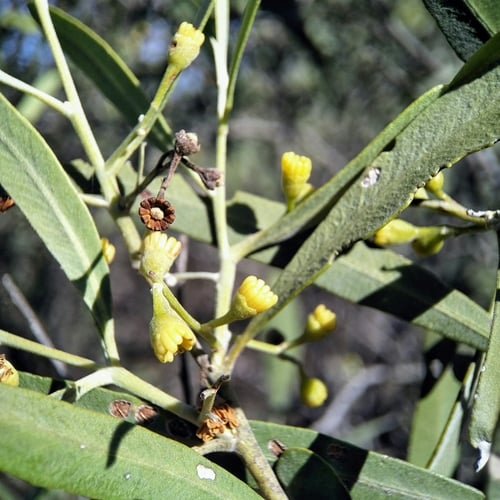
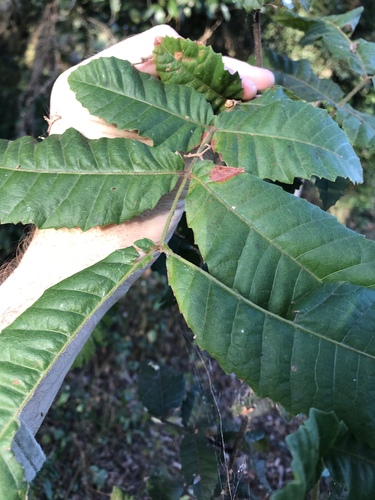
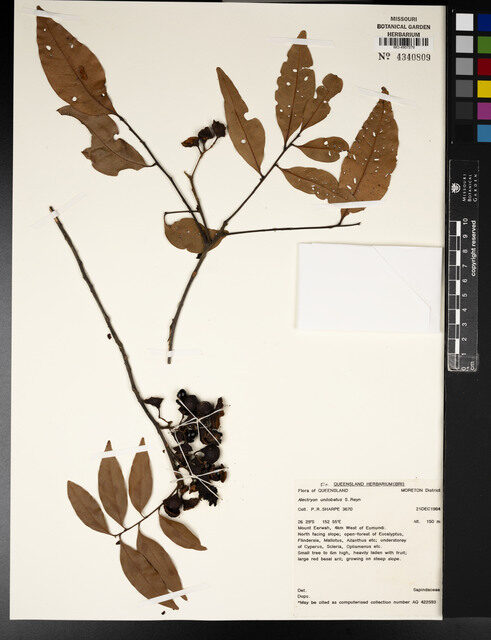
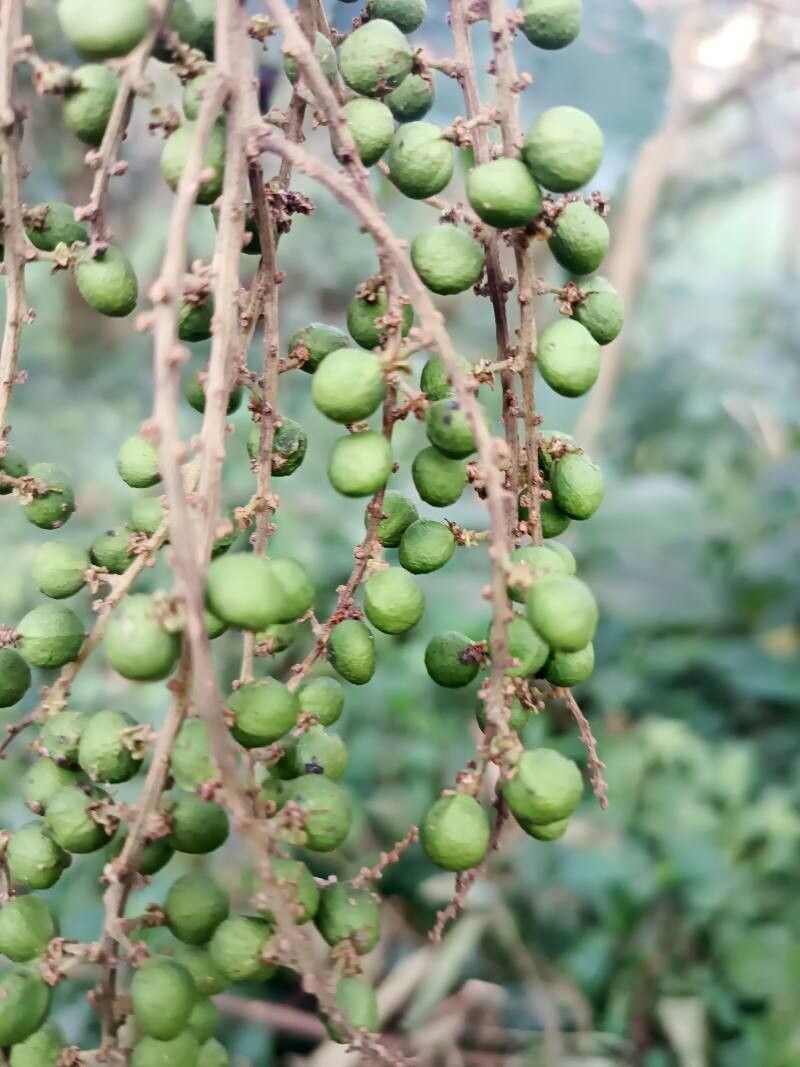
A small tree. It grows 5-7 m high. It can have one or several stems. They are crooked. The bark is rough and dark brown. It is deeply cracked. The leaves are blue-green to silvery grey. They are olive like and 5-10 cm long. The flowers are small and bell shaped without petals. They are green or yellow. They are carried in short, dense panicles. The fruit are made up of 1-4 rounded lobes. Each contains on small black seed.
Edible Uses
The arils and seeds are eaten.
Distribution
It is a temperate plant. It grows in the drier part of temperate Australia. They suit arid regions and can stand frost.
Where It Grows
Australia*,
Cultivation
Plants can be grown from seed or cuttings. It can be pruned and shaped.
Notes
There are 4 Heterodendrum species. They grow in Australia.
Also Known As
Boonaree
References (9)
- Bodkin, F., 1991, Encyclopedia Botanica. Cornstalk publishing, p 554
- Boomsma, C.D., 1972, Native Tree of South Australia. Woods & Forests Department South Australia, Bulletin No.19. p 205
- Cherikoff V. & Isaacs, J., The Bush Food Handbook. How to gather, grow, process and cook Australian Wild Foods. Ti Tree Press, Australia p 147
- Cribb, A.B. & J.W., 1976, Wild Food in Australia, Fontana. p 103
- Elliot, W.R., & Jones, D.L., 1992, Encyclopedia of Australian Plants suitable for cultivation. Vol 5. Lothian. p 321
Show all 9 references Hide references
- Hall, N. et al, 1972, The Use of Trees and Shrubs in the Dry Country of Australia, AGPS, Canberra. p 385
- Holliday, I., 1989, A Field Guide to Australian Trees. Hamlyn. p 230
- Lazarides, M. & Hince, B., 1993, Handbook of Economic Plants of Australia, CSIRO. p 131
- Mem. Mus. Hist. Nat. 4:8, t. 3. 1818 "oleaefolium"