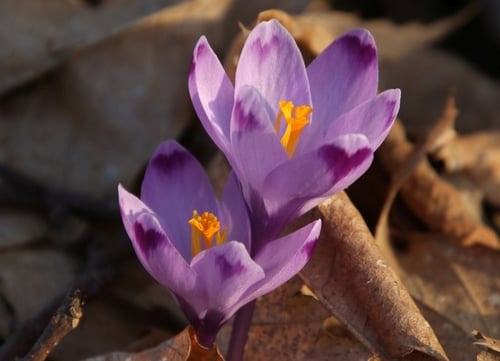
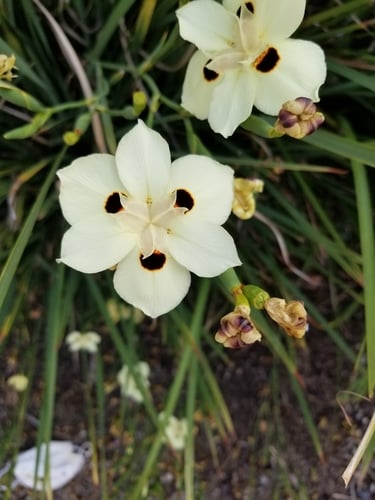
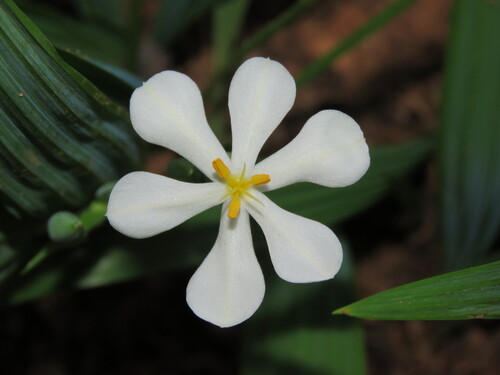
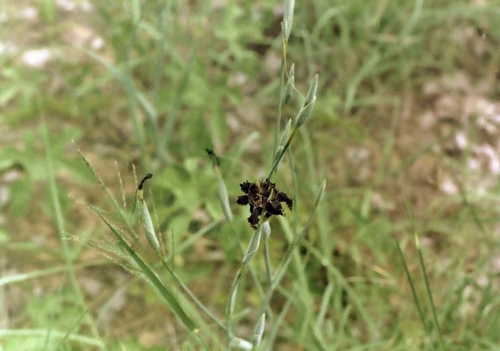
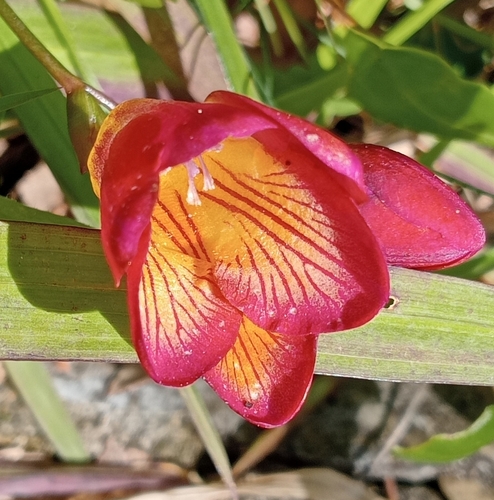
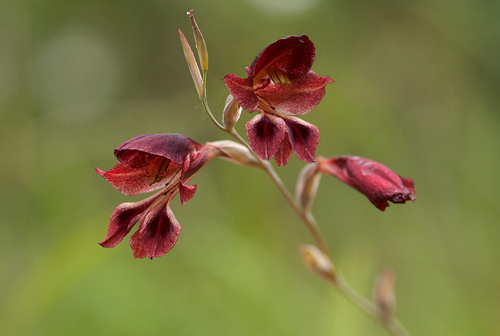
Hesperantha baurii
Baker
iNaturalist· cc0
no rights reserved
iNaturalist· cc0
no rights reserved
iNaturalist· cc0
no rights reserved
Summary
A corm-forming plant reaching 0.2 m tall. Hardy to UK zone 9. Flowers July to August. Hermaphroditic and pollinated by bees and moths. Requires full sun and tolerates both dry and moist soil. Grows in light sandy to medium loamy soils with mildly acid to basic pH.
Description
A herb which produces a corm. It grows 30-60 cm tall. The leaves at the base are long and narrow. They are 3 mm wide. The flowers are in spikes of up to 20. They are on stalks 40 cm high. These are zigzag. The fruit is an oval, thin-walled capsule. The seeds are oval and brown.
Edible Uses
The root is edible, though no further details are available.
Traditional Uses
The corm or bulb is eaten as a snack.
This uses section is brief — help expand it
Medicinal Uses
None known.
Distribution
A tropical plant.
Where It Grows
Africa, Eswatini, Lesotho, South Africa, Southern Africa, Swaziland,
Cultivation
Requires a well-drained soil in a sunny position. This species should grow well in a moist peaty soil. This species is not very hardy in Britain, but where temperatures seldom fall below freezing the corms can be successfully grown at the foot of a south facing wall or in a south facing border. Plants from the higher altitudes of its range should be frost hardy. Plant the corms about 10 - 15cm deep and give them a good mulch in winter. Lift and dry off the corms when the growth dies down and store them in a cool place until it is time to replant them. Corms can also be planted in spring, they will flower in the summer and can then be dug up in the autumn and stored in a cool frost-free place over winter. The flowers open in the early evening and emit a sweet clove-like perfume.
Propagation
Sow seed in autumn in a greenhouse, sowing thinly and leaving seedlings undisturbed in the seed tray throughout their first year. Give occasional liquid feeds to prevent nutrient deficiency. When plants go dormant in autumn, pot up two or three of the small corms per pot and grow on under glass until they are large enough to flower, then plant out in spring. Plants typically take 3 to 4 years to flower from seed. Offsets can be divided when harvesting corms and stored until replanting time. Small offsets are best grown on in a greenhouse for their first year; larger ones can go straight outdoors.
Other Uses
None known.
Other Information
It is eaten especially by children.
Notes
There are about 75 Hesperantha species. They grow in Africa.
Also Known As
Isidwa, Khahlana, Khahlana e nyenyane, Khukhu
References (8)
- Fox, F. W. & Young, M. E. N., 1982, Food from the Veld. Delta Books. p 240
- Guillarmod, J., 1971,
- Long, C., 2005, Swaziland's Flora - siSwati names and Uses http://www.sntc.org.sz/flora/
- Peters, C. R., O'Brien, E. M., and Drummond, R.B., 1992, Edible Wild plants of Sub-saharan Africa. Kew. p 33
- Plants for a Future database, The Field, Penpol, Lostwithiel, Cornwall, PL22 0NG, UK. http://www.scs.leeds.ac.uk/pfaf/
Show all 8 references Hide references
- Ruiters-Welcome, A. K., 2019, Food plants of southern Africa. Ph.D. thesis. Univ. of Johannesburg p 67
- Swaziland's Flora Database http://www.sntc.org.sz/flora
- Welcome, A. K. & Van Wyk, B.-E., 2019, An inventory and analysis of the food plants of southern Africa. South African Journal of Botany 122 (2019) 136–179