Hemerocallis minor
Miller
Grassleaf day lily, Small yellow flower vegetable
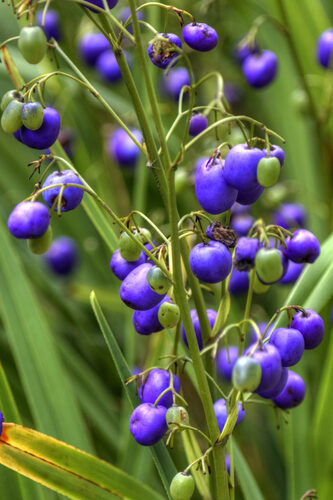
iNaturalist· cc-by-nc
(c) Dmitriy Tarasov, some rights reserved (CC BY-NC), uploaded by Dmitriy Tarasov
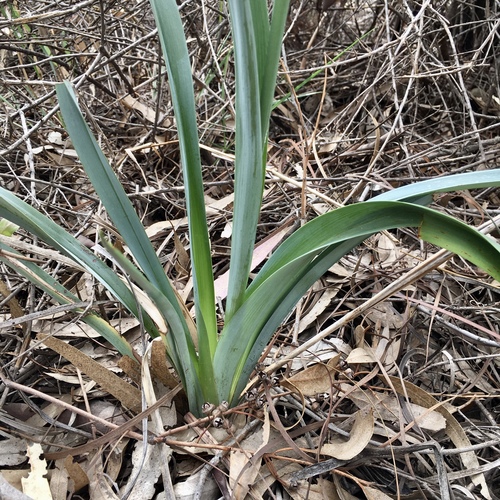
iNaturalist· cc-by-nc
(c) Сергей, some rights reserved (CC BY-NC), uploaded by Сергей
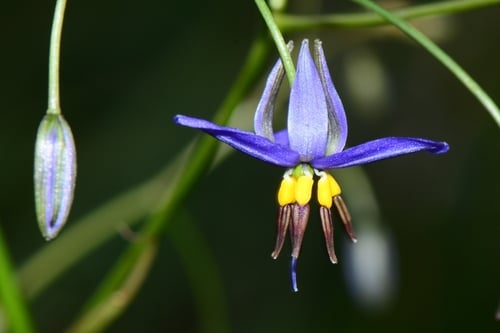
iNaturalist· cc-by
(c) Oleg Kosterin, some rights reserved (CC BY), uploaded by Oleg Kosterin
Summary
Source: WikipediaHemerocallis minor, is also known as dwarf daylily, grassleaf lily and small daylily. It is native to northern Asia (Siberia, Mongolia, China, Korea). The plant grows up through 0.5 m high. Its wide yellow flowers are scentless. It is a hermaphroditic species, pollinated by insects such as honey bees. In China, the flowers are eaten as a traditional food.
Description
A herb. It loses its leaves during the winter. It grows 50 cm high and spreads 50-60 cm wide. The roots are rope like and 1.5-3 mm thick. The leaves are narrow and 20-60 cm long by 0.3-1.5 cm wide. They are grass like. The flowering stalk is short. There are 2-3 groups of 1 or 2 flowers. The flowers have a smell. They open in the evening and last 1 or 2 days. The flowers are lemon coloured. The fruit is a capsule. It is oval and 2-3 cm long by 1-2 cm wide.
Edible Uses
Leaves and young shoots are edible cooked but must be harvested when very young before becoming fibrous; one report notes that eating the leaves may have a mildly stimulating or intoxicating effect. Flowers and flower buds are eaten raw or cooked and are considered a great delicacy. In China they are traditionally steamed and then dried. They can also be dried and used as a relish or as a thickener in soups. Flower buds contain approximately 43mg vitamin C per 100g, 983 IU vitamin A, and 3.1% protein. The roots are edible raw or cooked, with a radish-like flavour that is milder and less sharp than radish.
Traditional Uses
The flowers are steamed and then dried as a traditional food in China. They are used in soups and stir-fries. The young leaves are boiled and eaten. The bulbs can be baked, steamed, roasted or stir-fried.
Medicinal Uses
The plant is used as an anodyne, antidote, diuretic, and febrifuge. The juice of the roots is an effective antidote in cases of arsenic poisoning. The root also has a folk history of use in cancer treatment, and root extracts have shown antitumour activity. A tea made from boiled roots is used as a diuretic.
Known Hazards
Large quantities of the leaves are said to be hallucinogenic. Blanching the leaves removes this hallucinatory component. (This report does not make clear what it means by blanching, it could be excluding light from the growing shoots or immersing in boiling water.)
Distribution
It is a temperate climate plant. It grows in forests, thickets and grassy slopes. It is often in wet places along valleys. It grows between 200-2600 m altitude in N China. It grows in Inner Mongolia in China. It suits hardiness zones 4-9.
Where It Grows
Asia, Australia, China*, Europe, France, Indonesia, Japan, Korea, Mongolia, Russia, SE Asia, Siberia, Slovenia,
Cultivation
Succeeds in most soils, including dry ones, preferring a rich moist soil and a sunny position but tolerating partial shade. Plants flower less freely in a shady position though the flowers can last longer in such a position. Grows well in heavy clay soils. Succeeds in short grass if the soil is moist. Prefers a pH between 6 and 7. A very cold-hardy plant, tolerating temperatures down to about -25°c. Hybridizes freely with other members of this genus. A very ornamental plant, its roots are slender and not tuberous, whilst the rhizomes are not spreading. The roots sometimes have bulbous swellings at their tips. The flowers open in the evening and live for about 2 days. The flowers have a powerful scent of honeysuckle. Plants take a year or two to become established after being moved. Plants seem to be immune to the predations of rabbits. The plants are very susceptible to slug and snail damage, the young growth in spring is especially at risk.
Propagation
Sow seed in mid-spring in a greenhouse; germination is usually fairly rapid and good. Prick seedlings into individual pots when large enough to handle, overwinter in the greenhouse, and plant out in late spring. Divide plants in spring or after flowering in late summer or autumn — division is quick and easy at almost any time of year. Larger clumps can go straight into permanent positions; smaller clumps are best potted up and grown on in a cold frame until rooting well, then planted out in spring.
Other Uses
The tough dried foliage can be plaited into cord and used for making footwear. Flowers are rich in nectar and pollen, attracting bees, butterflies, and other pollinators. The dense foliage can provide some shelter for small wildlife, and the leaf litter offers overwintering habitat for beneficial insects.
Notes
There are about 15 Hemerocallis species. Also put in the family Hemerocallidaceae.
Synonyms
Also Known As
Honghu huwar, Hosoba-kisuge, Huanghuacai, Huang hua zi, Lili kuning kecil, Mala maslenica, Sir-a huwar, Xiao huang hua cai, Xira checheg
References (27)
- Bot. Repos. 4: t. 244. 1802 (As Hemerocallis graminea)
- Burkill, I.H., 1966, A Dictionary of the Economic Products of the Malay Peninsula. Ministry of Agriculture and Cooperatives, Kuala Lumpur, Malaysia. Vol 1 (A-H) p 1155
- Chen Xinqi, Liang Songyun, Xu Jiemei, Tamura M.N., Liliaceae. Flora of China. p 93
- Cundall, P., (ed.), 2004, Gardening Australia: flora: the gardener's bible. ABC Books. p 692
- Facciola, S., 1998, Cornucopia 2: a Source Book of Edible Plants. Kampong Publications, p 144
Show all 27 references Hide references
- Fan, L., et al, The Use of Edible Wild Plants and Fungi in Korean-Chinese Villages. Journal of Environmental Information Science 44-5 p 71-79
- Gard. dict. ed. 8: Hemerocallis no. 2. 1768
- Hedrick, U.P., 1919, (Ed.), Sturtevant's edible plants of the world. p 340
- Heo, B., et al., 2009, Antiproliferative Activity of Korean Wild Vegetables on Different Human Tumor Cell Lines. Plant Foods for Human Nutrition. 64:257-263
- https://en.wikipedia.org/wiki/List of wild edible plants in Mongolian cuisine
- Hu, Shiu-ying, 2005, Food Plants of China. The Chinese University Press. p 318
- Hwang, H., et al, 2013, A Study on the Flora of 15 Islands in the Western Sea of Jeollanamdo Province, Korea. Journal of Asia-Pacific Biodiversity Vol. 6, No. 2 281-310
- Hwang, HS, et al, 2014, Distribution characteristics of plant in the Ungseokbong Mountain, Gyeongsangnam-do, Korea. Journal of Asia-Pacific Biodiversity. 7(2014) e164-e178
- Khasbagan, Hu-Yin Huai, and Sheng-Ji pei, 2000, Wild Plants in the Diet of Athorchin Mongol Herdsmen in Inner Mongolia. Economic Botany 54(4): 528-536
- Khasbagan, Yeruhan and Zhao Hui, 2011, Study on Traditional Knowledge of Wild Edible Plants Used by the Mongolians in Xilingol Typical Steppe Area. Plant Diversity and Resources. 33(2): 239-246
- Lim, T. K., 2015, Edible Medicinal and Non Medicinal Plants. Volume 9, Modified Stems, Roots, Bulbs. Springer p 46
- Plants for a Future database, The Field, Penpol, Lostwithiel, Cornwall, PL22 0NG, UK. http://www.scs.leeds.ac.uk/pfaf/ (Also as Hemerocallis graminea)
- PROSEA handbook Volume 13 Spices. p 277
- Romanowski, N., 2007, Edible Water Gardens. Hyland House. p 87
- Sachula, et al, 2020, Wild edible plants collected and consumed by the locals in Daqinggou, Inner Mongolia, China. Journal of Ethnobiology and Ethnomedicine (2020) 16:60
- Seidemann J., 2005, World Spice Plants. Economic Usage, Botany, Taxonomy. Springer. p 175
- Sukarya, D. G., (Ed.) 2013, 3,500 Plant Species of the Botanic Gardens of Indonesia. LIPI p 1116
- Tanaka,
- Urgamal, M., et al, 2014, Conspectus of the Vascular Plants of Mongolia. Mongolia Academy of Sciences Institute of Botany and National University of Mongolia Department of Biology. p 45
- Valder, P., 1999, The Garden Plants of China. Florilegium. p 361
- Wujisguleng, W., & Khasbagen. K., 2010, An integrated assessment of wild vegetable resources in Inner Mongolian Autonomous Region, China. Journal or Ethnobiology and Ethnomedicine 6:34
- World Checklist of Useful Plant Species 2020. Royal Botanic Gardens, Kew