Aloe turkanensis
Christian
iNaturalist· cc-by-nc
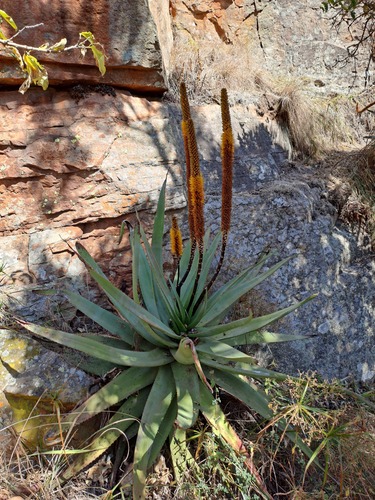
(c) sandradennis, some rights reserved (CC BY-NC), uploaded by sandradennis
iNaturalist· cc-by-nc
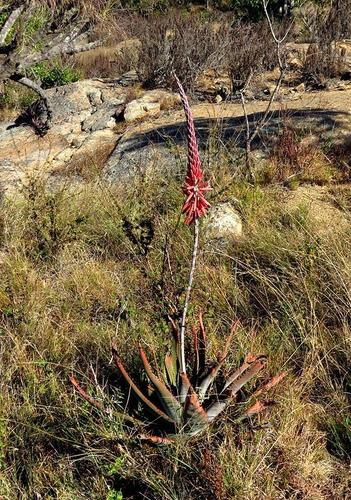
(c) Kenneth Bader, some rights reserved (CC BY-NC)
iNaturalist· cc-by-nc
(c) Kenneth Bader, some rights reserved (CC BY-NC)
Description
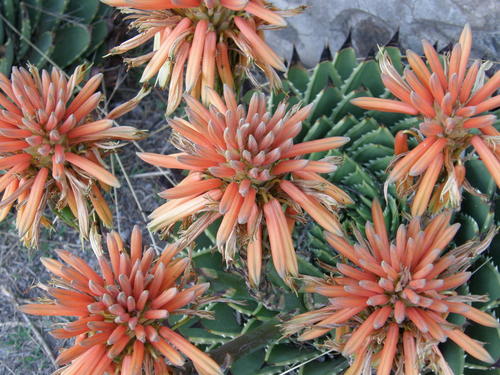
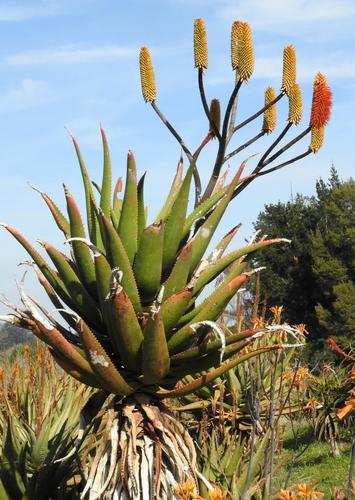
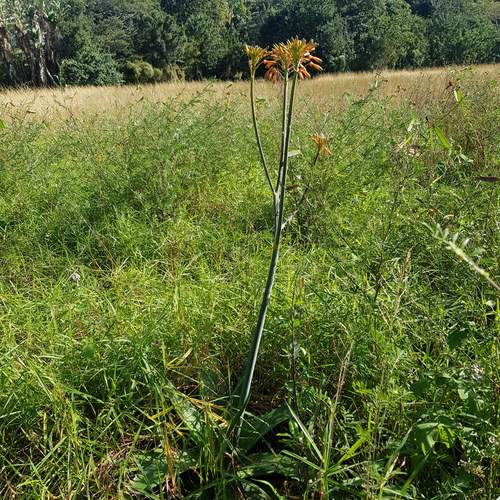
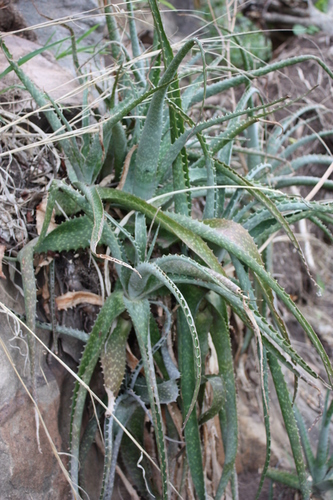
A succulent shrub. It is evergreen and sprawling. The stems are 70 cm long and branch forming a clump. There are a ring of 14-18 leaves on each branch.
Edible Uses
The root is used as a flavoring, particularly for beer.
Traditional Uses
The root is used to flavour beer. It should only be used in small doses due to anthraquinones.
This uses section is brief — help expand it
Medicinal Uses
The leaf sap is applied to wounds and as a cure for eye diseases. The juice from boiled roots is added to a drink to induce vomiting, which is said to relieve persistent headaches. The main components of the leaf exudate are aloin A, aloin B and aloesone. From about 70 Aloe species checked, Aloe turkanensis had the highest aloin content, both in the exudate and in the leaf (31% and 6.6% of dry weight, respectively). Aloin is a mixture of the stereoisomers aloin A (barbaloin) and aloin B (isobarbaloin), and is responsible for the laxative properties.
Known Hazards
The sap of Aloe species contains anthraquinones. These compounds have several beneficial medicinal actions, particularly as a laxative, and many species of Aloe are thus employed in traditional medicine. Whilst safe in small doses and for short periods of time, anthraquinones do have potential problems if used in excess. These include congestion and irritation of the pelvic organs. Long term use of anthraquinone laxatives may also play a role in development of colorectal cancer as they have genotoxic potential, and tumorigenic potential.
Distribution
It is a tropical plant.
Where It Grows
Africa, East Africa, Kenya, Uganda,
Cultivation
Plants can tolerate light frosts. Prefers a position in full sun but also tolerates light shade. Established plants are drought tolerant. Aloe species follow the Crassulacean acid metabolism (CAM). CAM plants can fix carbon dioxide at night and photosynthesize with closed stomata during the day, thus minimizing water loss. This, plus their succulent leaves and stems, and the presence of a thick cuticle, makes them well adapted to dry conditions.
Propagation
Seed - we have no specific information on this species - in general Aloes are sown in a sandy, well-drained potting soil in a warm, shady position in standard seed trays. Germination takes about three weeks. Cover the seed with a thin layer of sand (1 - 2mm), keep moist. The seedlings can be planted out in individual bags or containers as soon as they are large enough to handle. Easily be propagated by suckers.
Notes
Also put in the family Aloaceae. Also put in the family Asphodelaceae.
References (4)
- Morgan, W. T. W., 1981, Ethnobotany of the Turkana: Use of plants by a Pastoral People and Their Livestock in Kenya. Economic Botany 35(1):96-130
- Mutie, F. M., et al, 2023, Important Medicinal and Food Taxa (Orders and Families) in Kenya, Based on Three Quantitative Approaches. Plants 2023, 12, 1145
- Peters, C. R., O'Brien, E. M., and Drummond, R.B., 1992, Edible Wild plants of Sub-saharan Africa. Kew. p 10
- World Checklist of Useful Plant Species 2020. Royal Botanic Gardens, Kew