Heliotropium tenuifolium
R. Br.
Jurti-jurti
iNaturalist· cc-by
(c) Hugo Innes, some rights reserved (CC BY)
iNaturalist· cc-by
(c) Hugo Innes, some rights reserved (CC BY)
wikimedia· cc-by-sa
Wikimedia Commons - Mark Marathon
Description
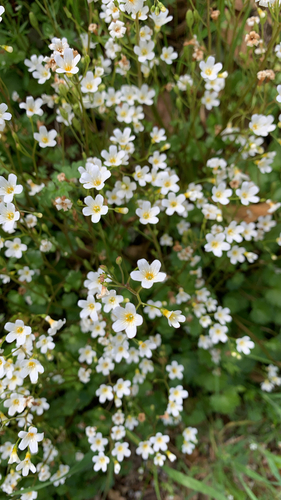
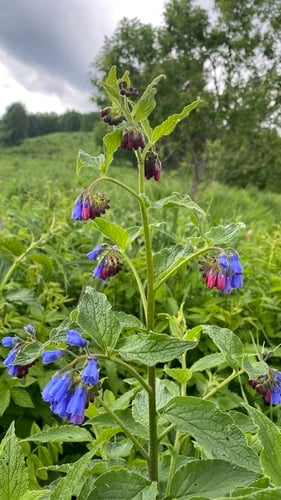
A small shrub which keeps growing from year to year. It grows 30-60 cm high and 30-60 cm wide. The stems are powdery. The young growth has short hairs. The leaves are 2-4 cm long by 0.1-0.2 cm wide. They are silvery and the edges curl backwards. The flowers are about 0.9 cm across. They are white. The nuts are hairy.
Edible Uses
The seeds are ground into a paste then cooked.
Traditional Uses
The seeds are ground into a paste then cooked.
This uses section is brief — help expand it
Distribution
A tropical plant. It grows in the tropics and subtropics. It grows in both coastal and inland regions. It needs an open sunny position and a well drained soil. It can tolerate light frosts. It can grow in arid places.
Where It Grows
Australia*,
Cultivation
Plants are grown from seed.
Notes
There are about 250 Heliotropium species.
Also Known As
Mamukata
References (8)
- Cancilla, D., 2018, Ethnobotanical and Ethnozoological Values Desktop Assessment - Eliwana Project. p 13
- Cherikoff V. & Isaacs, J., The Bush Food Handbook. How to gather, grow, process and cook Australian Wild Foods. Ti Tree Press, Australia p 190
- Elliot, W.R., & Jones, D.L., 1990, Encyclopedia of Australian Plants suitable for cultivation. Vol 5. Lothian. p 291
- Kenneally, K.E., Edinger, D. C., and Willing T., 1996, Broome and Beyond, Plants and People of the Dampier Peninsula, Kimberley, Western Australia. Department of Conservation and Land Management. p 73
- Latz, P.K., 1996, Bushfires and Bushtucker: Aboriginal plant use in Central Australia. IAD Press Alice Springs p 211
Show all 8 references Hide references
- Morley, B.D., & Toelken, H.R., (Eds), 1983, Flowering Plants in Australia. Rigby. p 263
- Paczkowska, G. & Chapman, A.R., 2000, The Western Australian Flora. A Descriptive Catalogue. Western Australian Herbarium. p 182
- Wheeler, J.R.(ed.), 1992, Flora of the Kimberley Region. CALM, Western Australian Herbarium, p 775