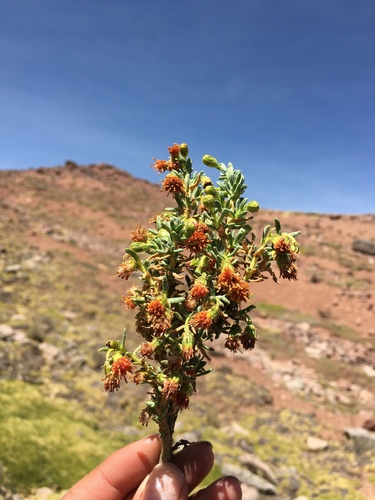
Helianthus annuus
L.
Sunflower
iNaturalist· cc-by
(c) Michelle W. (鍾偉瑋), some rights reserved (CC BY)
iNaturalist· cc-by-nc
(c) Emily Scherer, some rights reserved (CC BY-NC), uploaded by Emily Scherer
iNaturalist· cc-by
(c) Michelle W. (鍾偉瑋), some rights reserved (CC BY)
Summary
Source: WikipediaA tall, fast-growing annual reaching 3 m (9 ft) high and 0.3 m (1 ft) wide. Flowers from July to September with seeds ripening from September to October. Hardy to UK zone 7, not frost tender. Hermaphroditic and requires cross-pollination by bees and flies. Tolerates light sandy, medium loamy, and heavy clay soils with good drainage. Grows in semi-shade or full sun. Drought-tolerant and adapts to both dry and moist conditions. Attracts wildlife and beneficial insects.
Description
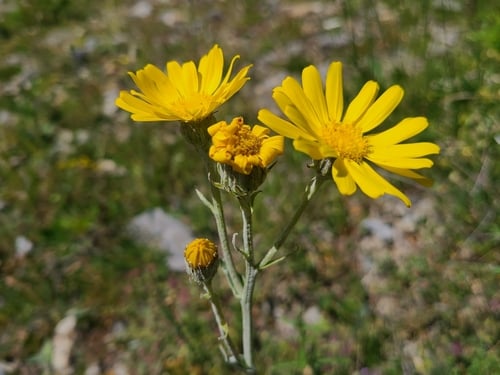
An upright annual plant. It varies in height from 1-4 m. It has a strong tap root. Plants are mostly unbranched but may have some branches. The stems are hairy. The leaves are large and oval to heart shaped. They have teeth around the edges. They are roughly hairy and mid to dark green. Leaves can be 10-40 cm long by 5-20 cm wide. The leaf stalk is long. The flowers are yellow and daisy like. Flowers are 9-20 cm across. Sometimes they are tinged red or purple.
Edible Uses
Sunflower seeds can be eaten raw or cooked and have a delicious nut-like flavour, though extracting them is fiddly due to their small size; commercial machines are available for this purpose. Rich in fats, the seeds can be ground into a powder, made into sunflower butter, or used to prepare seed yoghurt — for the latter, germinated seeds are blended with water and left to ferment. Sprouted seeds can also be eaten raw. Mixed with cereal flours, ground seed makes a nutritious bread. Russian cultivars have been developed with up to 50% oil content, and the oil contains between 44–72% linoleic acid. Per 100g of fresh seed: 560 calories; water 4.8%; protein 24g; fat 47.3g; carbohydrate 19.4g; fibre 3.8g; ash 4g; calcium 120mg; phosphorus 837mg; iron 7.1mg; sodium 30mg; potassium 920mg; vitamin A 30mg; thiamine (B1) 1.96mg; riboflavin (B2) 0.23mg; niacin 5.4mg. Young flower buds can be steamed and served like globe artichokes — mild and pleasant, though fiddly. Average seed yields range from 900–1,575 kg/ha, with reported yields exceeding 3,375 kg/ha. A high-quality edible semi-drying oil pressed from the seed is low in cholesterol and considered equal in quality to olive oil; it is used in salads, margarines, and cooking. The roasted seed serves as a coffee and drinking chocolate substitute; one source notes the roasted hulls are used for this purpose. The leaf petioles can be boiled and mixed with other foods.
Traditional Uses
An edible oil is extracted from the seeds and used for cooking. Sometimes seeds are eaten raw or roasted. The seeds can be ground into a meal for using in bread and cakes. They are also dried, roasted and ground and used as a coffee substitute. The seeds are boiled with water and honey to make a drink. The germinated seeds are fermented into a yogurt or cheese. The young flower buds are steamed and served like globe artichokes.
Medicinal Uses
A tea made from the leaves is astringent, diuretic, and expectorant, used in treating high fevers. Crushed leaves are applied as a poultice on sores, swellings, snakebites, and spider bites. Leaves are harvested as the plant comes into flower and dried for later use. A tea from the flowers is used to treat malaria and lung ailments. The flowering head and seeds are febrifuge, nutritive, and stomachic. The seeds are also considered diuretic and expectorant and have been used with success in treating pulmonary complaints. A decoction of the roots is applied as a warm wash to relieve rheumatic aches and pains.
Known Hazards
The growing plant can accumulate nitrates, especially when fed on artificial fertilizers. The pollen or plant extracts may cause allergic reactions.
Distribution
A temperate plant. It suits the highlands of the tropics and can stand a light frost. It needs a well drained soil. It prefers a rich soil. It is drought and frost resistant. Sunflowers grow from the equator to 55°N latitude. They do not suit the wet tropics. They cannot tolerate very acid soils. It can grow in arid places. In Hobart Botanical gardens. In Nepal it grows up to 600 m altitude. It suits hardiness zones 4-11. In Yunnan.
Where It Grows
Africa, Angola, Argentina, Asia, Australia, Balkans, Bangladesh, Botswana, Britain, Bulgaria, Burkina Faso, Burundi, Cambodia, Cameroon, Canada, Caucasus, Central Africa, Central America, Central Asia, Chile, China, Congo DR, Costa Rica, Cuba, Dominican Republic, East Africa, Ecuador, Eritrea, Ethiopia, Europe, Fiji, Finland, France, Gambia, Georgia, Germany, Ghana, Guinea, Guinée, Guyana, Haiti, Hawaii, Himalayas, Hungary, India, Indochina, Jamaica, Kazakhstan, Kenya, Korea, Macedonia, Malawi, Mauritania, Mediterranean, Mexico, Moldova, Mongolia, Morocco, Mozambique, Myanmar, Namibia, Nepal, New Zealand, Niger, Nigeria, North Africa, North America*, Norway, Pacific, Pakistan, Papua New Guinea, PNG, Peru, Philippines, Puerto Rico, Romania, Russia, Rwanda, Sahel, Scandinavia, SE Asia, Senegal, Serbia, Seychelles, Sierra Leone, Slovenia, Somalia, South Africa, Southern Africa, South America, South Sudan, Spain, Sri Lanka, Sudan, Switzerland, Tajikistan, Tanzania, Tasmania, Thailand, Turkey, Türkiye, Uganda, Ukraine, Uruguay, USA*, West Africa, West Indies, Yugoslavia, Zambia, Zimbabwe,
Cultivation
An easily grown plant, it succeeds in most soils, including poor soils provided they are deep and well-drained, but it grows best in a deep rich soil. Plants are intolerant of acid or waterlogged conditions. Especially when grown for its edible seed, the plant prefers a sunny position though it also tolerates light shade. Requires a neutral or preferably calcareous soil. As sunflowers have highly efficient root systems, they can be grown in areas which are too dry for many other crops. Established plants are quite drought-resistant except during flowering. The sunflower tolerates an annual precipitation of 20 - 400cm, an average annual temperature in the range of 6 - 28°C and a pH in the range of 4.5 - 8.7. The young growth is extremely attractive to slugs, plants can be totally destroyed by them. Members of this genus are rarely if ever troubled by browsing deer or rabbits. The sunflower is a very ornamental plant that is widely grown in gardens and is also a major commercial crop for its edible seed and many other uses. It grows well in Britain, but it does not ripen its seed reliably in this country and so is not suitable for commercial cultivation at the present. It is the state flower of Kansas. Three distinct groups of sunflowers are cultivated:- Giant types grow from 1.8 - 4.2 metres tall with flower heads 30 - 50cm in diameter. The seeds are large, white or gray in colour, sometimes with black stripes, and are the best for culinary purposes, though the oil content is lower than for other types. 'Grey Stripe', 'Hopi Black Dye', 'Mammoth Russian' and 'Sundak' are examples of this type. Semi-dwarf types grow from 1.3 - 1.8 m tall, are early maturing and have heads 17 - 23 cm diameter. The seeds are smaller, black, gray or striped, the oil content is also higher. Examples include 'Pole Star' and 'Jupiter' Dwarf types grow from 0.6 - 1.4 m tall, are early maturing and have heads 14 - 16 cm in diameter[269. The seeds are small but the oil content is the highest. Examples include 'Advance' and 'Sunset'. Some forms are being bred for greater cold tolerance and should be more reliable in Britain. Plants tend to grow better in the south and south-west of England. Most forms require a four month frost-free growing season, though some Russian cultivars can mature a crop in 70 days. When plants are grown in cooler latitudes the seed contains higher proportions of polyunsaturated fatty oils. The plant has a strong taproot that can penetrate the soil to depth of 3 metres, it also has a large lateral spread of surface roots. Sunflowers grow badly with potatoes but they do well with cucumbers and corn. A very greedy and vigorous plant, it can inhibit the growth of nearby plants. Plants tend to impoverish the soil if they are grown too often in the same place. In garden design, as well as the above-ground architecture of a plant, root structure considerations help in choosing plants that work together for their optimal soil requirements including nutrients and water. The predictable growth behaviour makes it easier to maintain without having to apply containment methods.
Propagation
Sow seed in mid spring directly in situ. For an earlier start, sow 2–3 seeds per pot in a greenhouse in early spring using a fairly rich compost. Thin to the strongest seedling, give occasional liquid feeds to prevent nutrient deficiency, and plant out in late spring or early summer. Seed harvested at 12% moisture content and stored properly will remain viable for several years.
Other Uses
A semi-drying oil from the seed — present at up to 45% in some varieties — is used mixed with drying oils such as linseed to make soap, candles, varnishes, and paint, and also for lighting. It is said to be unrivalled as a lubricant. Blotting paper is made from the seed receptacles, and a high-quality writing paper is made from the inner stalk. The pith of the stems is one of the lightest known substances, with a specific gravity of 0.028, and is used in life-saving appliances and microscope slides. Dried stems make an excellent fuel with ash rich in potassium; both dried stems and empty seed receptacles serve as excellent kindling. Stem fibre is used to make paper and fine cloth. A yellow dye comes from the flowers, and a purple-black dye is obtained from the seeds of certain varieties grown by the Hopi Indians of south-west North America. Grown as a spring-sown green manure, sunflowers produce a good bulk of material. Root secretions can inhibit the growth of nearby plants. The plant is a good bee plant providing large quantities of nectar, and the flowers attract beneficial insects including lacewings and parasitic wasps that prey on pests, especially aphids.
Production
Time to maturity is usually 4-5 months. Seeds are ready to eat when the flower starts to wither.
Other Information
A major crop for oil seed. The seeds contain 40% oil. It is cultivated.
Notes
Almost all Helianthus (70 species) in N and S America are edible. Elias, T.S. & Dykeman P.A., 1990, Edible Wild Plants. A North American Field guide. Sterling, New York p 156
Nutrition
| Part | Moisture | kJ | kcal | Protein | Vit A | Vit C | Iron | Zinc |
|---|---|---|---|---|---|---|---|---|
| Seed | 5.4 | 2385 | 571 | 22.8 | 5 | 1.4 | 6.8 | 5.1 |
Synonyms
Also Known As
Aditya-bhaktichettu, Bunga matahari, Chhouk rath, Flor del sol, Girasol guacho, Gulberoj, Intipangara, Intitica, Maravilla, Mirasol, Mzesumzira, Nanala, Navadna sončnica, Negya, Solsikke, Surajamakha, Surjomukhi bij, Suryakanti, Suryamykhi, Suryaphul, Tournesol, Tshiteaduvha, Xiang ri kui
References (77)
- Ambasta, S.P. (Ed.), 2000, The Useful Plants of India. CSIR India. p 259
- Anderson, E. F., 1993, Plants and people of the Golden Triangle. Dioscorides Press. p 212
- Anderson, M. K., 2012, Edible Seeds and Grains of California Tribes and the Klamath Tribe of Oregon in the Phoebe Apperson Hearst Museum of Anthropology Collections, University of California, Berkeley. USDA p 50
- Bernholt, H. et al, 2009, Plant species richness and diversity in urban and peri-urban gardens of Niamey, Niger. Agroforestry Systems 77:159-179
- Bianchini, F., Corbetta, F., and Pistoia, M., 1975, Fruits of the Earth. Cassell. p 238
Show all 77 references Hide references
- Blamey, M and Grey-Wilson, C., 2005, Wild flowers of the Mediterranean. A & C Black London. p 440
- Bodkin, F., 1991, Encyclopedia Botanica. Cornstalk publishing, p 544
- Borrell, O.W., 1989, An Annotated Checklist of the Flora of Kairiru Island, New Guinea. Marcellin College, Victoria Australia. p 63
- Bremness, L., 1994, Herbs. Collins Eyewitness Handbooks. Harper Collins. p 252
- Brickell, C. (Ed.), 1999, The Royal Horticultural Society A-Z Encyclopedia of Garden Plants. Convent Garden Books. p 504
- Brouk, B., 1975, Plants Consumed by Man. Academic Press, London. p 223
- Brown, D., 2002, The Royal Horticultural Society encyclopedia of Herbs and their uses. DK Books. p 232
- Burkill, H. M., 1985, The useful plants of west tropical Africa, Vol. 4. Kew.
- Burkill, I.H., 1966, A Dictionary of the Economic Products of the Malay Peninsula. Ministry of Agriculture and Cooperatives, Kuala Lumpur, Malaysia. Vol 1 (A-H) p 1150
- Burnie, G.(Ed.), 2003, Annuals and Bulbs. The Gardener's Handbooks. Fog City Press. p 167
- Bussman, R. W., et al, 2016, A comparative ethnobotany of Khevsureti, Samtskhe-Javakheti, Tusheti, Svaneti, and Racha-Lechkhumi, Republic of Georgia (Sakartvelo), Caucasus. Journal of Ethnobiology and Ethnomedicine (2016) 12:4
- Bussman, R. W. et al, 2017, Ethnobotany of Samtskhe-Javakheti, Sakartvelo (Republic of Georgia), Caucasus. Indian Journal of Traditional Knowledge Vol. 16(1) pp 7-24
- Bussman, R. W., et al, 2021, Unity in diversity—food plants and fungi of Sakartvelo (Republic of Georgia), Caucasus. Journal of Ethnobiology and Ethnomedicine (2021) 17:72 p 6
- Cribb, A.B. & J.W., 1976, Wild Food in Australia, Fontana. p 97, 162, 178
- Cundall, P., (ed.), 2004, Gardening Australia: flora: the gardener's bible. ABC Books. p 684
- Elias, T.S. & Dykeman P.A., 1990, Edible Wild Plants. A North American Field guide. Sterling, New York p 156
- Esperanca, M. J., 1988. Surviving in the wild. A glance at the wild plants and their uses. Vol. 2. p 249
- Facciola, S., 1998, Cornucopia 2: a Source Book of Edible Plants. Kampong Publications, p 39
- Fongnzossie Fedoung, E., et al, 2020, Wild edible plants and mushrooms of the Bamenda Highlands in Cameroon: ethnobotanical assessment and potentials for enhancing food security. Journal of Ethnobiology and Ethnomedicine 16:12
- Fowler, D. G., 2007, Zambian Plants: Their Vernacular Names and Uses. Kew. p 12
- French, B.R., 1986, Food Plants of Papua New Guinea, A Compendium. Asia Pacific Science Foundation p 353
- French, B.R., 2010, Food Plants of Solomon Islands. A Compendium. Food Plants International Inc. p 336
- Gouldstone, S., 1983, Growing your own Food-bearing Plants in Australia. Macmillan p 180
- Hedrick, U.P., 1919, (Ed.), Sturtevant's edible plants of the world. p 337
- Heiser,C.B., 1979, Sunflowers, in Simmonds N.W.,(ed), Crop Plant Evolution. Longmans. London. p 36
- Hermandez Bermejo, J.E., and Leon, J. (Eds.), 1994, Neglected Crops. 1492 from a different perspective. FAO Plant Production and Protection Series No 26. FAO, Rome. p18
- https://www.fireflyforest.com/flowers/category/edible-plants/ Edible Plants – Southeastern Arizona Wildflowers and Plants
- Hussey, B.M.J., Keighery, G.J., Cousens, R.D., Dodd, J., Lloyd, S.G., 1997, Western Weeds. A guide to the weeds of Western Australia. Plant Protection Society of Western Australia. p 98
- Hu, Shiu-ying, 2005, Food Plants of China. The Chinese University Press. p 734
- Huxley, A. (Ed.), 1977, The Encyclopedia of the Plant Kingdom. Chartweil Books. p 155
- Jardin, C., 1970, List of Foods Used In Africa, FAO Nutrition Information Document Series No 2.p 43
- Kiple, K.F. & Ornelas, K.C., (eds), 2000, The Cambridge World History of Food. CUP p 434, 1861
- Latham, P., 2004, Useful Plants of Bas-Congo province. Salvation Army & DFID p 146
- Lazarides, M. & Hince, B., 1993, Handbook of Economic Plants of Australia, CSIRO. p 129
- Lim, T. K., 2015, Edible Medicinal and Non Medicinal Plants. Volume 9, Modified Stems, Roots, Bulbs. Springer p 45
- Liu, Yi-tao, & Long, Chun-Lin, 2002, Studies on Edible Flowers Consumed by Ethnic Groups in Yunnan. Acta Botanica Yunnanica. 24(1):41-56
- Loughmiller, C & L., 1985, Texas Wildflowers. A Field Guide. University of Texas, Austin. p 62
- Low, T., 1992, Bush Tucker. Australia’s Wild Food Harvest. Angus & Robertson. p 30
- Lyle, S., 2006, Discovering fruit and nuts. Land Links. p 236
- MacKinnon, A., et al, 2009, Edible & Medicinal Plants of Canada. Lone Pine. p 352
- Magwede, K., van Wyk, B.-E., & van Wyk, A. E., 2019, An inventory of Vhavenḓa useful plants. South African Journal of Botany 122 (2019) 57–89
- Malezas Comestibles del Cono Sur, INTA, 2009, Buernos Aires
- Manandhar, N.P., 2002, Plants and People of Nepal. Timber Press. Portland, Oregon. p 256
- Menninger, E.A., 1977, Edible Nuts of the World. Horticultural Books. Florida p 102
- Miguel, E., et al, 1989, A checklist of the cultivated plants of Cuba. Kulturpflanze 37. 1989, 211-357
- Moerman, D. F., 2010, Native American Ethnobotany. Timber Press. p 257
- Mukemre, M., et al, 2016, Survey of wild food plants for human consumption in villages of Catak, (Van-Turkey), Indian Journal of Traditional Knowledge. Vol. 15(2) pp. 183-191
- Omawale, 1973, Guyana's edible plants. Guyana University, Georgetown p 60
- Paczkowska, G. & Chapman, A.R., 2000, The Western Australian Flora. A Descriptive Catalogue. Western Australian Herbarium. p 164
- Peekel, P.G., 1984, (Translation E.E.Henty), Flora of the Bismarck Archipelago for Naturalists, Division of Botany, Lae, PNG. p 563,
- Phon, P., 2000, Plants used in Cambodia. © Pauline Dy Phon, Phnom Penh, Cambodia. p 336
- Piedra-Malagón, E. M. et al, 2022, Edible native plants of the Gulf of Mexico Province. Biodiversity Data Journal 10: e80565 p 13
- Plants for a Future database, The Field, Penpol, Lostwithiel, Cornwall, PL22 0NG, UK. http://www.scs.leeds.ac.uk/pfaf/
- Plants of Haiti Smithsonian Institute http://botany.si.edu
- Purseglove, J.W., 1968, Tropical Crops Dicotyledons, Longmans. p 68
- Royal Botanic Gardens, Kew (1999). Survey of Economic Plants for Arid and Semi-Arid Lands (SEPASAL) database. Published on the Internet; http://www.rbgkew.org.uk/ceb/sepasal/internet [Accessed 11th April 2011]
- Ruiters-Welcome, A. K., 2019, Food plants of southern Africa. Ph.D. thesis. Univ. of Johannesburg p 34
- Saunders, C.F., 1948, Edible and Useful Wild Plants. Dover. New York. p 49
- Skinner, G. & Brown, C., 1981, Simply Living. A gatherer's guide to New Zealand's fields, forests and shores. Reed. p 50
- Sp. pl. 2:904. 1753
- Staples, G.W. and Herbst, D.R., 2005, A tropical Garden Flora. Bishop Museum Press, Honolulu, Hawaii. p 161
- USDA, ARS, National Genetic Resources Program. Germplasm Resources Information Network - (GRIN). [Online Database] National Germplasm Resources Laboratory, Beltsville, Maryland. Available: www.ars-grin.gov/cgi-bin/npgs/html/econ.pl (10 April 2000)
- van der Vossen, H.A.M. & Fagbayide, J.A., 2007. Helianthus annuus L. [Internet] Record from Protabase. van der Vossen, H.A.M. & Mkamilo, G.S. (Editors). PROTA (Plant Resources of Tropical Africa), Wageningen, Netherlands. < http://database.prota.org/search.htm>. Accessed 16 October 2009.
- van Wyk, B., 2005, Food Plants of the World. An illustrated guide. Timber press. p 206
- van Wyk, Be, & Gericke, N., 2007, People's plants. A Guide to Useful Plants of Southern Africa. Briza. p 22
- Vickery, M.L. and Vickery, B., 1979, Plant Products of Tropical Africa, Macmillan. p 30
- Welcome, A. K. & Van Wyk, B.-E., 2019, An inventory and analysis of the food plants of southern Africa. South African Journal of Botany 122 (2019) 136–179
- Wickens, G.E., 1995, Edible Nuts. FAO Non-wood forest products. FAO, Rome. p 18, 117
- Wiersema, J. H. & Leon, B., 2013, World Economic Plants. A Standard Reference CRC Press. 2nd Ed. p 341
- Williamson, J., 2005, Useful Plants of Malawi. 3rd. Edition. Mdadzi Book Trust. p 129
- World Checklist of Useful Plant Species 2020. Royal Botanic Gardens, Kew
- Zaldivar, M. E., et al, 2002, Species Diversity of Edible Plants Grown in Homegardens of Chibehan Amerindians from Costa Rica. Human Ecology, Vol. 30, No. 3, pp. 301-316