Gypsophila oldhamiana
Miquel
Manchurian baby's breath, Pink baby's breath
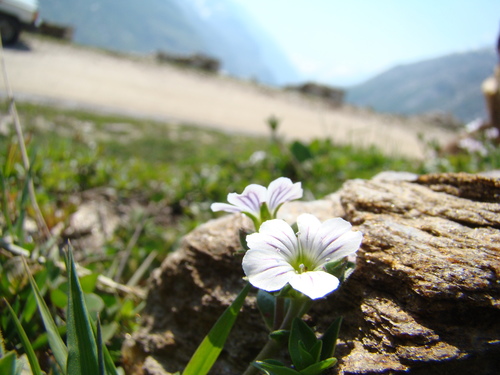
iNaturalist· cc-by-nc
(c) Chuangzao, some rights reserved (CC BY-NC), uploaded by Chuangzao
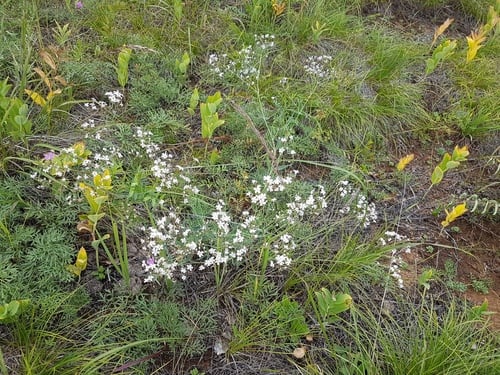
iNaturalist· cc-by-nc
(c) onidiras-iNaturalist, some rights reserved (CC BY-NC)
iNaturalist· cc-by-nc
(c) onidiras-iNaturalist, some rights reserved (CC BY-NC)
Summary
Source: WikipediaGypsophila oldhamiana, the Manchurian baby's-breath or Oldham's baby's-breath, is a flowering plant of the family Caryophyllaceae.
Description
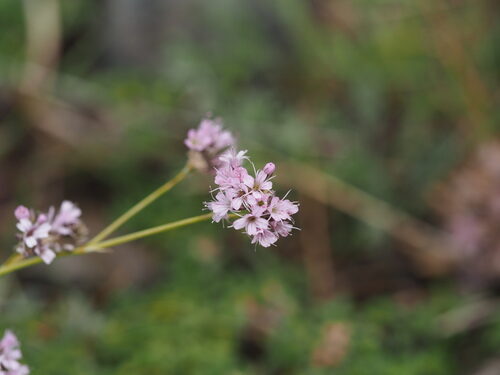
A herb. It keeps growing from year to year. It grows up to 60-100 cm tall. It has a stout rootstock. The leaves are greyish-blue. The leaves are opposite and have short leaf stalks. They are broadly sword shaped and 3-7 cm long by 4-15 mm wide. There are many small flowers that are lilac-pink. These occur at the ends of the branches.
Edible Uses
The leaves have been used as a famine food when all else fails. No further details are available. Some caution is advised given concerns about toxicity.
Traditional Uses
The young shoots are used as a vegetable.
This uses section is brief — help expand it
Medicinal Uses
The root is used in the treatment of jaundice, lung diseases, rheumatism, and typhoid fever.
Known Hazards
Although no mention has been seen for this species, at least one member of this genus has a root that is rich in saponins. Although toxic, these substances are very poorly absorbed by the body and so tend to pass through without causing harm. They are also broken down by heat so a long slow baking can destroy them. Saponins are found in many plants, including several that are often used for food, such as certain beans. It is advisable not to eat large quantities of food that contain saponins. Saponins are much more toxic to some creatures, such as fish, and hunting tribes have traditionally put large quantities of them in streams, lakes etc in order to stupefy or kill the fish.
Distribution
It is a temperate plant. It grows in scrub, mountain slope grasslands, rocks, maritime sands from sea level to 2000 m. altitude in China.
Where It Grows
Asia, China, Japan, Korea, Manchuria,
Cultivation
Requires a well-drained soil in full sun. Lime tolerant, it grows well in a dryish soil. Plants have a deep root system and are best left undisturbed once they have been planted out.
Propagation
Seed is best sown in a greenhouse in spring. Prick seedlings out into individual pots once large enough to handle, and plant out into permanent positions in summer if growth allows. If plants are too small, overwinter them in the greenhouse and plant out in late spring or early summer the following year. Divide clumps in spring or autumn — larger clumps can go straight into permanent positions, while smaller ones are best potted up and grown on in a cold frame until well rooted, then planted out in spring. Basal cuttings can be taken before flowering: harvest shoots around 10cm long with plenty of underground stem, pot individually, and keep in light shade in a cold frame or greenhouse until well rooted, then plant out in summer. Root cuttings are also an option.
Other Uses
Miscellany None known Special Uses
Notes
It is used in medicine. It is cultivated as an ornamental. There are about 100 Gypsophila species.
Also Known As
Chang rui shi tou hua
References (5)
- Ann. Mus. Bot. Lugduno-Batavum 3:187. 1867
- Flora of China @ efloras.org Volume 6
- Hu, Shiu-ying, 2005, Food Plants of China. The Chinese University Press. p 385
- Lu Dequan, Wu Zhengyi, Zhou Lihua, Chen Shilong; Michael G. Gilbert, Magnus Lidén, John McNeill, John K. Morton, Bengt Oxelman, Richard K. Rabeler, Mats Thulin, Nicholas J. Turland, Warren L. Wagner, CARYOPHYLLACEAE, Flora of China.
- Plants for a Future database, The Field, Penpol, Lostwithiel, Cornwall, PL22 0NG, UK. http://www.scs.leeds.ac.uk/pfaf/