Cerastium furcatum
Cham. & Schltdl.
Yuan mao juan er
iNaturalist· cc-by-nc
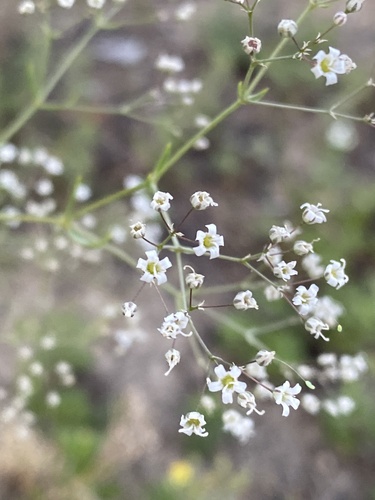
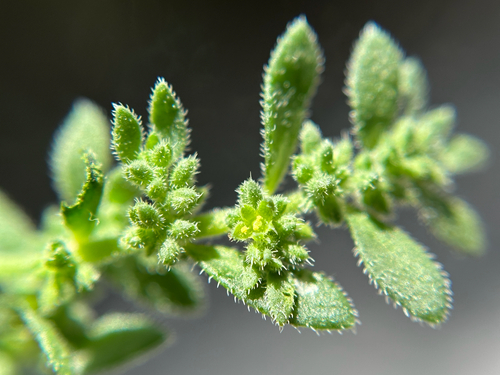
(c) V.S. Volkotrub, some rights reserved (CC BY-NC)
iNaturalist· cc-by-nc
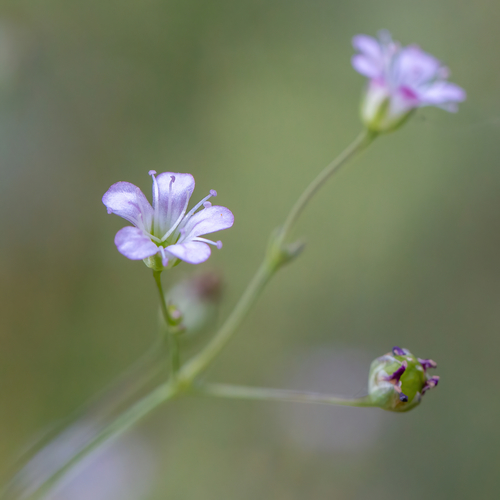
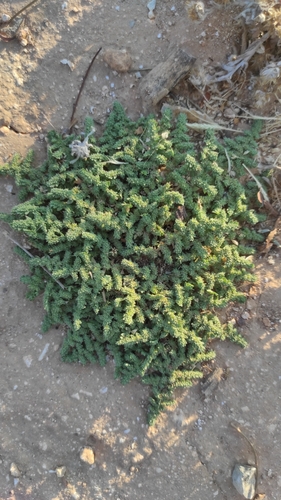
(c) V.S. Volkotrub, some rights reserved (CC BY-NC)
iNaturalist· cc-by-nc
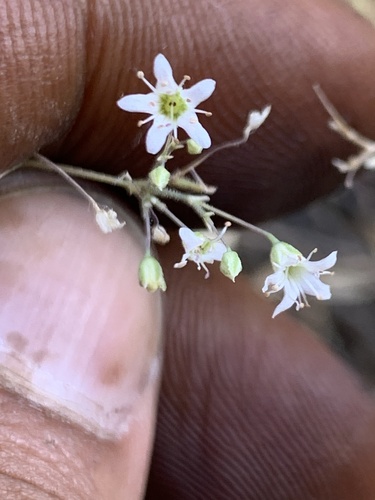
(c) Gularjanz Grigoryi Mihajlovich, some rights reserved (CC BY-NC)
Summary
Cerastium furcatum is a perennial reaching 0.5 m tall. It flowers from May to August with seeds ripening July to September. The plant is hermaphroditic and thrives in light sandy, medium loamy, or heavy clay soils with mildly acid to basic pH. It requires full sun and prefers moist conditions.
Description
A herb. It keeps growing from year to year. It is 15-55 cm tall. The leaves at the base are spoon shaped. The leaves on the stem are oval or sword shaped. They are 1-3 cm long by 0.5-1 cm wide.
Edible Uses
Young leaves and stems are edible cooked.
Medicinal Uses
None known.
Distribution
It is a temperate plant. It grows on forest margins, mountain valleys, hillsides and summits, meadows between 1200–3800 m. in China. In Sichuan and Yunnan.
Where It Grows
Asia, China, Japan, Korea, North Korea, Russia,
Cultivation
We have very little information on this species and do not know if it will be hardy in Britain, though judging by its native range it should succeed outdoors in many parts of this country. It is likely to require a moist soil in light shade.
Propagation
Sow seed in spring in a cold frame. Prick seedlings out into individual pots once large enough to handle, then plant into permanent positions during summer. Division in spring may also be possible.
Other Uses
None known.
Notes
There are about 100 Cerastium species.
Synonyms
References (3)
- Flora of China @ efloras.org Volume 6
- Lu Dequan, Wu Zhengyi, Zhou Lihua, Chen Shilong; Michael G. Gilbert, Magnus Lidén, John McNeill, John K. Morton, Bengt Oxelman, Richard K. Rabeler, Mats Thulin, Nicholas J. Turland, Warren L. Wagner, CARYOPHYLLACEAE, Flora of China.
- Plants for a Future database, The Field, Penpol, Lostwithiel, Cornwall, PL22 0NG, UK. http://www.scs.leeds.ac.uk/pfaf/