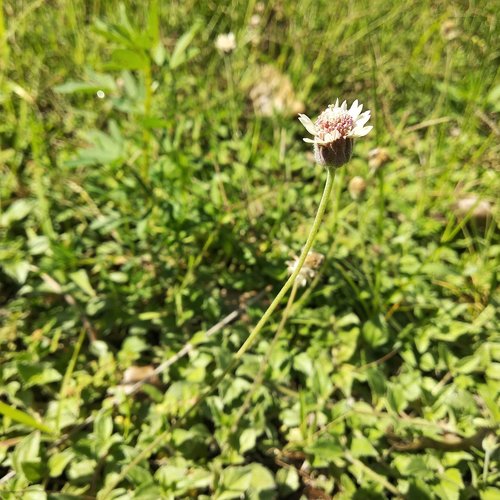
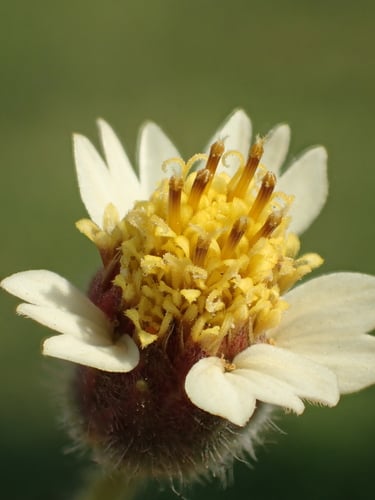
Gynura aurantiaca
(Blume) DC.
Purple Passion Vine, Purple velvet plant, Royal velvet plant, Velvet plant
iNaturalist· cc-by-nc
(c) ocanire, some rights reserved (CC BY-NC), uploaded by ocanire
iNaturalist· cc-by-nc
(c) Hani Ristiawan, some rights reserved (CC BY-NC)
Summary
Source: WikipediaGynura aurantiaca, called purple passion or velvet plant, is a species of flowering plant in the daisy family Asteraceae. It is native to Southeast Asia but grown in many other places as a house plant. In warm regions, it is frequently grown outdoors on patios and in gardens rather than inside buildings, and hence it has escaped into the wild in Africa, Australia, South America, Mesoamerica, Florida, and a few other places.
Description
A trailing soft wooded herb. It is evergreen. It grows 2-2.4 m high and spreads 1.2 m wide. The leaves are spear shaped and scalloped along the edge. They are 20 cm long. There are purple bristles on them. The flowers are small and orange. They are 25 mm wide. They are in clusters.
Edible Uses
The tender leaves are used as food, particularly in soups.
Traditional Uses
The tender leaves are used as food. They are used in soups.
This uses section is brief — help expand it
Distribution
A tropical plant. It grows in mixed forests and can be in sun or part shade. It can be near swamps and along streams. In Argentina it grows between 300-2,400 m above sea level. It suits hardiness zones 10-12.
Where It Grows
Argentina, Asia, Australia, China, Indonesia*, Malaysia, Pacific, Philippines, SE Asia, Slovenia, South America,
Cultivation
Plants can be grown by cuttings.
Notes
There are about 40 Gynura species. They are mostly in the tropics. It is a cultivated plant.
Synonyms
Also Known As
Grmičasta ginura, Perdu beludru ungu, Umyung
References (9)
- Bodkin, F., 1991, Encyclopedia Botanica. Cornstalk publishing, p 522
- Cundall, P., (ed.), 2004, Gardening Australia: flora: the gardener's bible. ABC Books. p 662
- Hedrick, U.P., 1919, (Ed.), Sturtevant's edible plants of the world. p 335
- Hibbert, M., 2002, The Aussie Plant Finder 2002, Florilegium. p 117
- Hu, Shiu-ying, 2005, Food Plants of China. The Chinese University Press. p 731
Show all 9 references Hide references
- Martin, F.W. & Ruberte, R.M., 1979, Edible Leaves of the Tropics. Antillian College Press, Mayaguez, Puerto Rico. p 185
- Prodr. 6:300. 1838
- Sukarya, D. G., (Ed.) 2013, 3,500 Plant Species of the Botanic Gardens of Indonesia. LIPI p 638
- Terra, G.J.A., 1973, Tropical Vegetables. Communication 54e Royal Tropical Institute, Amsterdam, p 50