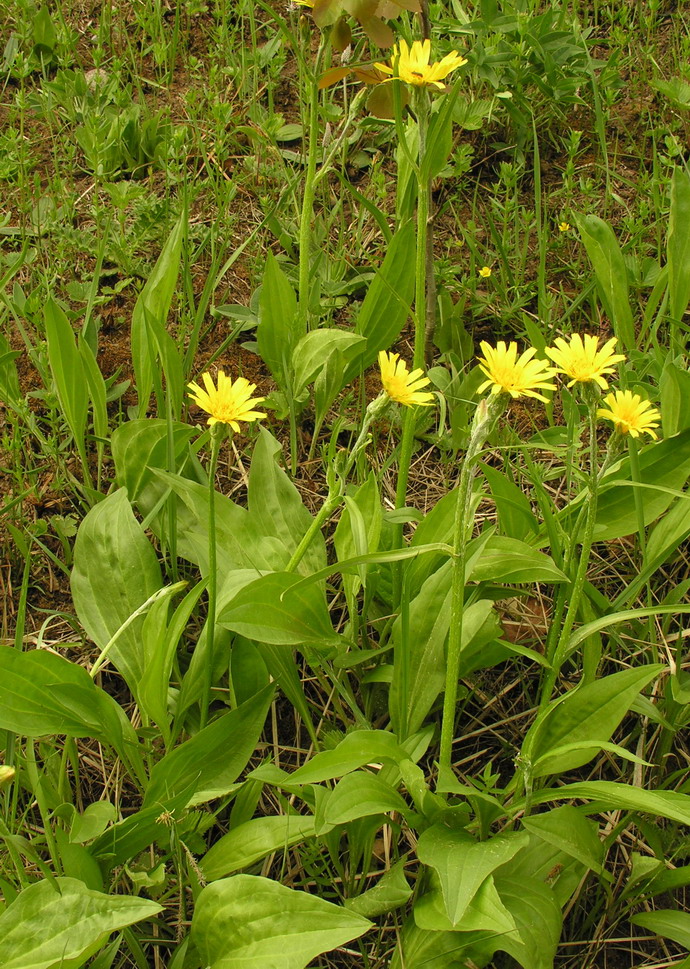
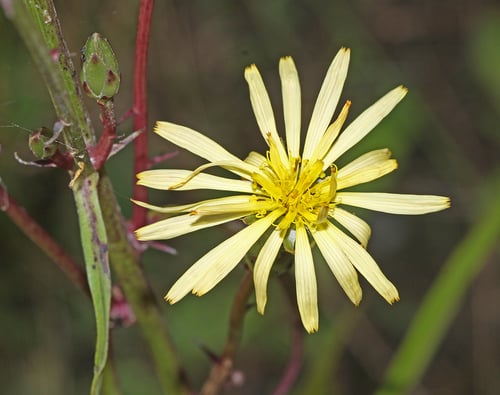
Wyethia helianthoides
Nutt.
Sunflower wyethia
iNaturalist· cc-by-nc
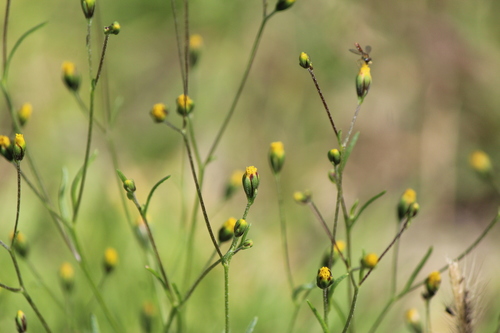
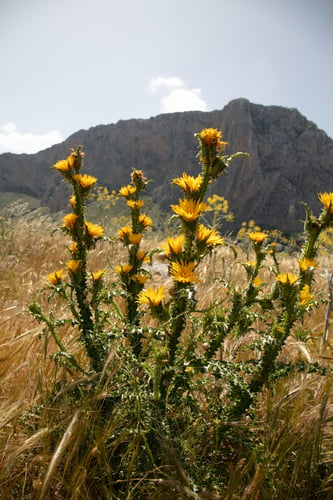
(c) frenchlimonade, some rights reserved (CC BY-NC), uploaded by frenchlimonade
iNaturalist· cc0
no rights reserved
iNaturalist· cc0
no rights reserved
Summary
Source: WikipediaPerennial herb flowering June to July. Hermaphroditic and insect-pollinated. Suitable for light sandy to medium loamy, well-drained soils with mildly acid to basic pH. Requires full sun and moist soil conditions.
Description
Perennial herb flowering June to July. Hermaphroditic and insect-pollinated. Suitable for light sandy to medium loamy, well-drained soils with mildly acid to basic pH. Requires full sun and moist soil conditions.
Edible Uses
The root is eaten cooked. Native North American Indians prepared it by lining pits in the ground with large stones, burning a fire on the stones until they were hot, then placing the roots on the hot stones, sealing them in with fern leaves and earth, and fermenting them for one or two days before eating.
Traditional Uses
The plant is heated, fermented and eaten.
This uses section is brief — help expand it
Medicinal Uses
None known
Distribution
It is a temperate plant.
Where It Grows
North America, USA,
Cultivation
We have very little information on this species and do not know if it will be hardy in Britain, though judging by its native range it should succeed outdoors in many parts of the country. The following notes are based on the general needs of the genus. Requires a free-draining, gritty but moisture-retentive soil in a sunny position. Plants are intolerant of drought.
Propagation
Sow seed in a greenhouse or cold frame in early spring using a very freely-draining compost. Prick out seedlings into individual pots as soon as they are large enough to handle, then plant out into permanent positions when sufficiently established. The crown can also be carefully divided as plants come into growth in spring.
Other Uses
None known
References (3)
- Beckstrom-Sternberg, Stephen M., and James A. Duke. "The Foodplant Database." http://probe.nalusda.gov:8300/cgi-bin/browse/foodplantdb.(ACEDB version 4.0 - data version July 1994)
- Moerman, D. F., 2010, Native American Ethnobotany. Timber Press. p 601
- Plants for a Future database, The Field, Penpol, Lostwithiel, Cornwall, PL22 0NG, UK. http://www.scs.leeds.ac.uk/pfaf/