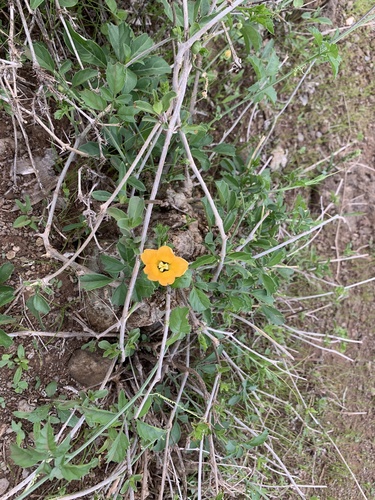
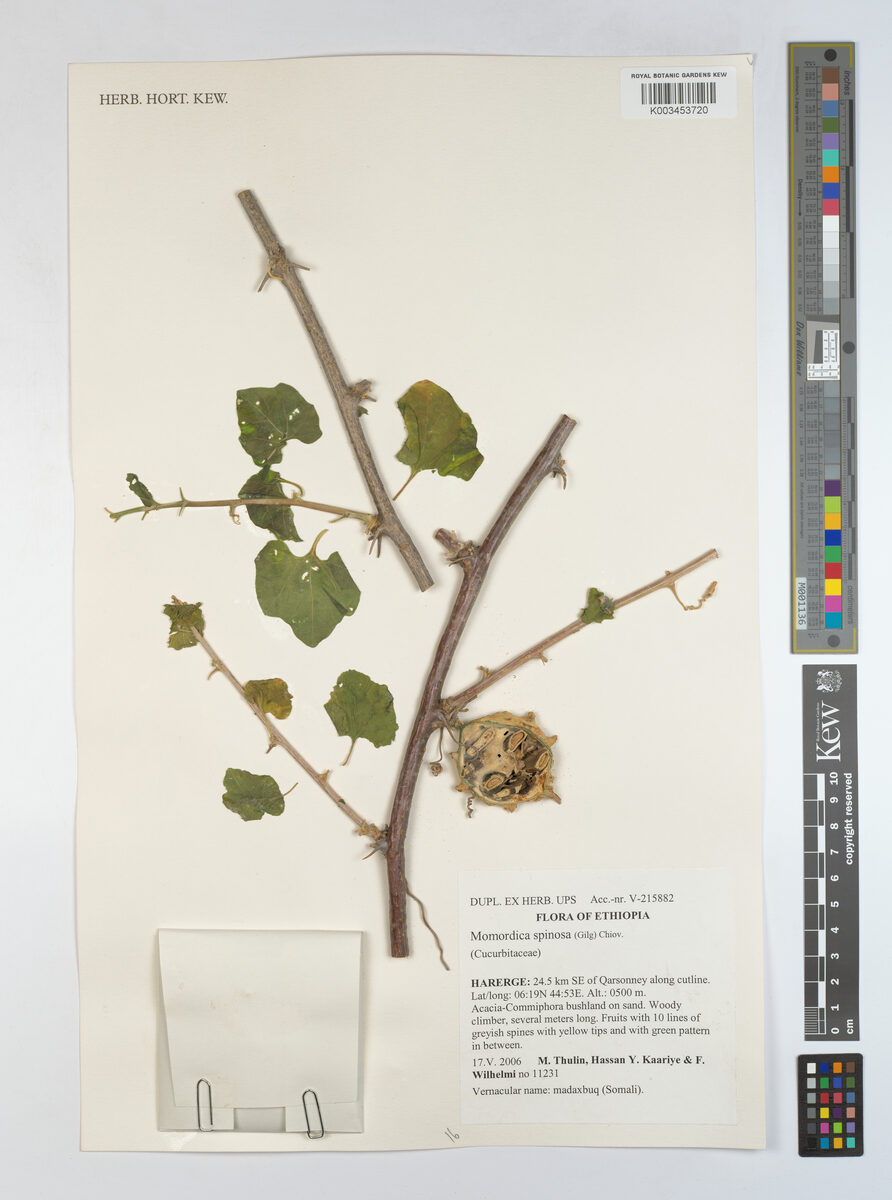
Gymnopetalum chinense
(Lour.) Merr.
iNaturalist· cc-by-nc
(c) Andreas Berger, some rights reserved (CC BY-NC)
iNaturalist· cc-by-nc
(c) Andreas Berger, some rights reserved (CC BY-NC)
iNaturalist· cc-by-nc
(c) Andreas Berger, some rights reserved (CC BY-NC)
Description
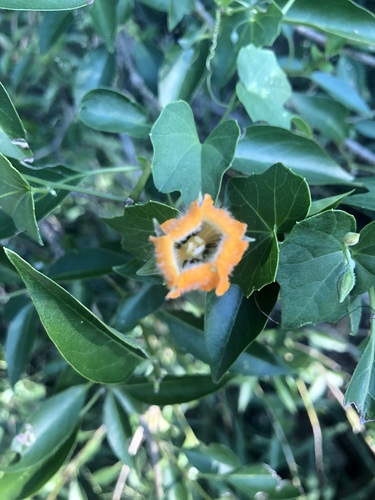
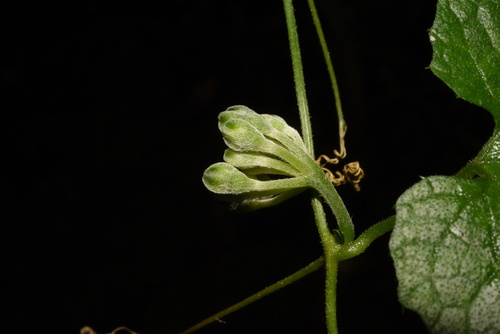
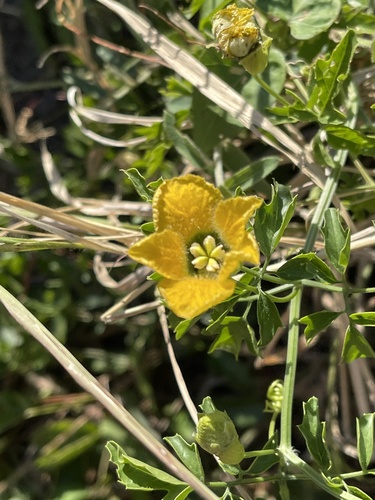
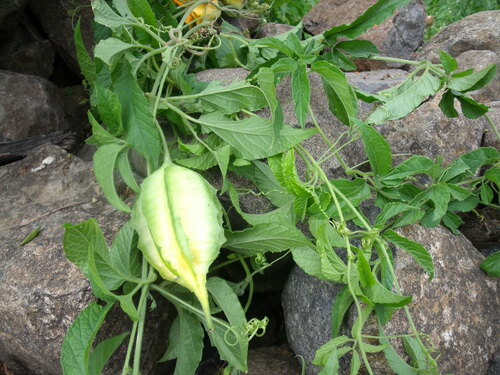
A pumpkin family plant. It is a creeping or climbing herb. It has a tendril at every node opposite the leaf. The leaves have veins spread out like fingers on a hand. The leaves are an angular oval shape. The flower buds occur between the tendril and the leaf stalk. Male and female flowers are separate. The flower tubes are white.
Edible Uses
Young leaves are cooked as a vegetable or potherb. Young fruit (with seeds removed) are cooked with dried fish, used for chutney, or candied as a flavouring.
Traditional Uses
The unripe fruit with the seeds removed is candied or used as a flavouring. The young leaves are cooked and used as a vegetable and as a potherb. CAUTION: Mature fruit are poisonous. Young fruit are edible. They are cooked with dried fish. They are also used for chutney.
Known Hazards
Mature fruit are poisonous.
Distribution
A tropical plant.
Where It Grows
Asia, China, India, Indochina, Indonesia, Laos, Malaysia, Myanmar, Northeastern India, Pacific, Philippines, SE Asia, Thailand, Vietnam,
Other Information
Young leaves and fruit are sold in local markets.
Synonyms
Also Known As
Beimahai, Betimum tikus, Cut qua, Dukhathai, Kanjat, Kaubutkila, Kemarogan, Manisan, Ram berul, Riho, Sipam, Timput pulau
References (13)
- Ambasta, S.P. (Ed.), 2000, The Useful Plants of India. CSIR India. p 252 (As Gymnopetalum cochinchinense and also as Gymnopetalum quinquelobum)
- Burkill, I.H., 1966, A Dictionary of the Economic Products of the Malay Peninsula. Ministry of Agriculture and Cooperatives, Kuala Lumpur, Malaysia. Vol 1 (A-H) p 1136 (As Gymnopetalum cochinchinense and also as Gymnopetalum quinquelobum)
- Heyne, K., 1927, p 1422 (As Gymnopetalum quinquelobum)
- Hill, M. & Hallam, D., (eds), 1997, Na Hang Nature Reserve, Tat Ke Sector. Site description and conservation evaluation. Hanoi. p 76 (As Gymnopetalum cochinchinensis)
- Irawan, D., et al, 2006, Ethnobotanical study and nutrient potency of local traditional vegetables in Central Kalimantan. Tropics Vol. 15(4)
Show all 13 references Hide references
- Lugod, G.C. and de Padua L.S., 1979, Wild Food Plants in the Philippines. Vol. 1. Univ. of Philippines Los Banos. p 30
- Medhi, P. & Borthakur, S. K., 2012, Phytoresources from North Cachur Hills of Assam -3: Edible plants sold at Hflong market. Indian Journal or Natural Products and Resources. 3(1) pp 84-109 (As Gymnopetalum cochinchinense)
- Medhi, P., Sarma, A and Borthakur, S. K., 2014, Wild edible plants from the Dima Hasao district of Assam, India. Pleione 8(1): 133-148
- Ogle, B. M., et al, 2003, Food, Feed or Medicine: The Multiple Functions of Edible Wild Plants in Vietnam. Economic Botany 57(1): 103-117 (As Gymnopetalum cochinchinense)
- Phangchopi, U., et al, 2015, Diversity of wild edible plants in Marat Longri Wildlife Sanctuary, Assam. Indian Journal of Natural Products and Resources Vol. 6(4), December 2015 pp. 305-313
- Robinson, R.W., & Decker-Walters, D.S., Cucurbits. CAB International p (As Gymnopetalum cochinchinense)
- Tanaka, Y. & Van Ke, N., 2007, Edible Wild Plants of Vietnam: The bountiful garden. Orchid books. p 72 (As Gymnopetalum cochinchinense)
- Teron, R. & Borthakur, S. K., 2016, Edible Medicines: An Exploration of Medicinal Plants in Dietary Practices of Karbi Tribal Population of Assam, Northeast India. In Mondal, N. & Sen, J.(Ed.) Nutrition and Health among tribal populations of India. p 150 (As Gymnopetalum cochinchinense)