Grewia occidentalis
L.
Bow wood, Four Corners, Cross-berry
iNaturalist· cc-by-nc
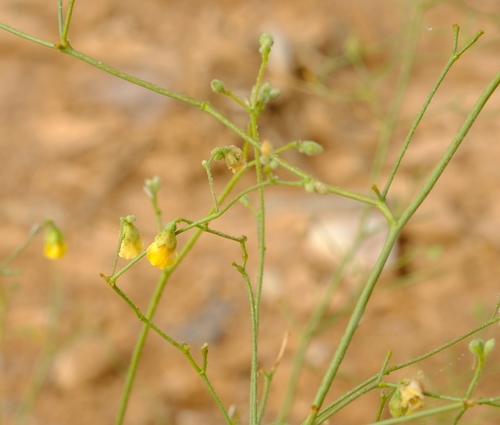
(c) graham_g, some rights reserved (CC BY-NC)
iNaturalist· cc-by-nc-sa
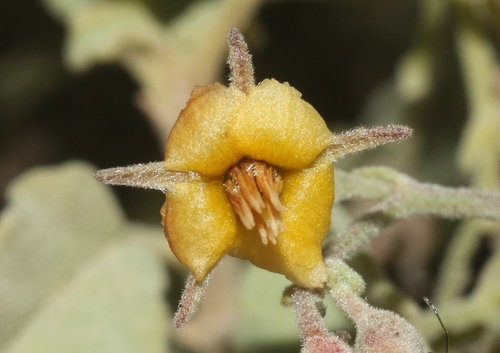
(c) 106611639464075912591, some rights reserved (CC BY-NC-SA), uploaded by 106611639464075912591
iNaturalist· cc-by-sa
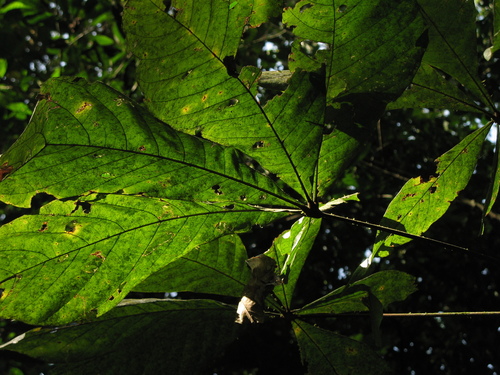
(c) Nicola van Berkel, some rights reserved (CC BY-SA), uploaded by Nicola van Berkel
Summary
Source: WikipediaGrewia occidentalis, the crossberry, is a species of deciduous tree, indigenous to Southern Africa.
Description
A scrambling shrub. It grows up to 6 m tall. The stems are flexible. They become four angled with age. The leaves are 2-8 cm long by 1.3-4 cm wide. The leaves are sword shaped. They have irregular blunt teeth along the edge. The flowers are pink to red. They are 2.5 cm across. Flowers occur as 1-3 together on slender stalks opposite the leaf. The fruit have 4 lobes. They are 2.5 cm across. The fruit is purple when ripe. Each lobe contains one seed. The fruit is edible.
Edible Uses
The ripe fruit can be eaten raw, and the juice consumed fresh or fermented, sometimes cooked in milk to make a drink. The leaves are cooked as a vegetable.
Traditional Uses
The ripe fruit are eaten raw. The juice is used fresh or fermented. They are also cooked in milk to make a drink. The leaves are cooked as a vegetable.
Medicinal Uses
An important species in traditional medicine, it is used for a variety of purposes. Grewia species are valued in many cultures for their medicinal virtues. The main medicinal action appears to come from the mucilage that is found in the leaves, stems and roots, which has been shown to have soothing and healing properties. Taken internally it is often used as a remedy for diarrhoea and dysentery, for example, whilst externally it is applied to wounds, cuts, ulcers, irritations etc. The plant can be taken as a simple infusion or decoction, or it can be applied topically as a poultice of the plant, or the mucilage can be extracted from the plant, if required, by maceration and then decoction. The bruised bark, soaked in hot water, is used to treat wounds. Root extracts were used to help in childbirth. Parts of the plant were used to treat impotence and sterility.
Distribution
A tropical plant. It is common in forest and scrub. It grows in areas with modest rainfall. It grows from sea level to 1500 m altitude in South Africa. In Zimbabwe it grows above 1,400 m above sea level. Plants can grow in the sun or partial shade. It needs fertile, well-drained soil. It can tolerate frost. It suits hardiness zones 9-11. In Brisbane Botanical Gardens.
Where It Grows
Africa, Australia, Botswana, East Africa, Eswatini, Ethiopia, Hawaii, Mozambique, Namibia, Pacific, South Africa, Southern Africa, Swaziland, USA, Zambia, Zimbabwe,
Cultivation
It can be grown from seed. Seeds germinate easily and plants transplant easily. Plants can also be grown from cuttings or layering.
Propagation
Seed - studies have shown that seed which has passed through the gut of monkeys and baboons germinates better than those collected from a tree. This is due to the fact that the seeds chemical inhibitors have been broken down by the animal's stomach acids. However germination is generally fairly good even from seed that has not passed through a gut.
Other Uses
The pounded bark, when used regularly as a shampoo, is believed to prevent the hair from turning grey. The wood is used for making bows, walking sticks, spear shafts etc.
Production
It is fast growing in the early stage. A fruit weighs about 1 g.
Notes
There are about 200 Grewia species. They are mostly tropical. The fruit of most may be edible. These were in the Sparrmanniaceae and the Tiliaceae.
Nutrition
| Part | Moisture | kJ | kcal | Protein | Vit A | Vit C | Iron | Zinc |
|---|---|---|---|---|---|---|---|---|
| Fruit | 12.6 | 1080 | 258 | 2.8 | — | 18.4 | — | 1.1 |
Synonyms
Also Known As
Sssegaaibos, Basbessie, Broodjie, Cross berry, Dadels, Kruisbessie, Lavender starflower, Liklolo, Motsotsojane, Mulembu, Mumaka, Mupunzunyeke, Musosobiana, Star-flower, Umnqabaza, Umnqabalaza, Umsosobiyane
References (39)
- Altschul, S.V.R., 1973, Drugs and Foods from Little-known Plants. Notes in Harvard University Herbaria. Harvard Univ. Press. Massachusetts. no. 2724
- Brickell, C. (Ed.), 1999, The Royal Horticultural Society A-Z Encyclopedia of Garden Plants. Convent Garden Books. p 482
- Cundall, P., (ed.), 2004, Gardening Australia: flora: the gardener's bible. ABC Books. p 653
- De Vynk, J. C., et al, 2016, Indigenous edible plant use by contemporary Khoe-San descendants of South Africa's Cape South Coast. South African Journal of Botany. 102 (2016) 60-69
- Exell, A.W. et al, (Ed), 1963, Flora Zambesiaca Vol 2 Part 1 Crown Agents, London. p 58
Show all 39 references Hide references
- Facciola, S., 1998, Cornucopia 2: a Source Book of Edible Plants. Kampong Publications, p 241
- FAO, 1988, Traditional Food Plants, FAO Food and Nutrition Paper 42. FAO Rome p 312
- Fox, F. W. & Young, M. E. N., 1982, Food from the Veld. Delta Books. p 355
- https://growwild.co.za Edible Indigenous plants
- Grivetti, 1976, 1979,
- Grivetti, L. E., 1980, Agricultural development: present and potential role of edible wild plants. Part 2: Sub-Saharan Africa, Report to the Department of State Agency for International Development. p 79
- INFOODS:FAO/INFOODS Databases
- Joffe, P., 2007, Creative Gardening with Indigenous Plants. A South African Guide. Briza. p 229
- Llamas, K.A., 2003, Tropical Flowering Plants. Timber Press. p 270
- Long, C., 2005, Swaziland's Flora - siSwati names and Uses http://www.sntc.org.sz/flora/
- Lord, E.E., & Willis, J.H., 1999, Shrubs and Trees for Australian gardens. Lothian. p 233
- Magwede, K., van Wyk, B.-E., & van Wyk, A. E., 2019, An inventory of Vhavenḓa useful plants. South African Journal of Botany 122 (2019) 57–89
- Ogle & Grivetti, 1985,
- Palgrave, K.C., 1996, Trees of Southern Africa. Struik Publishers. p 576
- Palmer, E and Pitman, N., 1972, Trees of Southern Africa. Vol. 2. A.A. Balkema, Cape Town p 1443
- Peters, C. R., O'Brien, E. M., and Drummond, R.B., 1992, Edible Wild plants of Sub-saharan Africa. Kew. p 192
- Ruiters-Welcome, A. K., 2019, Food plants of southern Africa. Ph.D. thesis. Univ. of Johannesburg p 76
- Shackleton, S. E., et al, 1998, Use and Trading of Wild Edible Herbs in the Central Lowveld Savanna Region, South Africa. Economic Botany, Vol. 52, No. 3, pp. 251-259
- Shava, S., 2000, The Use of Indigenous Plants as Food by a Rural Community in the Eastern Cape: an Educational Exploration. Masters Thesis Rhodes University. p 65
- Silberbauer, 1981,
- Sp. pl. 2:964. 1753
- Staples, G.W. and Herbst, D.R., 2005, A tropical Garden Flora. Bishop Museum Press, Honolulu, Hawaii. p 549
- Swaziland's Flora Database http://www.sntc.org.sz/flora
- Tredgold, M.H., 1986, Food Plants of Zimbabwe. Mambo Press. p 70
- USDA, ARS, National Genetic Resources Program. Germplasm Resources Information Network - (GRIN). [Online Database] National Germplasm Resources Laboratory, Beltsville, Maryland. Available: www.ars-grin.gov/cgi-bin/npgs/html/econ.pl (10 April 2000)
- van Wyk, B, van Wyk, P, and van Wyk B., 2000, Photographic guide to Trees of Southern Africa. Briza. p 168
- Venter, F & J., 2009, Making the most of Indigenous Trees. Briza. p 186
- von Breitenbach, F., 1985, Southern Cape Tree Guide. Department of Environment Affairs, Forestry Branch. Pamphlet 360 Pretoria p 21
- Wehmeyer, A. S, 1986, Edible Wild Plants of Southern Africa. Data on the Nutrient Contents of over 300 species
- Welcome, A. K. & Van Wyk, B.-E., 2019, An inventory and analysis of the food plants of southern Africa. South African Journal of Botany 122 (2019) 136–179
- Wilson, A. L. & Downs, C. T., 2012, Fruit nutritional composition and non-nutritive traits of indigenous South African tree species. South African Journal of Botany. 78:30-36
- Wiersema, J. H. & Leon, B., 2013, World Economic Plants. A Standard Reference CRC Press. 2nd Ed. p 332
- World Checklist of Useful Plant Species 2020. Royal Botanic Gardens, Kew
- www.zimbabweflora.co.zw 2011