Thespesia populnea
(L.) Solander ex Correa
Pacific rosewood, Coastal Hibiscus
iNaturalist· cc-by
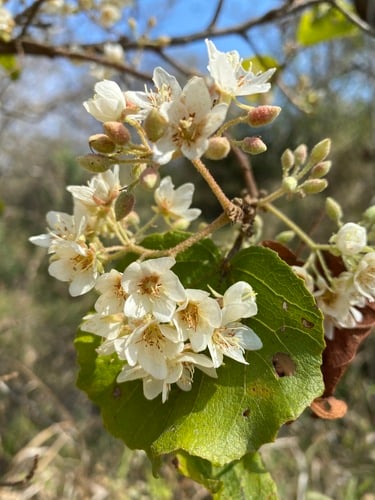
(c) Daniel Cahen, some rights reserved (CC BY), uploaded by Daniel Cahen
iNaturalist· cc-by-nc
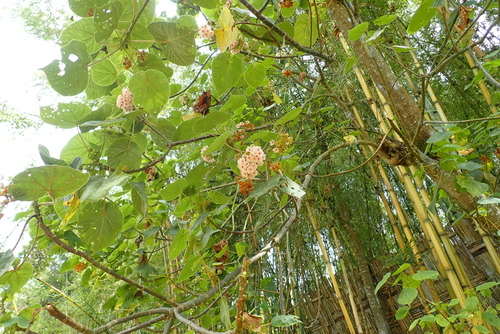
(c) Klaus Bohn, some rights reserved (CC BY-NC), uploaded by Klaus Bohn
iNaturalist· cc-by-nc
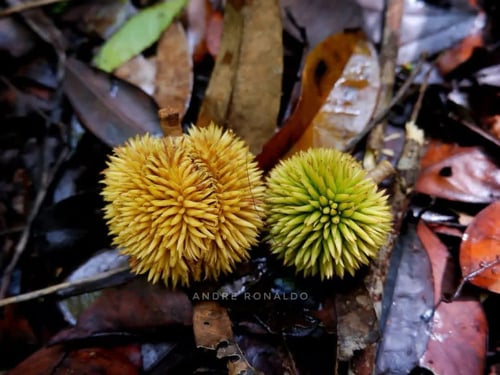
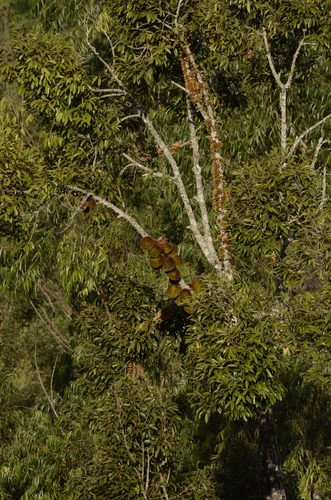
(c) Rujuta Vinod, some rights reserved (CC BY-NC), uploaded by Rujuta Vinod
Summary
Source: WikipediaThespesia populnea, commonly known as the portia tree (), Pacific rosewood, Indian tulip tree, or milo, among other names, is a species of flowering plant belonging to the mallow family, Malvaceae. It is a tree found commonly on coasts around the world. Although it is confirmed to be native only to the Old World tropics, other authorities consider it to have a wider, possibly pantropical native distribution. It is thought to be an invasive species in Florida and Brazil.
Description
An evergreen tree. It grows to 5-10 m high and spreads 2 m across. The stem is erect and branching. It has a compact crown. The outer bark is grey-brown. It is cracked along its length and scaly. The leaves are bluish green and broadly heart shaped. They are 5-15 cm long and 5-10 cm wide and taper to a tip. The leaves are thin and have very small scales on both surfaces. They are on long stalks. The leaves have nectar nearing zones at the bases of the midrib. The flowers are a sulphur-yellow. They have 5 petals and a purple throat. They occur singly. They are bell shaped. Flowers are 5-8 cm across. The flowers are somewhat like Hibiscus. The fruit is a round capsule 2.5 cm across. Sometimes it splits open into 5 valves revealing silky brown seeds. They are oval or triangle shaped and about 9 mm across.
Edible Uses
Young leaves can be eaten raw or cooked as a vegetable, and are also boiled or added to soups. Flowers and flower buds are edible raw or cooked. Unripe fruits are eaten raw, boiled or fried as a vegetable, while ripe fruits are preserved and eaten. A gum is obtained from the fruit and flowers.
Traditional Uses
The young leaves and young flower buds are eaten raw, cooked or fried in butter. They are used in soups. The fruit are eaten preserved.
This uses section is brief — help expand it
Medicinal Uses
The bark, root, leaves, flowers and fruits are all used in traditional medicine, and research broadly supports these uses. The heartwood contains sesquiterpenoid quinones — including mansonone D and H, thespone and thespesone — known to induce contact dermatitis, inhibit tumour formation and have antifungal properties. Heartwood and other plant parts contain gossypol. Fruits and leaves have antibacterial activity; methanolic extracts of flower buds have shown antifungal activity; ethanol extracts of the flower have shown antihepatotoxic activity; and aqueous fruit extracts have demonstrated wound-healing activity in rats following both topical and oral administration. Seed oil has anti-amoebic activity. The heartwood is carminative and useful in treating pleurisy, cholera, colic and high fevers. Fruit juice treats herpes. Crushed fruit is used for urinary tract problems and abdominal swellings. Fruit cooked and crushed in coconut oil forms a hair salve that kills lice. A fruit extract is applied to swollen testicles. A leaf tea treats rheumatism and urinary retention. A leaf decoction is used for coughs, influenza, headache and illness relapses. Leaf sap and decoctions of most plant parts are applied externally to treat skin diseases. Pounded fruits mixed with pounded leaves form a poultice for headaches and itching. A decoction of bark and fruit mixed with oil treats scabies. A bark decoction treats dysentery and haemorrhoids; a bark maceration is drunk for colds. A cold bark infusion treats dysentery, diabetes, gonorrhoea, yellow urine and thrush. The bark is also used for indigestion, pelvic infection, dysmenorrhoea, infertility, secondary amenorrhoea, appetite loss, ulcers and worms. The inner bark treats constipation and typhoid. The stem is employed in treating breast cancer. Other plant extracts have shown significant antimalarial activity. Leaf and bark decoctions are taken for high blood pressure. Seeds are purgative.
Known Hazards
The root is toxic. The heartwood contains several sesquiterpenoid quinones, including mansonone D and H, thespone and thespesone, which are known to induce contact dermatitis.
Distribution
It is a tropical plant. It does best in light well-drained soils. It needs an open sunny position. It is damaged by drought and frost. It can tolerate salt spray. It needs a temperature above 13-15°C. They suit the coastal tropics. It does best with a temperature of 20-26°C. It grows along beaches and tidal forests in India. In China it grows on the sea coast in sunny places. It grows up to 150 m above sea level. It suits hardiness zones 10-12.
Where It Grows
Africa, American Samoa, Andamans, Asia, Australia, Bahamas, Bangladesh, Cambodia, Caribbean, Caroline Islands, Cayman Islands, Central America, China, Chuuk, Colombia, Cuba, Dominican Republic, East Africa, East Timor, Easter Island, Fiji, French Polynesia, FSM, Ghana, Guianas, Guyana, Haiti, Hawaii, India, Indochina, Indonesia, Jamaica, Japan, Kiribati, Lesser Antilles, Malaysia, Maldives, Mariana Islands, Marquesas, Marshall Islands, Mauritius, Mexico*, Micronesia, Mozambique, Myanmar, Nauru, New Zealand, Nigeria, Niue, North America, Northeastern India, Pacific, Pakistan, Palau, Papua New Guinea, PNG, Philippines, Puerto Rico, Rotuma, Ryukyu, Samoa, SE Asia, Solomon Islands, Southern Africa, Sri Lanka, St Helena, Suriname, Tahiti, Taiwan, Thailand, Timor-Leste, Tonga, Tuvalu, United Arab Emirates, USA, Vanuatu, Venezuela, Vietnam, Wallis & Futuna, West Africa, West Indies*, Yap, Zimbabwe,
Cultivation
Plants are grown from seed. The seed can be dried and stored for short periods but it is best to sow fresh seed. Seeds can germinate in 8 days but may take a few weeks. They can also be grown from cuttings. Seeds can float in sea-water and stay alive for months.
Propagation
Direct sowings generally fail. The hard seed coat impedes germination, which is improved by scarification with a knife or sandpaper; germination then takes 8–70 days. Pot seedlings as soon as they are large enough to handle, using pots deep enough to accommodate the taproot. Plants should be ready to transplant in 12–16 weeks. Seed-raised trees produce knot-free, straight, even-grained and tough timber, making this the preferred propagation method. Cuttings of all sizes strike well, but small cuttings are preferable — trees raised from large cuttings are said to be short-lived and prone to decay.
Other Uses
The tree is highly resistant to wind and salt spray, making it valuable as a coastal windbreak, and is planted for erosion control — often as a living fence — in Karnataka, India, and the Pacific Islands. It has been used to support vanilla plants, and chippings have been trialled as green manure. The fibrous bark yields strong fibre used for cordage, fishing lines, coffee bags and boat caulking. Seed oil is used in lamps. Wood soaked in water yields a solution used in Asia to dye wool deep brown. Fruit and flowers yield a water-soluble yellowish dye; leaves yield a black dye. The bark is a source of tannins. A gum is obtained from the fruit and flowers, and a thick water-insoluble gum from the bark. Leaves are used for food wrapping. The heartwood is reddish-brown to dark brown or black, often with purple veining, sharply demarcated from a 1–2cm band of white to pale yellow or pale pink sapwood that darkens on exposure. The wood is fine- to medium-textured, with slight ribbon figure on quartersawn faces; freshly cut wood has a rose-like smell. It is strong, hard, light to medium in weight, very durable in contact with water or the ground, and resistant to insect attack. It seasons well without warping or checking, with very low to low shrinkage. It is easy to saw and work despite wavy grain, turns well green or dry, finishes to an attractive polish, and paints well, though gluing properties are poor to medium. An oil in the wood slows varnish drying. The wood is used for traditional bowls, artefacts, gunstocks, jewellery, furniture, plates, utensils, horse-drawn carts, wheelbarrows and canoe paddles, as well as for flooring, moulds, musical instruments, vehicle bodies and light construction. Its durability under water makes it popular for boat building. It is also used as fuel.
Production
It is fast growing. It flowers in 2-3 years.
Other Information
It is widely cultivated.
Notes
There are 17 Thespesia species.
Nutrition
| Part | Moisture | kJ | kcal | Protein | Vit A | Vit C | Iron | Zinc |
|---|---|---|---|---|---|---|---|---|
| Leaves | 64.3 | 598 | 143 | 3.9 | — | — | 4.1 | — |
Synonyms
Also Known As
Adavi-bendi, Al-shamsia, Badrirt, Baku, Banalo, Bang-beng, Baru-baru, Bebaru, Bendytree, Bhendi-ke-jhar, Bhendi, Cheelanthi, Dumbla, False rosewood, Frefi, Gajadanda, Gajashuni, Gan suriya, Gangaraavi, Gangareenu, Gardha-bhanda, Gunjausto, Hirundhu, Hoovarase, Indian tulip tree, Jogiyarale, Kandarola, Kilulo, Mi'o, Milo, Miro, Mulomulo, Munigangaraavi, Onovaro, Paarsapeepala, Palaopipal, Panu, Pararspipal, Paras papal, Paras pipal, Paras-pipal, Parash pipal, Parespipal, Parsacha-jhada, Parsipu, Peneh, Pinle-swedaw, Po tale, Pohon baru laut, Polo, Polynesian rosewood, Poovarasam kallal, Poovarasu, Porosopippoli, Portia tree, Porush, Purau, Sabu-bani, Seaside mahoe, Te bingibing, Tra bode, Tra lamvo, Umbrella tree, Waru lot
References (62)
- Abbiw, D.K., 1990, Useful Plants of Ghana. West African uses of wild and cultivated plants. Intermediate Technology Publications and the Royal Botanic Gardens, Kew. p 42
- Ambasta, S.P. (Ed.), 2000, The Useful Plants of India. CSIR India. p 635
- Ann. Mus. Natl. Hist. Nat. 9:290. 1807
- Anon., 2003, Native Plants for the Fitzroy basin. Society for Growing Australian Plants Inc. (Rockhampton Branch) p 76
- Barwick, M., 2004, Tropical and Subtropical Trees. A Worldwide Encyclopedic Guide. Thames and Hudson p 414
Show all 62 references Hide references
- Bodkin, F., 1991, Encyclopedia Botanica. Cornstalk publishing, p 979
- Bole, P.V., & Yaghani, Y., 1985, Field Guide to the Common Trees of India. OUP p 89
- Borrell, O.W., 1989, An Annotated Checklist of the Flora of Kairiru Island, New Guinea. Marcellin College, Victoria Australia. p 97
- Brickell, C. (Ed.), 1999, The Royal Horticultural Society A-Z Encyclopedia of Garden Plants. Convent Garden Books. p 1007
- Burkill, H. M., 1985, The useful plants of west tropical Africa, Vol. 4. Kew.
- Burkill, I.H., 1966, A Dictionary of the Economic Products of the Malay Peninsula. Ministry of Agriculture and Cooperatives, Kuala Lumpur, Malaysia. Vol 2 (I-Z) p 2192
- Cooper, W. and Cooper, W., 2004, Fruits of the Australian Tropical Rainforest. Nokomis Editions, Victoria, Australia. p 281
- Cowie, I, 2006, A Survey of Flora and vegetation of the proposed Jaco-Tutuala-Lore National Park. Timor-Lests (East Timor) www.territorystories.nt/gov.au p 50
- Cribb, A.B. & J.W., 1976, Wild Food in Australia, Fontana. p 111
- Dobriyal, M. J. R. & Dobriyal, R., 2014, Non Wood Forest Produce an Option for Ethnic Food and Nutritional Security in India. Int. J. of Usuf. Mngt. 15(1):17-37
- Elevitch, C.R.(ed.), 2006, Traditional Trees of the Pacific Islands: Their Culture, Environment and Use. Permanent Agriculture Resources, Holualoa, Hawaii. p 757
- Facciola, S., 1998, Cornucopia 2: a Source Book of Edible Plants. Kampong Publications, p 148
- Flora of Pakistan. www.eFloras.org
- Franklin, J., Keppel, G., & Whistler, W., 2008, The vegetation and flora of Lakeba, Nayau and Aiwa Islands, Central Lau Group, Fiji. Micronesica 40(1/2): 169–225, 2008
- Grandtner, M. M. & Chevrette, J., 2013, Dictionary of Trees, Volume 2: South America: Nomenclature, Taxonomy and Ecology. Academic Press p 663
- Grubben, G. J. H. and Denton, O. A. (eds), 2004, Plant Resources of Tropical Africa 2. Vegetables. PROTA, Wageningen, Netherlands. p 565
- Hall, N. et al, 1972, The Use of Trees and Shrubs in the Dry Country of Australia, AGPS, Canberra. p 207
- Havel, J.J., 1975, Forest Botany, Volume 3 Part 2 Botanical taxonomy. Papua New Guinea Department of Forests, p 182
- Hearne, D.A., & Rance, S.J., 1975, Trees for Darwin and Northern Australia. AGPS, Canberra p 113
- Hibbert, M., 2002, The Aussie Plant Finder 2002, Florilegium. p 298
- http://palaeoworks.anu.edu.au/Nuno_PhD/04.pdf re Timor
- http://www.botanic-gardens-ljubljana.com/en/plants
- Karim, F. M. & Dakheel, A, J., 2006, Salt-tolerant plants of the United Arab Emirates. 2006. International Center for Biosaline Agriculture, Dubai, UAE. p 124
- Keay, R.W.J., 1989, Trees of Nigeria. Clarendon Press, Oxford. p 140
- Kermath, B. M., et al, 2014, Food Plants in the Americas: A survey of the domesticated, cultivated and wild plants used for Human food in North, Central and South America and the Caribbean. On line draft. p 865
- Krishen P., 2006, Trees of Delhi, A Field Guide. DK Books. p 119
- Lamoureux, C.H., 1976, Trailside Plants of Hawaii's National Parks. Hawaii Natural History Association. p 49
- Levitt, D., 1981, Plants and people. Aboriginal uses of plants on Groote Eylandt. Australian Institute of Aboriginal Studies, Canberra. p 100
- Liefting, A., et al, Samoan plant names. http://en.wikipedia.org
- Llamas, K.A., 2003, Tropical Flowering Plants. Timber Press. p 259
- Martin, F.W. & Ruberte, R.M., 1979, Edible Leaves of the Tropics. Antillian College Press, Mayaguez, Puerto Rico. p 204
- McMakin, P.D., 2000, Flowering Plants of Thailand. A Field Guide. White Lotus. p 78
- Melzer, R. & Plumb, J., 2011, Plants of Capricornia. Belgamba, Rockhampton. p 175
- Morley, B. & Everard, B., 1970, Wild Flowers of the World. Ebury press. Plate 116
- Narayanan Ratheesh, M. K. et al, 2011, Wild edible plants used by the Kattunaikka, Paniya and Kuruma tribes of Wayanad District, Kerala, India. Journal of Medicinal Plants Research Vol. 5(15), pp. 3520-3529
- Palgrave, K.C., 1996, Trees of Southern Africa. Struik Publishers. p 586
- Patiri, B. & Borah, A., 2007, Wild Edible Plants of Assam. Geethaki Publishers. p 14
- Peekel, P.G., 1984, (Translation E.E.Henty), Flora of the Bismarck Archipelago for Naturalists, Division of Botany, Lae, PNG. p 369, 367
- Pham-Hoang Ho, 1999, An Illustrated Flora of Vietnam. Nha Xuat Ban Tre. p 532
- Plants of Haiti Smithsonian Institute http://botany.si.edu/antilles/West Indies
- Sahni, K.C., 2000, The Book of Indian Trees. Bombay Natural History Society. Oxford. p 36
- Selvam, V., 2007, Trees and shrubs of the Maldives. RAP Publication No. 2007/12 p 166
- Smith, A.C., 1981, Flora Vitiensis Nova, Lawaii, Kuai, Hawaii, Volume 2 p 425
- Smith, N., Mori, S.A., et al, 2004, Flowering Plants of the Neotropics. Princeton. p 233, Plate 28 (Photo)
- Staples, G.W. and Herbst, D.R., 2005, A tropical Garden Flora. Bishop Museum Press, Honolulu, Hawaii. p 393
- Sujanapal, P., & Sankaran, K. V., 2016, Common Plants of Maldives. FAO & Kerala FRI, p 271
- Sukarya, D. G., (Ed.) 2013, 3,500 Plant Species of the Botanic Gardens of Indonesia. LIPI p 551
- Swaminathan, M.S., and Kochnar, S.L., 2007, An Atlas of Major Flowering Trees in India. Macmillan. p 35
- Tang ya, Malvaceae. Flora of China. p
- Tewari, D.N., 1994, Important Plants of India. International Book Distributors, India. p 48
- Thaman, R. R, 2016, The flora of Tuvalu. Atoll Research Bulletin No. 611. Smithsonian Institute p 99
- Townsend, K., 1994, Across the Top. Gardening with Australian Plants in the tropics. Society for Growing Australian Plants, Townsville Branch Inc. p 357
- Wiersema, J. H. & Leon, B., 2013, World Economic Plants. A Standard Reference CRC Press. 2nd Ed. p 683
- World Checklist of Useful Plant Species 2020. Royal Botanic Gardens, Kew
- www.worldagroforestrycentre.org/treedb/
- Yuncker, T.G., 1959, Plants of Tonga, Bernice P. Bishop Museum, Hawaii, Bulletin 220. p 184
- Zizka, G., 1991, Flowering Plants of Easter Island. Palmarum Hortus Francofurtensis