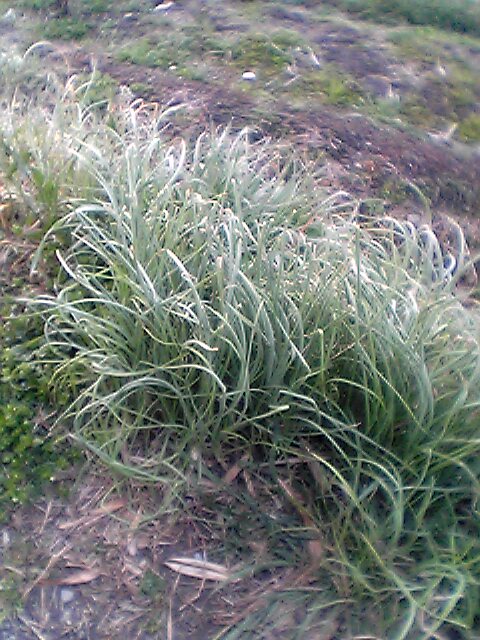
Allium chinense
G. Don
Chinese Chives
iNaturalist· cc-by-sa
(с) たね, некоторые права защищены (CC BY-SA)
iNaturalist· cc-by-sa
(с) KENPEI, некоторые права защищены (CC BY-SA)
iNaturalist· cc-by-nc
(с) frahome, некоторые права защищены (CC BY-NC), загрузил frahome
Summary
Source: WikipediaAllium chinense (also known as Chinese onion, Chinese scallion, glittering chive, Japanese scallion, Kiangsi scallion, and Oriental onion) is an edible species of Allium, native to China, and cultivated in many other countries. Its close relatives include the onion, scallion, leek, chive, and garlic.
Description
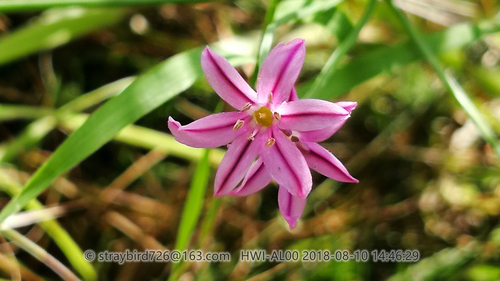
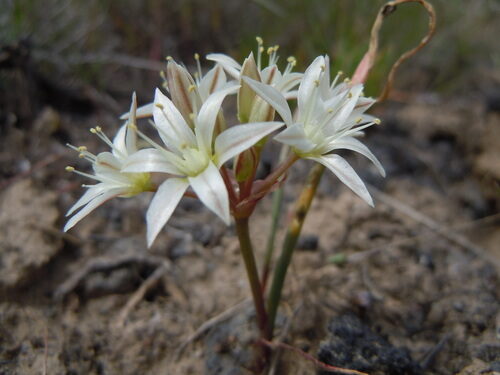
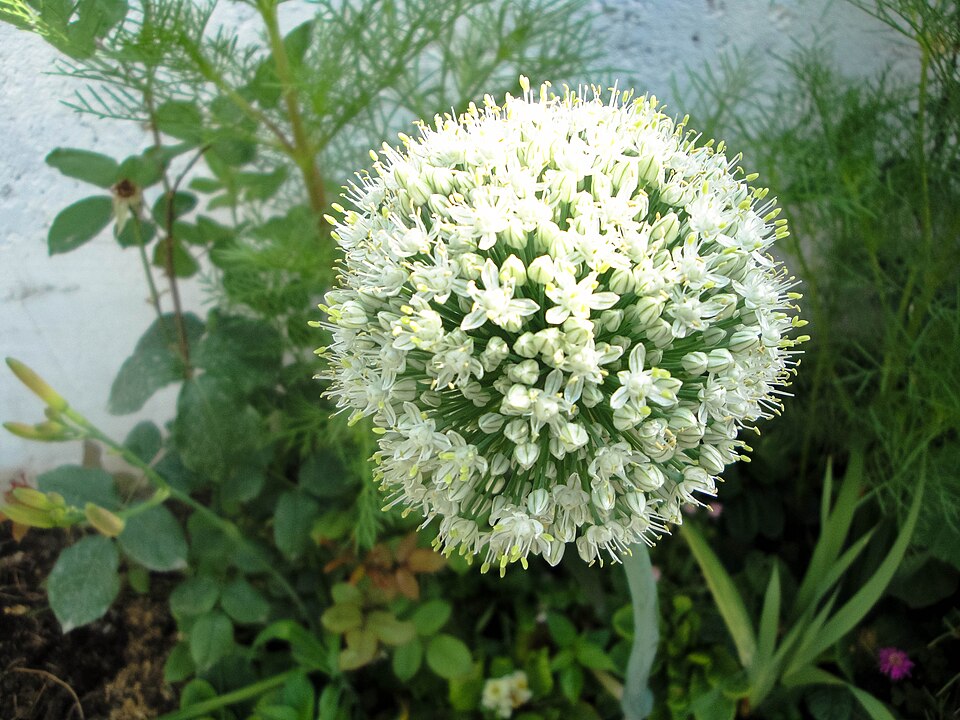
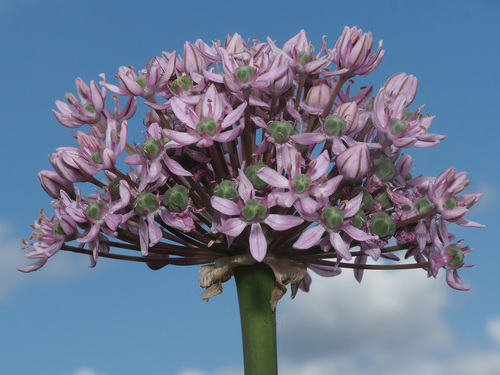
An onion family plant. The bulb can be 4-5 cm long by the second or third year. The bulbs taper into the leaves. They are narrow and oval. The plant forms a clump. The leaves can stick upwards or lie over. The leaves are 3-5 angled in cross section. They are 20-40 cm long by 1-5 mm wide. The flowers are on stalks with flowers on equal length stalks from one point. The flower stalk is solid. The flowers are bell shaped. The flower parts are light violet. There are 15-20 flowers on each stalk.
Edible Uses
The bulb can be eaten raw or cooked, offering an excellent crisp texture with a strong onion flavour. It can reach 4–5cm in diameter, though this size is typically not achieved until the second or third year. Nutritional content per 100g fresh weight includes approximately 3.1g protein, 0.1g fat, 18.3g soluble carbohydrate, and 0.7g ash. Leaves are also edible raw or cooked. The flowers and young seedpods can be eaten raw and work well as a garnish on salads.
Traditional Uses
The bulbs are eaten raw or cooked. They are pickled in salt, soy sauce and sugar. The leaves are eaten raw or cooked. The flowers and seed pods are used raw to flavour salads.
Medicinal Uses
The whole plant is astringent, carminative, and expectorant. It is used to treat stuffiness and pain in the chest, angina pectoris, pleurisy, bronchitis, diarrhoea, and tenesmus associated with dysentery. More broadly, like other members of its genus, this plant is a healthy dietary addition. It contains sulphur compounds responsible for its onion flavour, and when eaten regularly it can help reduce blood cholesterol levels, support digestive health, and tonify the circulatory system.
Known Hazards
Although no individual reports regarding this species have been seen, there have been cases of poisoning caused by the consumption, in large quantities and by some mammals, of certain members of this genus. Dogs seem to be particularly susceptible.
Distribution
It grows in light well drained soils. It can tolerate poor soils. They need full sun. It grows in the tropics and subtropics in China. Long days promote bulb and flower formation. In Yunnan.
Where It Grows
Asia, Australia, China*, Cuba, Hawaii, India, Indochina, Indonesia, Japan, Korea, Malaysia, North America, Northeastern India, Pacific, SE Asia, Tasmania, Thailand, USA, Vietnam, West Indies,
Cultivation
Prefers a sunny position in a light well-drained soil. Tolerates poor soils. Plants often die-back in hot weather mid-summer, coming back into growth in late summer and flowering in the autumn. The flowers seldom set seed in Britain. The bulbs should be planted fairly deeply. Most members of this genus are intolerant of competition from other growing plants. Grows well with most plants, especially roses, carrots, beet and chamomile, but it inhibits the growth of legumes. This plant is a bad companion for alfalfa, each species negatively affecting the other. This species is widely cultivated for its edible bulb and leaves, mainly in the tropical and sub-tropical areas of Japan, China and many other parts of eastern Asia. Members of this genus are rarely if ever troubled by browsing deer.
Propagation
Sow seed in spring in a cold frame. Prick out seedlings into individual pots once large enough to handle — placing three plants per pot will produce clumps more quickly. Grow on in the greenhouse through at least the first winter, then plant out into permanent positions in spring once growing vigorously. For division, spring is ideal, though the plants can be divided successfully at any point during the growing season and planted directly into their permanent positions if needed.
Other Uses
The plant's juice acts as a moth repellent. The whole plant is also said to repel insects and moles.
Production
Bulbs are harvested after leaves die back. For young bulbs and white stems plants are harvested before the leaves die back.
Other Information
This species is widely cultivated for its edible bulb and leaves in Japan, China and many other parts of eastern Asia. It is a commercially cultivated vegetable.
Notes
It contains about 3.1% protein, 0.12% fat, 18.3% soluble carbohydrate, 0.7% ash. There are about 300-700 Allium species. Most species of Allium are edible (Flora of China). All alliums are edible but they may not all be worth eating! They have also been put in the family Alliaceae.
Nutrition
| Part | Moisture | kJ | kcal | Protein | Vit A | Vit C | Iron | Zinc |
|---|---|---|---|---|---|---|---|---|
| Bulb | 86 | 215 | — | 0.6 | — | — | — | — |
| Leaves | — | — | — | — | — | — | — | — |
| Seedpod | — | — | — | — | — | — | — | — |
| Flowers | — | — | — | — | — | — | — | — |
Synonyms
Also Known As
Bawang ganda, Ch'iao t'ou, Chinese scallions, Cholang, Hiai, Hom-paenyuak, Hom prang, Hsieh, Japanese pickling onion, Japanese scallions, Jiao tou, K'iu t'au, Krathiam cheen, Krathiam chin, Lokyo, Mwjngphanf, Namemira, Newgi tingdra, Rak kioo, Rakkiyo, Rakkyo, Tlang purun
References (34)
- Facciola, S., 1998, Cornucopia 2: a Source Book of Edible Plants. Kampong Publications, p 5
- Flora of Taiwan Vol 5:39 (As var. morrisonense)
- Flora of Pakistan. www.eFloras.org
- Fujime, Y., 2012, Introduction to Some Indigenous Vegetables in Japan. HortScience Vol. 47(7) July 2012. p 831
- Hu, Shiu-ying, 2005, Food Plants of China. The Chinese University Press. p 312
Show all 34 references Hide references
- Jacquat, C., 1990, Plants from the Markets of Thailand. D.K. Book House p 102
- Kays, S. J., and Dias, J. C. S., 1995, Common Names of Commercially Cultivated Vegetables of the World in 15 languages. Economic Botany, Vol. 49, No. 2, pp. 115-152
- Khodram,S. D., et al, 2019, Local knowledge of edible flowers used in Mizoram. Indian Journal of Traditional Knowledge Vol 18(40 pp 715-723
- Kiple, K.F. & Ornelas, K.C., (eds), 2000, The Cambridge World History of Food. CUP p 1842
- Konsam, S., et al, 2016, Assessment of wild leafy vegetables traditionally consumed by the ethnic communities of Manipur, northeast India. Journal of Ethnobiology and Ethnomedicine, 12:9
- Kuo, W. H. J., (Ed.) Taiwan's Ethnobotanical Database (1900-2000), http://tk.agron.ntu.edu.tw/ethnobot/DB1.htm (As Allium bakeri)
- Larkcom, J., 1991, Oriental Vegetables, John Murray, London, p 105
- Lim, T. K., 2015, Edible Medicinal and Non Medicinal Plants. Volume 9, Modified Stems, Roots, Bulbs. Springer p 3
- Liu, Yi-tao, & Long, Chun-Lin, 2002, Studies on Edible Flowers Consumed by Ethnic Groups in Yunnan. Acta Botanica Yunnanica. 24(1):41-56
- McCollum, G.D., 1979, Onions and allies, in Simmonds N.W.,(ed), Crop Plant Evolution. Longmans. London. p 186
- Medhi, P. & Borthakur, S. K., 2012, Phytoresources from North Cachur Hills of Assam -3: Edible plants sold at Hflong market. Indian Journal or Natural Products and Resources. 3(1) pp 84-109
- Medhi, P., Sarma, A and Borthakur, S. K., 2014, Wild edible plants from the Dima Hasao district of Assam, India. Pleione 8(1): 133-148
- Mem. Wern. Nat. Hist. Soc. 6:83. 1827
- Miguel, E., et al, 1989, A checklist of the cultivated plants of Cuba. Kulturpflanze 37. 1989, 211-357
- Negi, K. S., and Pant, K. C., 1992, Less-Known Wild Species of Allium L. (Amaryllidaceae) from Mountainous Regions of India. Economic Botany, Vol. 46, No. 1, pp. 112-114
- Plants for a Future database, The Field, Penpol, Lostwithiel, Cornwall, PL22 0NG, UK. http://www.scs.leeds.ac.uk/pfaf/
- PROSEA handbook Volume 13 Spices. p 273
- Purseglove, J.W., 1972, Tropical Crops. Monocotyledons. Longmans p 52
- Seidemann J., 2005, World Spice Plants. Economic Usage, Botany, Taxonomy. Springer. p 16
- Siemonsma, J. S. and Piluek, K. (Eds), 1994, Plant Resources of South-East Asia No. 8 Vegetables. Prosea Foundation, Bogor, Indonesia, p 71
- Staples, G.W. and Herbst, D.R., 2005, A tropical Garden Flora. Bishop Museum Press, Honolulu, Hawaii. p 681
- USDA, ARS, National Genetic Resources Program. Germplasm Resources Information Network - (GRIN). [Online Database] National Germplasm Resources Laboratory, Beltsville, Maryland. Available: www.ars-grin.gov/cgi-bin/npgs/html/econ.pl (10 April 2000)
- van Wyk, B., 2005, Food Plants of the World. An illustrated guide. Timber press. p 49
- Wiersema, J. H. & Leon, B., 2013, World Economic Plants. A Standard Reference CRC Press. 2nd Ed. p 34
- Woodward, P., 1996, Garlic and Friends. The History, Growth and Use of Edible Alliums. Hyland House. p 166
- Woodward, P., 2000, Asian Herbs and Vegetables. Hyland House. p 11
- World Checklist of Useful Plant Species 2020. Royal Botanic Gardens, Kew
- Yasukawa, K., Medicinal and Edible Plants as Cancer Preventive Agents. Drug Discovery Research in Pharmacognosy. p185 www.intechopen.com
- Zeven, A. C. & de West, J. M. J., 1982, Dictionary of cultivated plants and their regions of diversity. Wageningen. p 32