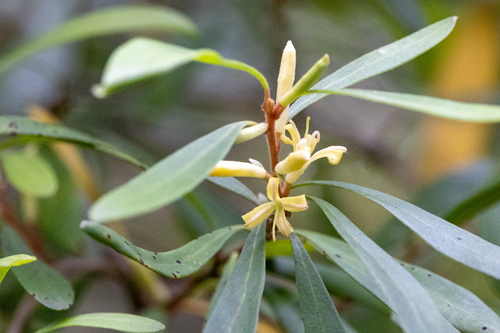
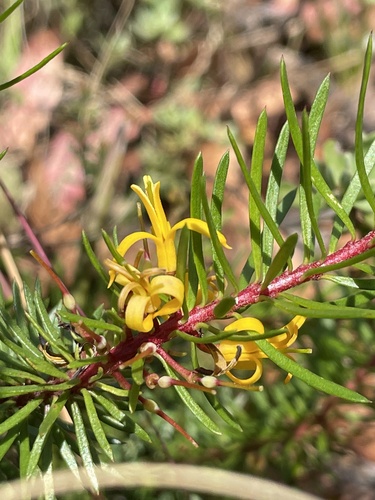
Grevillea wickhamii
Meissner
Holly-leafed Grevillea, Wickham’s Grevillea
iNaturalist· cc-by
(c) Doug Ford, some rights reserved (CC BY)
iNaturalist· cc-by-nc
(c) Lorenzo Vinciguerra, some rights reserved (CC BY-NC), uploaded by Lorenzo Vinciguerra
iNaturalist· cc-by-nc
(c) victorianwalker, some rights reserved (CC BY-NC), uploaded by victorianwalker
Summary
Source: WikipediaGrevillea wickhamii, commonly known as Wickham's grevillea, holly-leaf grevillea or lgarrmari in Djaru, is a species of flowering plant in the family Proteaceae and is endemic to northern Australia. It is an erect shrub or spindly tree with holly-like, broadly egg-shaped leaves with 2 to 7 shallow teeth, and down-curved clusters of flowers, the colour depending on subspecies.
Description
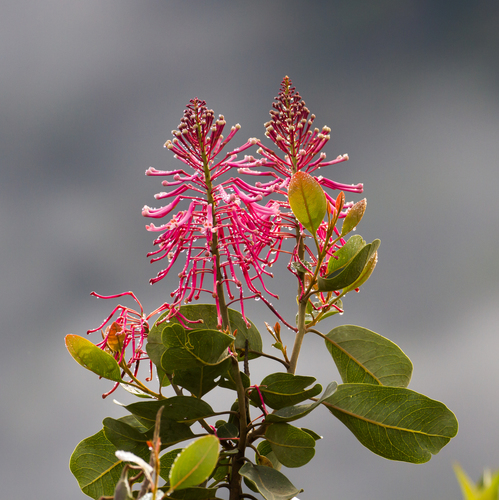
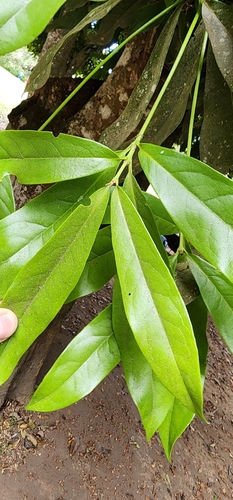
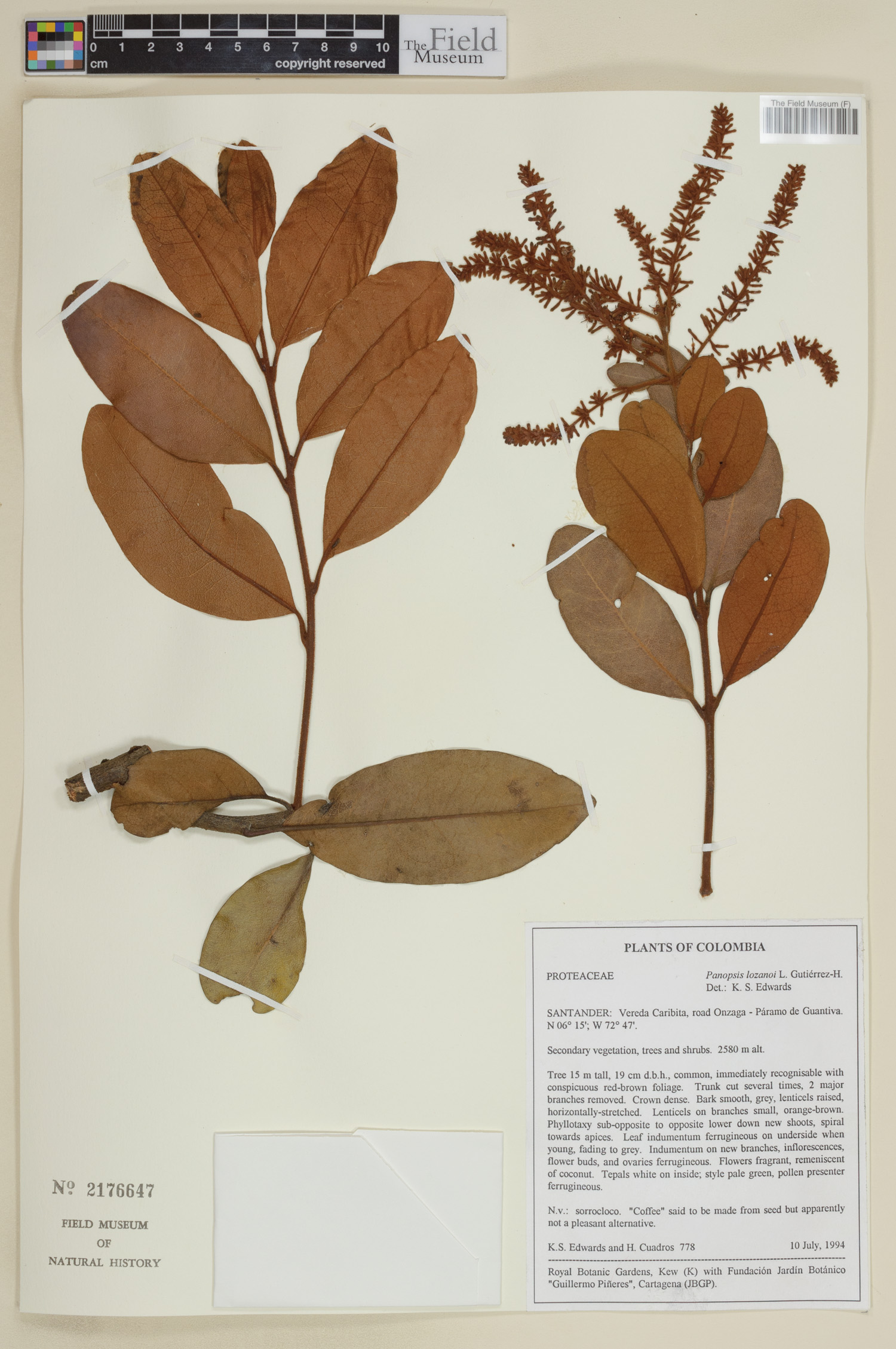
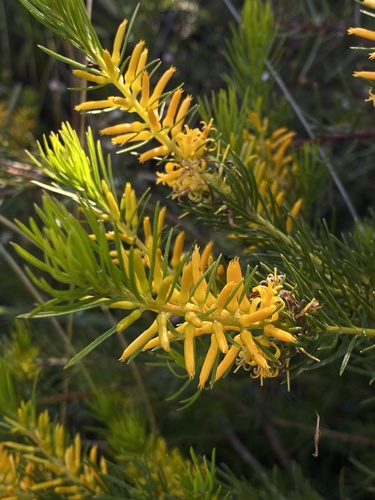
A medium to large shrub. It grows 3-4 m high. The new growth is silky. It has an open crown and spreads 2-2.5 m wide. The leaves are holly like and silvery-grey. The leaves are stiff and wavy with sharply pointed lobes. There are 4-9 lobes. The flowers are dark red and hang on long stalks. They can also be pink or golden. They hang down from the axils of leaves. The fruit are small and woody. They are brown when ripe and contain 2 seeds.
Edible Uses
The flower nectar, seeds, fruit, and gum are edible.
Distribution
It grows in tropical and subtropical regions. It can grow in semiarid and arid places. It needs a well drained soil. It can grow in full sun or light shade. It can stand light frosts. It suits hardiness zones 9-12.
Where It Grows
Australia*,
Cultivation
Plants can be grown from seed or cuttings. The seeds should be soaked or nicked to allow water to penetrate.
Notes
There are 250 Grevillea species.
Also Known As
Yindilnja, Yinnjinja
References (20)
- Bindon, P., 1996, Useful Bush Plants. Western Australian Museum. p 147
- Bodkin, F., 1991, Encyclopedia Botanica. Cornstalk publishing, p 519
- Cancilla, D., 2018, Ethnobotanical and Ethnozoological Values Desktop Assessment - Eliwana Project. p 13
- Cherikoff, V. & Isaacs, J., The Bush Food Handbook. How to gather, grow, process and cook Australian Wild Foods. Ti Tree Press, Australia p 189
- Cundall, P., (ed.), 2004, Gardening Australia: flora: the gardener's bible. ABC Books. p 653
Show all 20 references Hide references
- Elliot, W.R., & Jones, D.L., 1990, Encyclopedia of Australian Plants suitable for cultivation. Vol 5. Lothian. p 126
- Etherington, K., & Imwold, D., (Eds), 2001, Botanica's Trees & Shrubs. The illustrated A-Z of over 8500 trees and shrubs. Random House, Australia. p 358
- Hibbert, M., 2002, The Aussie Plant Finder 2002, Florilegium. p 116
- Kenneally, K.E., Edinger, D. C., and Willing T., 1996, Broome and Beyond, Plants and People of the Dampier Peninsula, Kimberley, Western Australia. Department of Conservation and Land Management. p 170
- Latz, P.K., 1996, Bushfires and Bushtucker: Aboriginal plant use in Central Australia. IAD Press Alice Springs p 204
- Lord, E.E., & Willis, J.H., 1999, Shrubs and Trees for Australian gardens. Lothian. p 170
- Milson, J., 2000, Trees and Shrubs of north-west Queensland. DPI p 262
- Molyneux, B. and Forrester, S., 1997, The Austraflora A-Z of Australian Plants. Reed. p 115
- Olde, P & Marriott, N., 1995, The Grevillea Book. Kangaroo Press. Vol 3. p 227
- Paczkowska, G . & Chapman, A.R., 2000, The Western Australian Flora. A Descriptive Calatogue. Western Australian Herbarium. p 491
- Townsend, K., 1994, Across the Top. Gardening with Australian Plants in the tropics. Society for Growing Australian Plants, Townsville Branch Inc. p 241
- Townsend, K., 1999, Field Guide to Plants of the Dry Tropics. Society for Growing Australian Plants, Townsville Branch Inc. p 115
- Wheeler, J.R.(ed.), 1992, Flora of the Kimberley Region. CALM, Western Australian Herbarium, p 475
- Wightman, Glenn et al. 1992. Mudburra Ethnobotany: Aboriginal Plant Use from Kulumindini (Elliott) Northern Australia. Northern Territory Botanical Bulletin No 14. Parks and Wildlife Commission of the Northern Territory. p 22.
- World Checklist of Useful Plant Species 2020. Royal Botanic Gardens, Kew