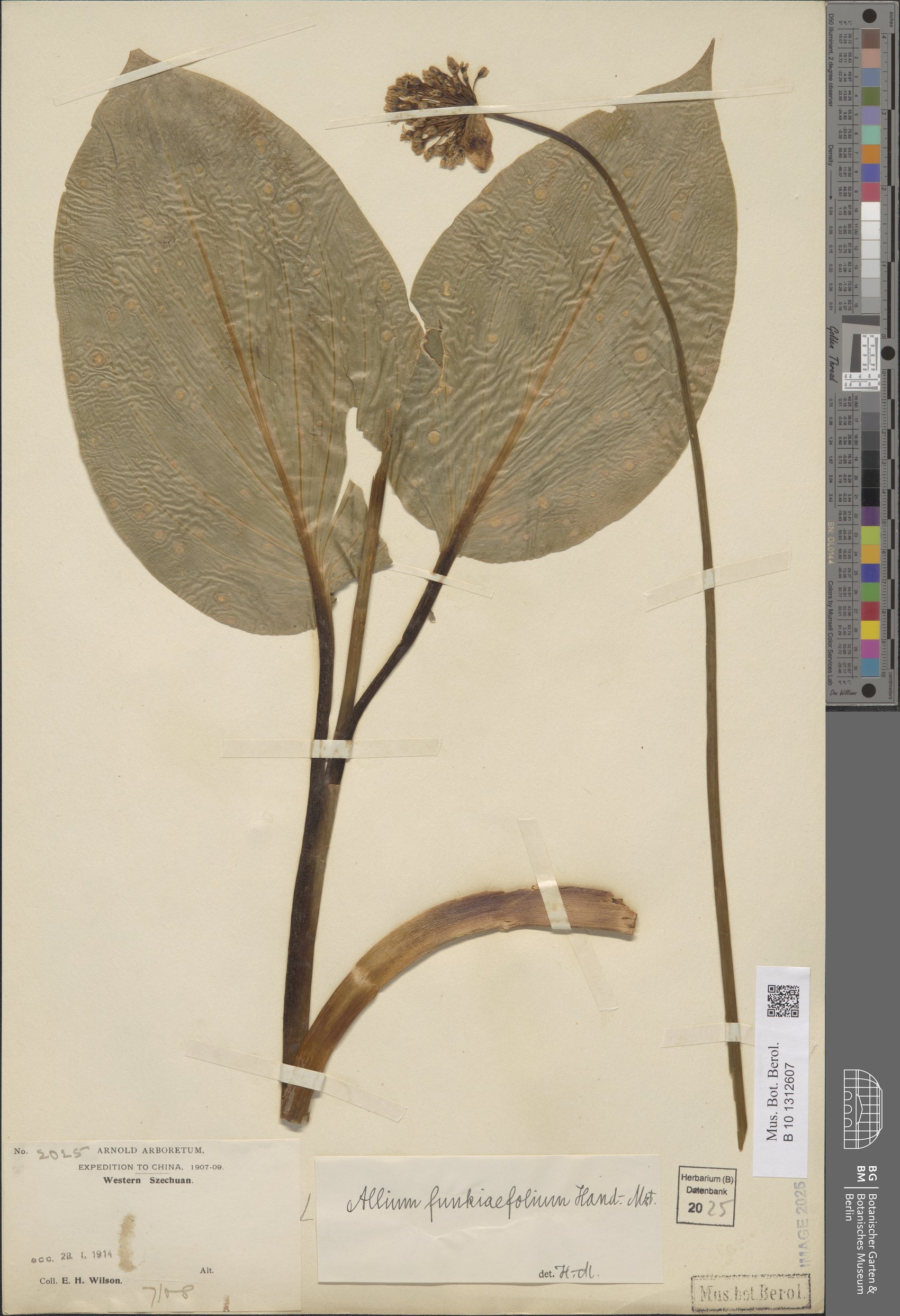
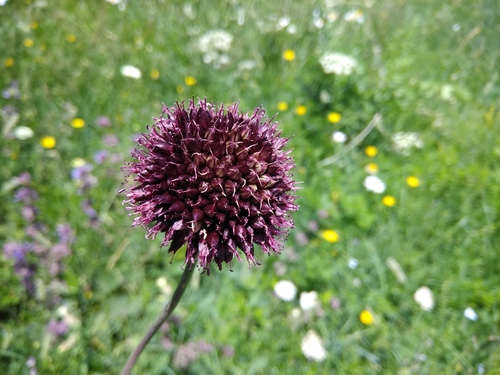
Allium ampeloprasum var. babbingtonii
(Borrer) Syme
Babbington's leek
gbif· cc-by-nc
simon-ford
gbif· cc-by-nc
simon-ford
gbif· cc-by-nc
Kerry O’Shea Quinto
Summary
Source: WikipediaAllium ampeloprasum is a member of the onion genus Allium. The wild plant is commonly known as wild leek or broadleaf wild leek. Its native range includes southern Europe, southwestern Asia and North Africa, but it has been cultivated and naturalized in many other countries. Allium ampeloprasum has been differentiated into five cultivated vegetables: leek, elephant garlic, pearl onion, kurrat, and Persian leek.
Description
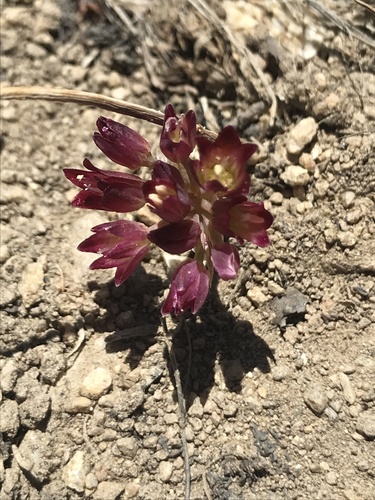
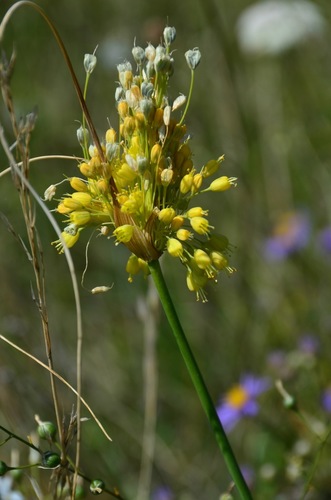
An onion family plant. The plant has a bulb and grows up to 1.8 m high. It is 10 cm across. It has more bulbils and fewer flower heads than wild leek.
Edible Uses
The bulbs are eaten raw or cooked, the leaves are eaten raw or cooked, the flowers are used raw or to flavor cooked foods, and the small bulbs or bulbils are used for flavoring or pickling.
Traditional Uses
The bulbs are eaten raw or cooked. The leaves are eaten raw or cooked. The flowers are used raw or to flavour cooked foods. The small bulbs or bulbils can be used for flavouring or pickles.
Distribution
It is a temperate plant. It grows naturally in rocky places near the coast in S.W. England and the Channel Islands. It prefers a sunny position in a light well drained soil. It tolerates a pH in the range 5.2 to 8.3. It suits hardiness zone 6.
Where It Grows
Britain, Europe, Ireland,
Cultivation
Plants can be grown from seed or by division of clumps or from bulbils.
Notes
There are about 300-700 Allium species. Most species of Allium are edible (Flora of China). All alliums are edible but they may not all be worth eating! They have also been put in the family Alliaceae.
Synonyms
References (5)
- Crawford, M., 2012, How to grow Perennial Vegetables. Green Books. p 72
- Facciola, S., 1998, Cornucopia 2: a Source Book of Edible Plants. Kampong Publications, p 4
- Plants for a Future database, The Field, Penpol, Lostwithiel, Cornwall, PL22 0NG, UK. http://www.scs.leeds.ac.uk/pfaf/
- J. E. Smith, Engl. bot. ed. 3[B], 9:204, t. 1531. 1869
- Wiersema, J. H. & Leon, B., 2013, World Economic Plants. A Standard Reference CRC Press. 2nd Ed. p 33