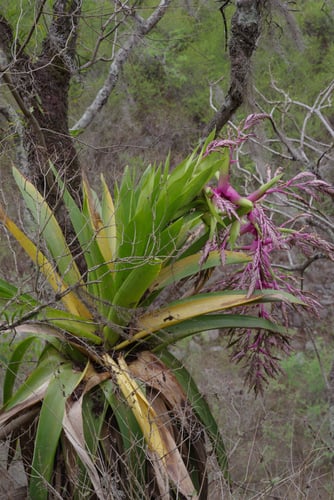
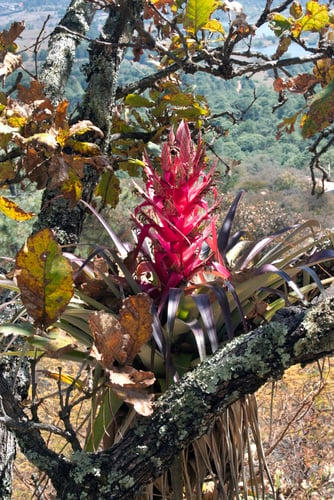
Greigia sphacelata
(Ruiz & Pav.) Regel
Chupon
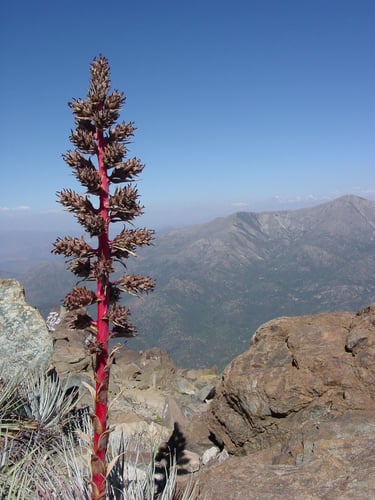
iNaturalist· cc-by-nc
(c) Diego Almendras G., some rights reserved (CC BY-NC), uploaded by Diego Almendras G.
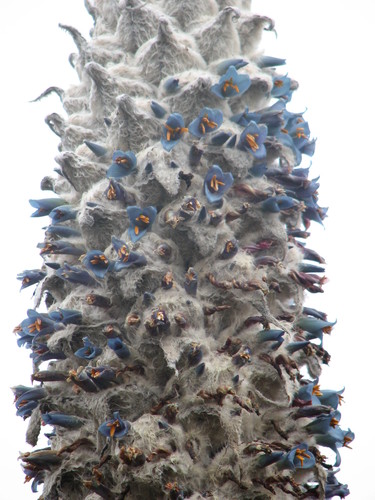
iNaturalist· cc0
no rights reserved
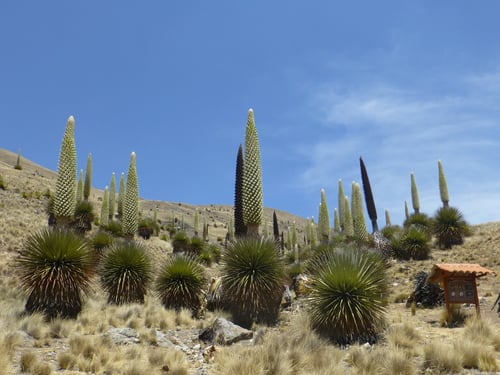
iNaturalist· cc0
no rights reserved
Summary
Source: WikipediaGreigia sphacelata is a species of flowering plant in the family Bromeliaceae. This species is endemic to Chile. It is distributed between the Maule and Los Lagos regions. It produces edible fruits, known as 'chupones'.
Description
A shrub. It grows 1.5 m high. It does not have a stem but the leaves are 2 m long and in a ring. The inner leaves are erect and the outer leaves curve. They are 3 cm wide and have a few sharp spines at the tip. Leaves are more pale underneath. There are teeth along the edge. The flowering shoots are at the side and have many flowers. The fruit is pulpy and white with many black seeds.
Edible Uses
The fruit is edible.
Traditional Uses
The fruit are eaten raw and taste like an apple.
This uses section is brief — help expand it
Medicinal Uses
None known.
Distribution
In Chile it grows in coastal areas from sea level to 500 m altitude. It grows in humid areas with constant rainfall. It can tolerate some shade. It suits hardiness zone 9. It can tolerate some frost.
Where It Grows
Chile*, South America,
Cultivation
A frost tender plant requiring stove conditions, though it can be grown outdoors in the summer.
Propagation
Propagate from seed.
Other Uses
None known.
Other Information
The fruit are eaten especially by children. They are also sold in local markets.
Synonyms
Also Known As
Cai, Caj, Chapeu, Chupeu, Chupones, Guicondo, Niyu, Nuyu, Quiscal, Rayen niyu
References (12)
- Barreau, A., et al, 2016, How Can We Teach Our Children if We Cannot Access the Forest? Generational Change in Mapuche Knowledge of Wild Edible Plants in Andean Temperate Ecosystems of Chile. Journal of Ethnobiology 36(2): 412–432
- Cordero, S. E., Abello, L. A., & Galvez, F. L., 2017, Plantas silvestres comestibles y medicinales de Chile y otras partes del mundo. CORMA p 178
- Daly, A. B., 20014, Narrating changing foodways: wild edible plant knowledge and traditional food systems in Mapuche lands of the Andean Temperate Forests, Chile. Masters Thesis Vancouver. p 45
- Gartenflora 14:137, t. 474. 1865
- Hedrick, U.P., 1919, (Ed.), Sturtevant's edible plants of the world. p 332
Show all 12 references Hide references
- Kermath, B. M., et al, 2014, Food Plants in the Americas: A survey of the domesticated, cultivated and wild plants used for Human food in North, Central and South America and the Caribbean. On line draft. p 397
- Leon-Lobos, P., et al, 2022, Patterns of Traditional and Modern Uses of Wild Edible Native Plants of Chile: Challenges and Future Perspectives. Plants (Basel) v 11 (6) Table S1
- Martin, F. W., et al, 1987, Perennial Edible Fruits of the Tropics. USDA Handbook 642 p 84
- Plants for a Future database, The Field, Penpol, Lostwithiel, Cornwall, PL22 0NG, UK. http://www.scs.leeds.ac.uk/pfaf/
- Rapoport, E. H. & Ladio, A. H., 1999, Plantas comestibles. Bosque Volume 20 No. 2. ISSN 0314-8799
- Smith, L. B. & Downs, R. J., 1979, Bromelioideae, Flora Neotropica 14(3), p 1633
- www.chileflora.com