Bromelia pinguin
L.
Pinguin
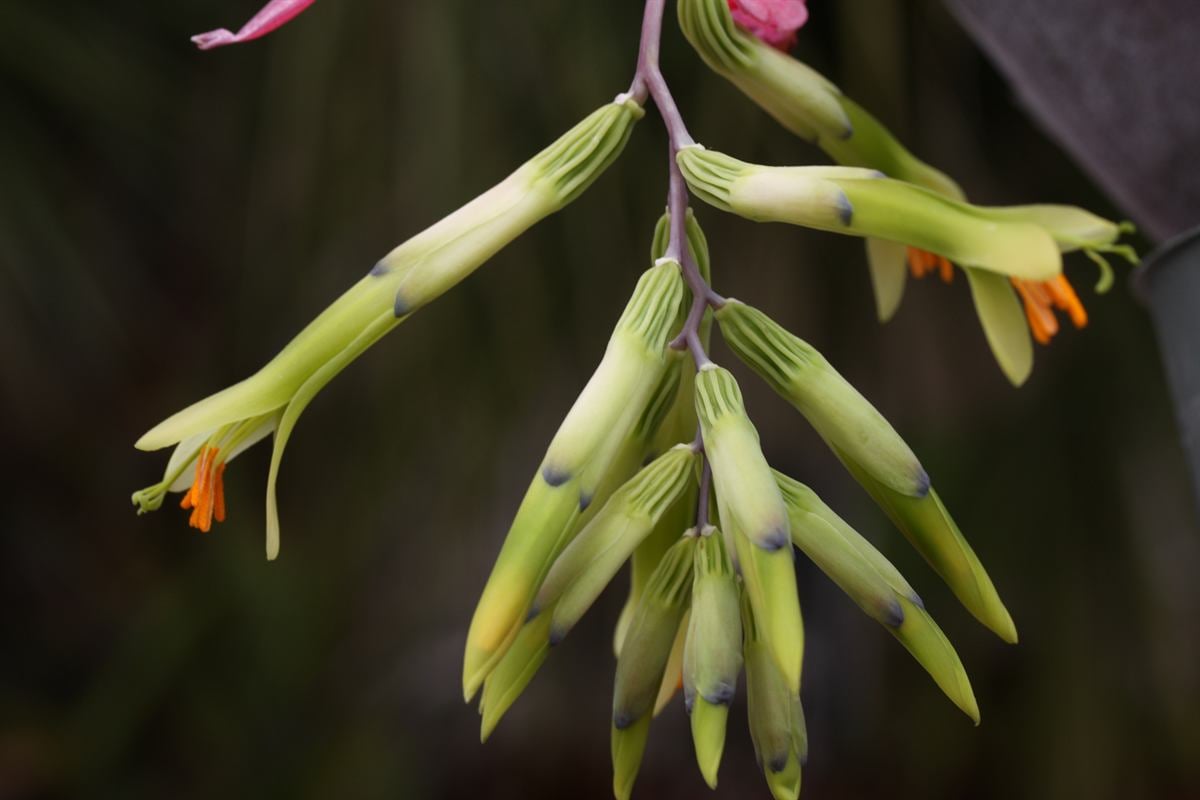
iNaturalist· cc-by-nc
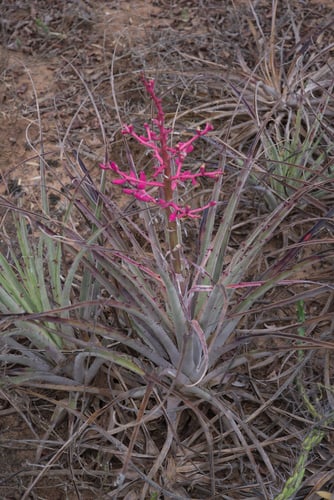
(c) PRAC VALLES, some rights reserved (CC BY-NC), uploaded by PRAC VALLES
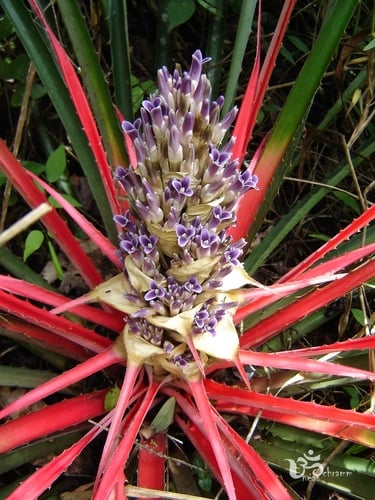
iNaturalist· cc-by-nc
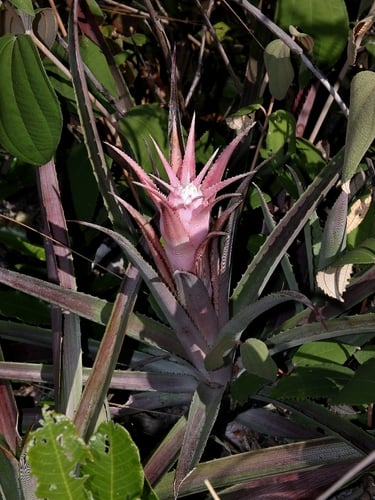
(c) Richard W. Tate, some rights reserved (CC BY-NC), uploaded by Richard W. Tate
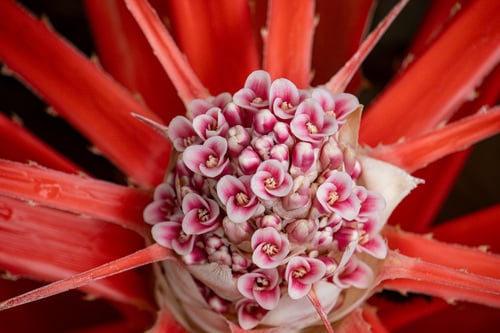
iNaturalist· cc-by-nc
(c) Federico A. Chinchilla Romero, some rights reserved (CC BY-NC), uploaded by Federico A. Chinchilla Romero
Summary
Source: WikipediaBromelia pinguin is a plant species in the genus Bromelia. This species is native to Central America, Mexico, the West Indies and northern South America. It is also reportedly naturalized in Florida. It is very common in Jamaica, where it is planted as a fence around pasture lands, on account of its prickly leaves, and has historically been used as an herbal abortifacient. The plant can be stripped of its pulp, soaked in water, and beaten with a wooden mallet, and it yields a fiber whence thread is made. In Nicaragua and El Salvador it is used to make gruel.
Description
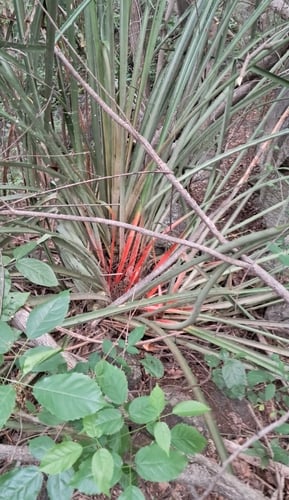
A herb. It is like a pineapple plant. It grows attached to other plants. It grows 1.2-2 m high. It spreads 2 m wide. The leaves are sword shaped and curve outwards. They are green but turn red at the base of the flower. There are teeth on the edges of the leaves. These are hooked. The flowers are purple and white. There are white woolly bracts along the fruit. The fruit are a crowded head of berries that are plum like and edible. They are yellow. The head is 60-100 cm long.
Edible Uses
Edible Parts: Flowers Fruit Shoots Edible Uses: Drink The fruits are edible but very acid. The fruit is intensely sour and acrid, it is sometimes used for making vinegar. It makes an excellent, refreshing drink. The young shoots at the base of the plant can be eaten raw or cooked. They are much used as food in all the dryer regions of Guatemala. They can be had when ordinary vegetables are scarce or unobtainable, as at the end of the dry season. The inflorescence is fried and eaten. In El Salvador, it is used to make gruel.
Traditional Uses
The fruit is mostly used for juice. It is very sour and is used for vinegar. The fruit can be eaten raw or cooked. The flower is fried and eaten. It is cooked in stews with onion and capsicum. The base of the shoots are eaten raw or cooked.
Medicinal Uses
None known
Distribution
It is a tropical plant. It is best in a seasonally wet and dry climate. It needs well-drained soil. It can grow in full sun or light shade. In Costa Rica it grows from sea level to 800 m altitude. It suits hardiness zones 9-12.
Where It Grows
Australia, Brazil, Caribbean, Central America*, Colombia, Costa Rica, Cuba, Dominican Republic, Ecuador, El Salvador, Grenada, Guatemala, Guiana, Guianas, Guyana, Haiti, Hawaii, Honduras, India, Jamaica, Lesser Antilles, Mexico*, Nicaragua, North America, Pacific, Puerto Rico, South America*, Suriname, USA, Venezuela, West Indies,
Cultivation
Plants can be grown from seed or offsets.
Propagation
Seed
Other Uses
Fencing Fibre Hedge String Much planted for hedges and fences in central America and the West Indies. Other Uses: A fibre obtained from the leaves has been used locally for cordage, ropes etc. Rather weak. It is stripped of its pulp, soaked in water, and beaten with a wooden mallet to yield the fiber. Special Uses Carbon Farming Food Forest Hedge
Other Information
It is sold in local markets.
Notes
There are 51 Bromelia species. They grow in tropical America.
Synonyms
Also Known As
Barbed-wire fence, Borregos, Caracuate, Cardo, Chibichibe, Chupaya, Corazon de Fuego, Guapilla, Maya, Pina de raton, Pinguin, Pinuela, Viru, Wild pineapple
References (33)
- Ambasta S.P. (Ed.), 2000, The Useful Plants of India. CSIR India. p 87
- Bircher, A. G. & Bircher, W. H., 2000, Encyclopedia of Fruit Trees and Edible Flowering Plants in Egypt and the Subtropics. AUC Press. p 66
- Bodkin, F., 1991, Encyclopedia Botanica. Cornstalk publishing, p 171
- Castaneda, H., & Stepp, J. R., 2007, Ecosystems as Sources of Useful Plants for the Guaymi People of Costa Rica. Ethnobotany Journal. 5:249-257
- Chizmar Fernandez, C., et al, 2009, Plantas comestibles de Centroamerica. Instituto de Biodiversidad, Costa Rica. p 133
Show all 33 references Hide references
- Cundall, P., (ed.), 2004, Gardening Australia: flora: the gardener's bible. ABC Books. p 260
- D'Ambrosio, U., & Puri, R. K., 2016, Foodways in transition: food plants, diet and local perceptions of change in a Costa Rican Ngäbe community. Journal of Ethnobiology and Ethnomedicine (2016) 12:3 p 22
- Ekman Herbarium records Haiti
- Facciola, S., 1998, Cornucopia 2: a Source Book of Edible Plants. Kampong Publications, p 62
- FAO, 1993, Valor Nutritivo Y Usis en Alimantacion humana de Algunis Cultivos Autoctonos Subexplotados de Mesoamerica. FAO, Santiago, Chile. p 69
- Kermath, B. M., et al, 2014, Food Plants in the Americas: A survey of the domesticated, cultivated and wild plants used for Human food in North, Central and South America and the Caribbean. On line draft. p 145
- Kiple, K.F. & Ornelas, K.C., (eds), 2000, The Cambridge World History of Food. CUP p 1835
- Langlois, H. C., 2004, Ethnobotanical analysis of different successional stages as sources of wild edible plants for the Guaymi people in Costa Rica. M. Sc. thesis University of Florida.
- Llamas, K.A., 2003, Tropical Flowering Plants. Timber Press. p 157
- Lopez-Diago, D. & Garcia, N., 2021, Wild edible fruits of Colombia. Biota ColomBiana 22 (2) p 33
- Martin, F.W. & Ruberte, R.M., 1979, Edible Leaves of the Tropics. Antillian College Press, Mayaguez, Puerto Rico. p 79, 180
- Martin, F. W., et al, 1987, Perennial Edible Fruits of the Tropics. USDA Handbook 642 p 84
- Miguel, E., et al, 1989, A checklist of the cultivated plants of Cuba. Kulturpflanze 37. 1989, 211-357
- Piedra-Malagón, E. M. et al, 2022, Edible native plants of the Gulf of Mexico Province. Biodiversity Data Journal 10: e80565 p 14
- Pio-Leon, J. F., et al, 2009, Physicochemical, Nutritional and Antibacterial Characteristics of the Fruit of Bromelia pinguin L. Plant Foods for Human Nutrition 64:181-187
- Plants of Haiti Smithsonian Institute http://botany.si.edu
- Roa, J. A. G. & Boada, D. S. G., 2018, Fundación para el Fortalecimiento de la Fruticultura y Plantas Alimenticias no Convencionales en Colombia.
- Rosero-Toro, et al, 2018, Cultural significance of the flora of a tropical dry forest in the Doche vereda (Villavieja, Huila, Colombia). Journal of Ethnobiology and Ethnomedicine (2018) 14:22 p
- Segura, S. et al, 2018, The edible fruit species in Mexico. Genet Resour Crop Evol (2018) 65:1767–1793
- Sp. pl. 1:285. 1753 (type species)
- Standley, P. & Steyermark, J., 1958, Flora of Guatemala. Fieldiana: Botany, Volume 24 part 1 p 347, 393
- Staples, G.W. and Herbst, D.R., 2005, A tropical Garden Flora. Bishop Museum Press, Honolulu, Hawaii. p 637
- Torre, de la, L., et al, 2008, Enciclopedia de las Plantas Útiles del Ecuador. Herbario QCA. Pontificia Universidad Católica del Ecuador. p 260
- Turreira-Garcia, N., et al, 2015, Wild edible plant knowledge, distribution and transmission: a case study of the Achi Mayans of Guatemala. Journal of Ethnobiology and Ethnomedicine. 11:52
- Uphof,
- World Checklist of Useful Plant Species 2020. Royal Botanic Gardens, Kew
- www.colecionandofrutas.org
- Zuchowski W., 2007, Tropical Plants of Costa Rica. A Zona Tropical Publication, Comstock Publishing. p 371