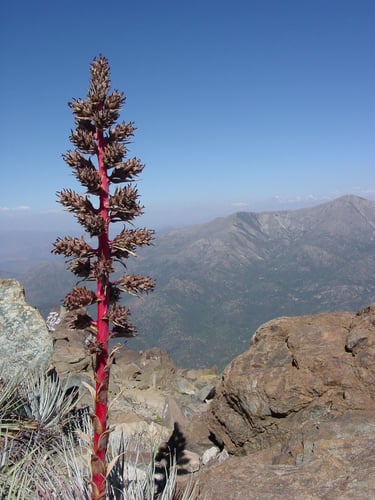
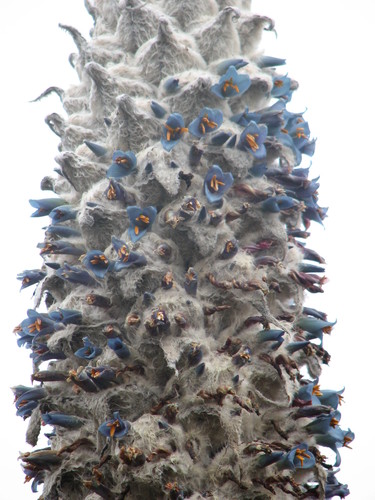
Bromelia laciniosa
C. Martius ex Schultes f.
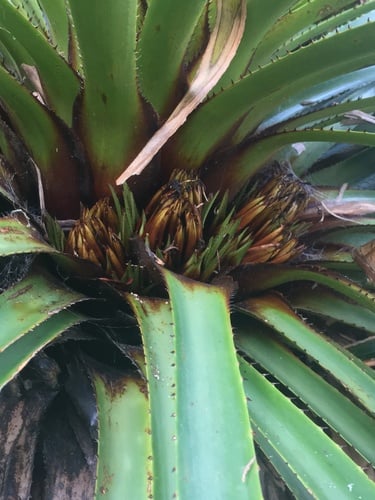
iNaturalist· cc-by-nc-sa
(c) Rich Hoyer, some rights reserved (CC BY-NC-SA), uploaded by Rich Hoyer
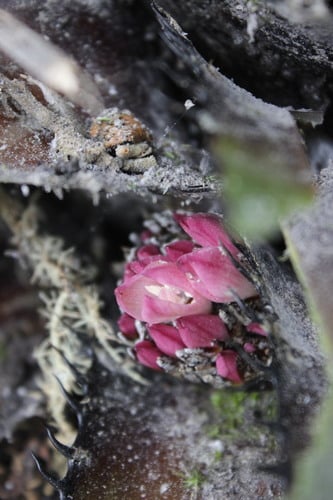
iNaturalist· cc-by-nc
(c) Sidnei Sampaio, some rights reserved (CC BY-NC), uploaded by Sidnei Sampaio
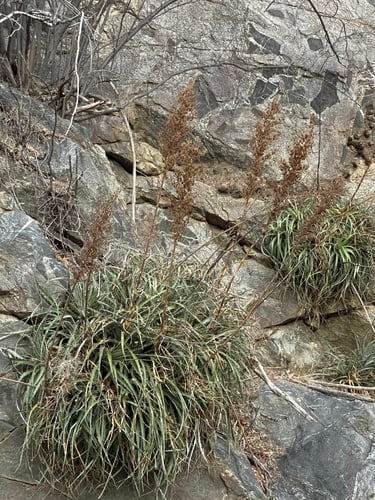
iNaturalist· cc-by-nc-sa
(c) Rich Hoyer, some rights reserved (CC BY-NC-SA), uploaded by Rich Hoyer
Summary
Source: WikipediaBromelia laciniosa, natively known as macambira, is plant in the bromeliad family, or in other words, the pineapple family—though not all bromeliads resemble the common pineapple. Bromelia laciniosa is native to Brazil and Argentina but cultivated in many other places.
Description
A tropical herb of the Bromeliaceae family with characteristic suckers, native to tropical America where it can survive in arid and drought-prone environments. The plant produces edible bulbs, roots, and leaves that are traditionally processed into flour.
Edible Uses
The bulbs are cooked and sun-dried, then pulverized into flour. The roots and leaves are also edible. The plant is used as a famine food.
Traditional Uses
The bulbs are cooked then sun-dried. The bulb is then pulverised and reduced to a flour.
This uses section is brief — help expand it
Medicinal Uses
A significant negative of working with Bromelia laciniosa is that the extraction of its leaves is very laborious; the plant's blades need to be trimmed and packed into bundles to make the pulverizing of its stalks more productive. Farmers need to make a cost/benefit analysis to determine whether the labour and equipment is worth the rewards of growing Bromelia laciniosa. Strong fibers can also be extracted from Bromelia laciniosa; the blades of the plant are cut, its thorns removed, its leaves fermented for several days to loosen up the fibers, and then its stalks are dried and readied for fiber extraction; a caveat though is that this process gives off a pungent odor, so this task should be performed in a contained area. The leaves and fruit of Bromelia laciniosa can be boiled and ground to extract a starchy substance that, when dried, can be consumed as a flour that is a fiber and calcium rich source; in fact, the calcium content of this plant is the highest of any known plant species, evident by its 15 to 1 ratio of calcium content relative to cow milk. The concentrate of the roots of Bromelia laciniosa roots has been claimed to have various medical uses, such as to combat hepatitis, intestinal viruses, and as a diuretic.
Known Hazards
The processed flour contains exceptionally high calcium content (15 times that of milk, 3 times that of cheese), which may be a consideration for those monitoring calcium intake.
Distribution
A tropical plant. It can grow in arid places. It can survive drought.
Where It Grows
Africa, Argentina, Brazil, East Africa, Mozambique, South America,
Cultivation
Seeds need light to germinate. Seeds germinate better if soaked in acetone for 60 minutes.
Other Information
It is a famine food.
Notes
Chemical composition: moisture = 0.5%; starch = 63.10%; sugars = 4.36%; proteins = 5.14%; minerals = 4.27%; crude fibres, etc.[sic] = 13.63%; ash (Si02: (0.80% in flour); CaO = 38.1% (1.62% in flour; Fe2O3 = 0.7% (0.03% in flour). Thiamine = 168 mcg per 100g. No riboflavin. Attention is directed to the extraordinary calcium content - the highest of any known plant species - corresponding to 15x the amount for milk and 3x the amount for cheese. There are 51 Bromelia species. They grow in tropical America.
Synonyms
Also Known As
Macambira
References (7)
- Brickell, C. (Ed.), 1999, The Royal Horticultural Society A-Z Encyclopedia of Garden Plants. Convent Garden Books. p 192
- DE CASTRO
- Lim, T. K., 2015, Edible Medicinal and Non Medicinal Plants. Volume 9, Modified Stems, Roots, Bulbs. Springer p 18
- Nascimento, V. T. D., et al, 2012, Famine Foods of Brazil’s Seasonal Dry Forests: Ethnobotanical and Nutritional Aspects. Economic Botany.66 (1), pp 22-34
- Nascimento, V. T. D., et al, 2013, Knowledge and Use of Wild Food Plants in Areas of Dry Seasonal Forests in Brazil. Ecology of Food and Nutrition, 52:317–343
Show all 7 references Hide references
- Royal Botanic Gardens, Kew (1999). Survey of Economic Plants for Arid and Semi-Arid Lands (SEPASAL) database. Published on the Internet; http://www.rbgkew.org.uk/ceb/sepasal/internet [Accessed 4th April 2011]
- World Checklist of Useful Plant Species 2020. Royal Botanic Gardens, Kew