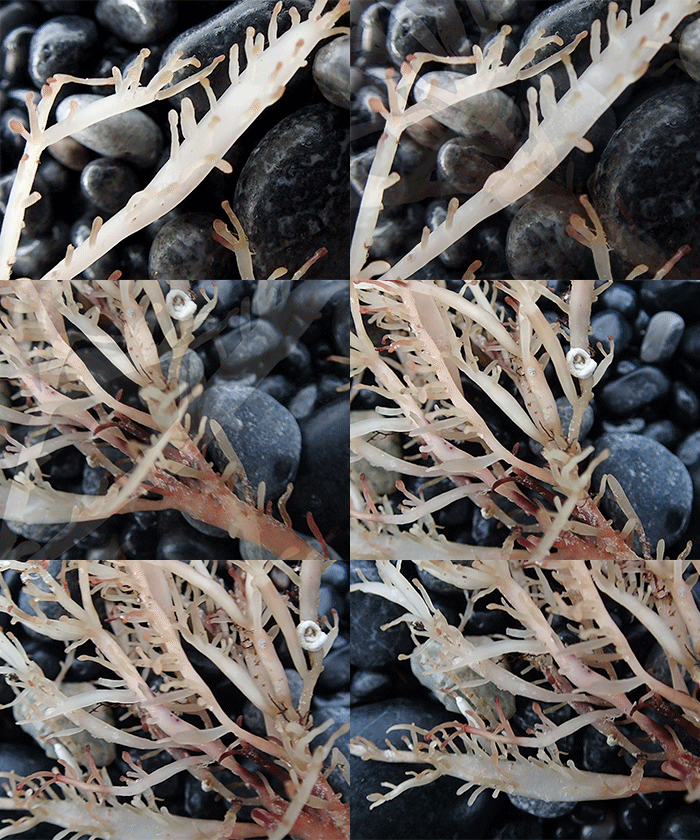
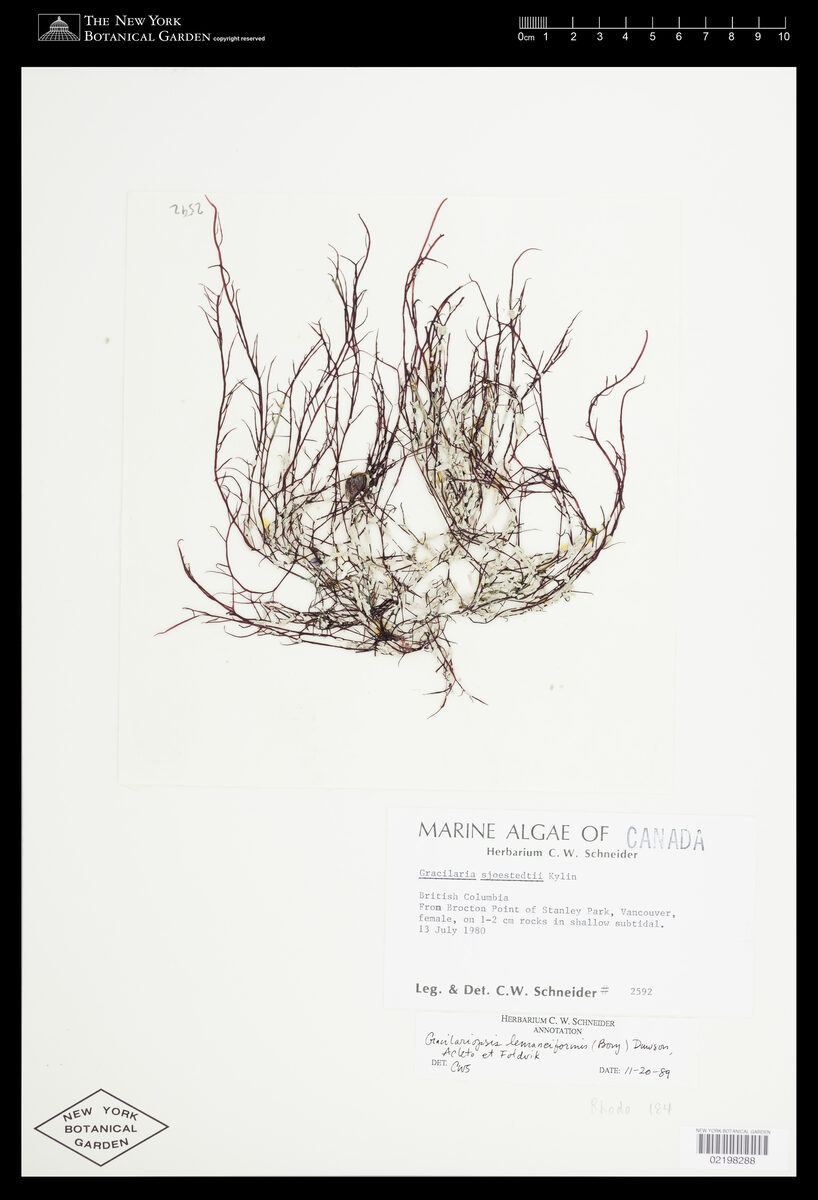
Gracilaria tenuistipitata
Chang et Xia
Gracilariaceae Edible: Algae, Frond, Seaweed
gbif· cc-by
Meise Botanic Garden
gbif· cc-by-nc
University of North Carolina at Chapel Hill Herbarium; Max & Fran Hommersand Algae Herbarium: Algae (NCU-Algae)
gbif· cc-by-nc
University of North Carolina at Chapel Hill Herbarium; Max & Fran Hommersand Algae Herbarium: Algae (NCU-Algae)
Description
A tropical red seaweed in the Gracilariaceae family, composed of algal fronds.
This description is brief — help expand it
Edible Uses
The fronds and algae are eaten as seaweed.
Distribution
It is a tropical plant.
Where It Grows
Asia, China, Indochina, Indonesia, Japan, Malaysia, North America, Philippines, SE Asia, Singapore, Thailand, USA, Vietnam,
References (5)
- http://www.seavegetables.com (As var. liui)
- Xia, B., and Abbott, I.A., 1987, Edible seaweeds of China and their place in the Chinese diet. Economic Botany 41:341-53
- Yang, J., et al, 2012, Aqueous Extracts of the Edible Gracilaria tenuistipitata are Protective Against H2O2-Induced DNA Damage, Growth Inhibition and Cell Cycle Arrest. Molecules 2012, 17, 7241-7254
- Yangthong, M. et al, 2009, Antioxidant Activities of Four Edible Seaweeds from the Southern Coast of Thailand. Plant Foods for Human Nutrition 64:218-223
- Zemke-White, W. L. & Ohno, M., 1999, World seaweed utilisation: An end-of-century summary. Journal of Applied Phycology 11: 369-376 (var. liui)