Gracilaria verrucosa
(Hudson) Papenfuss
Sea hair, Hair seaweed
iNaturalist· cc-by-nc
(c) Frédéric ANDRE, some rights reserved (CC BY-NC)
iNaturalist· cc-by-nc
(c) Frédéric ANDRE, some rights reserved (CC BY-NC)
iNaturalist· cc-by-nc
(c) Esteban, some rights reserved (CC BY-NC)
Description
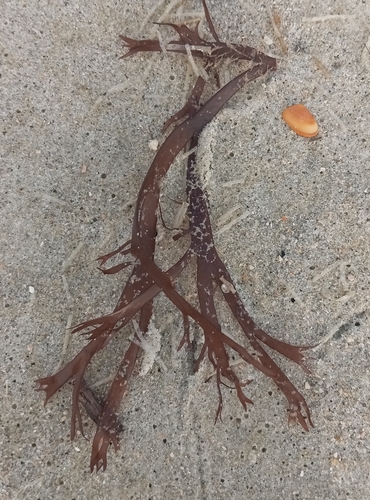
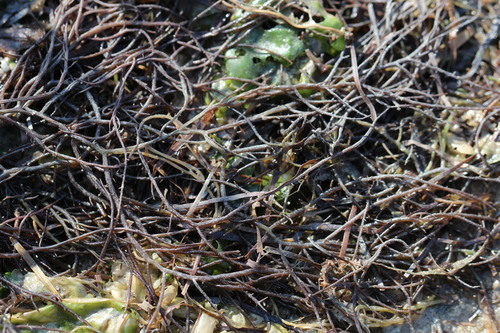
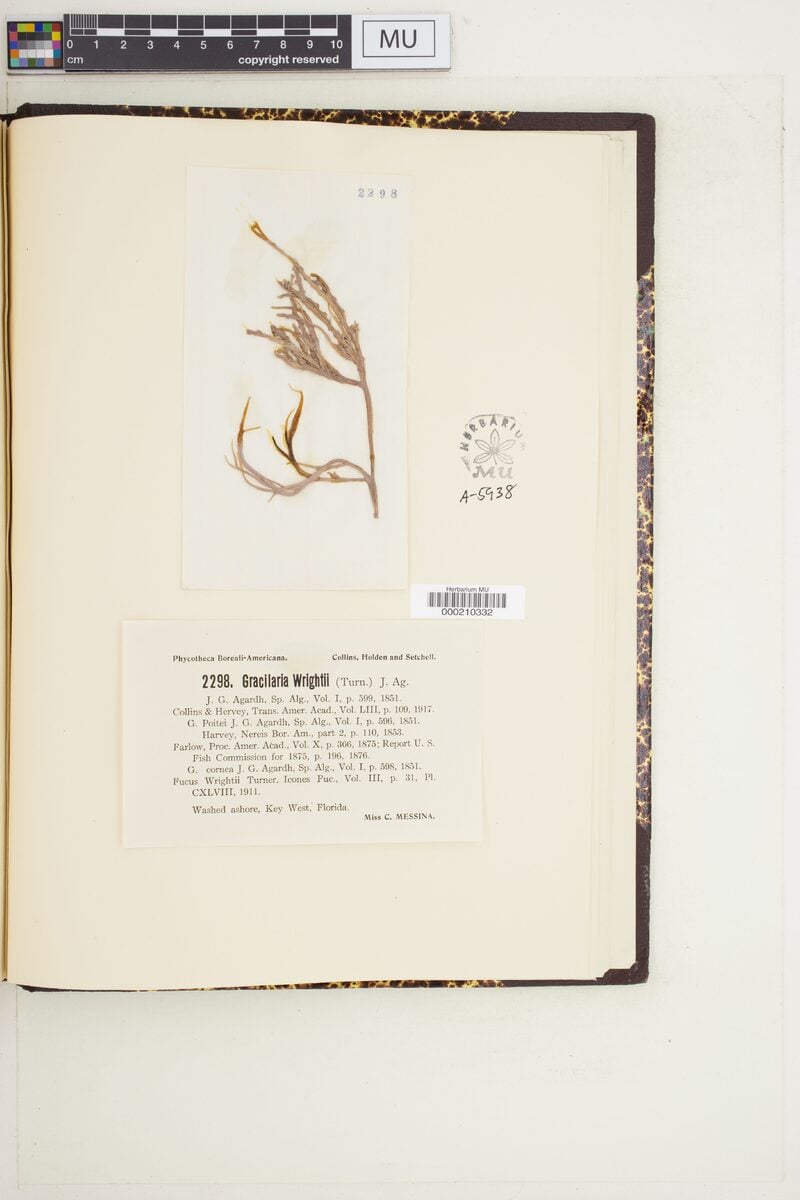
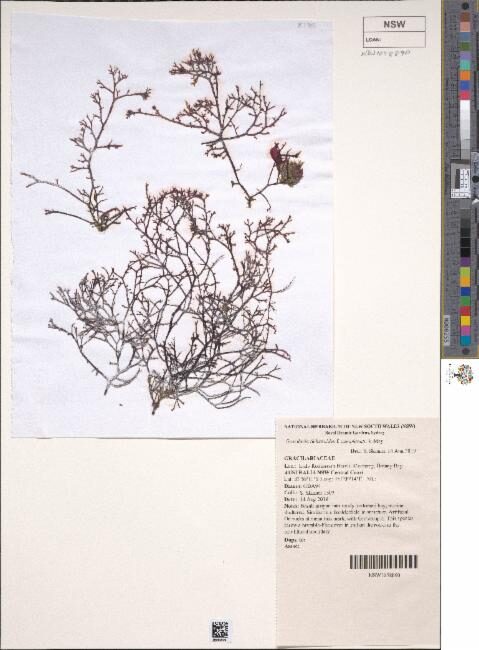
A red seaweed. Some forms are small and some large. They can be 10 cm long or 2.5 m long. It has irregular branches and these taper to the tip.
This description is brief — help expand it
Edible Uses
The fronds can be eaten raw, sun-bleached, or blanched, and are often cooked with other vegetables or pickled. It is also processed to produce agar.
Traditional Uses
It can be eaten raw, sunbleached or blanched. It is used to produce agar. It is pickled. It can be cooked with other vegetables.
This uses section is brief — help expand it
Distribution
A tropical plant. It often is attached to rocks or pebbles. It is in the lower intertidal zone. It grows on sheltered shores.
Where It Grows
Antarctica, Argentina, Asia, Australia, Britain, Caribbean, Chile, Egypt, Europe, Fiji, Hispaniola, Indonesia, Italy, Japan, Korea, Mediterranean, North Africa, Pacific, Papua New Guinea, PNG, Peru, Philippines, SE Asia, South America, West Indies,
Synonyms
Also Known As
Black moss, China grass, False Ceylon moss, Lumiwawa, Lumiyara, Pelillo, Sea moss, Susueldot-baybay
References (15)
- Ambasta, S.P. (Ed.), 2000, The Useful Plants of India. CSIR India. p 247
- Cherry, P., et al, 2019, Risks and benefits of consuming edible seaweeds. Nutrition ReviewsVR Vol. 77(5):307–329
- Cribb, A.B. & J.W., 1976, Wild Food in Australia, Fontana. p 189, 192
- Cribb, A.B., 1996, Seaweeds of Queensland A Naturalist's Guide. The Queensland Naturalists' Club Handbook No. 2. p 89
- Facciola, S., 1998, Cornucopia 2: a Source Book of Edible Plants. Kampong Publications, p 259
Show all 15 references Hide references
- Galutira E.C., and Velasquez, E.T., 1963, Taxonomy, distribution and seasonal occurrence of edible marine algae in Ilocos Norte, Philippines. Philippines Journal of Science. 92:483-522
- http://www.seavegetables.com
- Jansen, A. A. J., et al, (Eds), 1990, Food and Nutrition in Fiji. Volume One. p 55
- Kiple, K.F. & Ornelas, K.C., (eds), 2000, The Cambridge World History of Food. CUP p 232, 237
- Lee, B., 2008, Seaweed Potential as a marine vegetable. RIRDC Publication No. 08/009
- Millar, A. J., et al, 1999, Annotated and Illustrated Survey of the Marine Macroalgae from Motupore Island and Vicinity (Port Moresby area, Papua New Guinea). 111. Rhodophyta. Australian Systematic Botany 12, 549-591
- Rouxel, C. et al, 2001, Species identification by SDS-PAGE of red algae used as seafood or a food ingredient. Food Chemistry 74 (2001) 349–353
- Solomon, C., 2001, Encyclopedia of Asian Food. New Holland. p 335
- Surey-Gent, S. & Morris G., 1987, Seaweed. A User's Guide. Whirret Books. London. p 66, 136
- Zemke-White, W. L. & Ohno, M., 1999, World seaweed utilisation: An end-of-century summary. Journal of Applied Phycology 11: 369-376