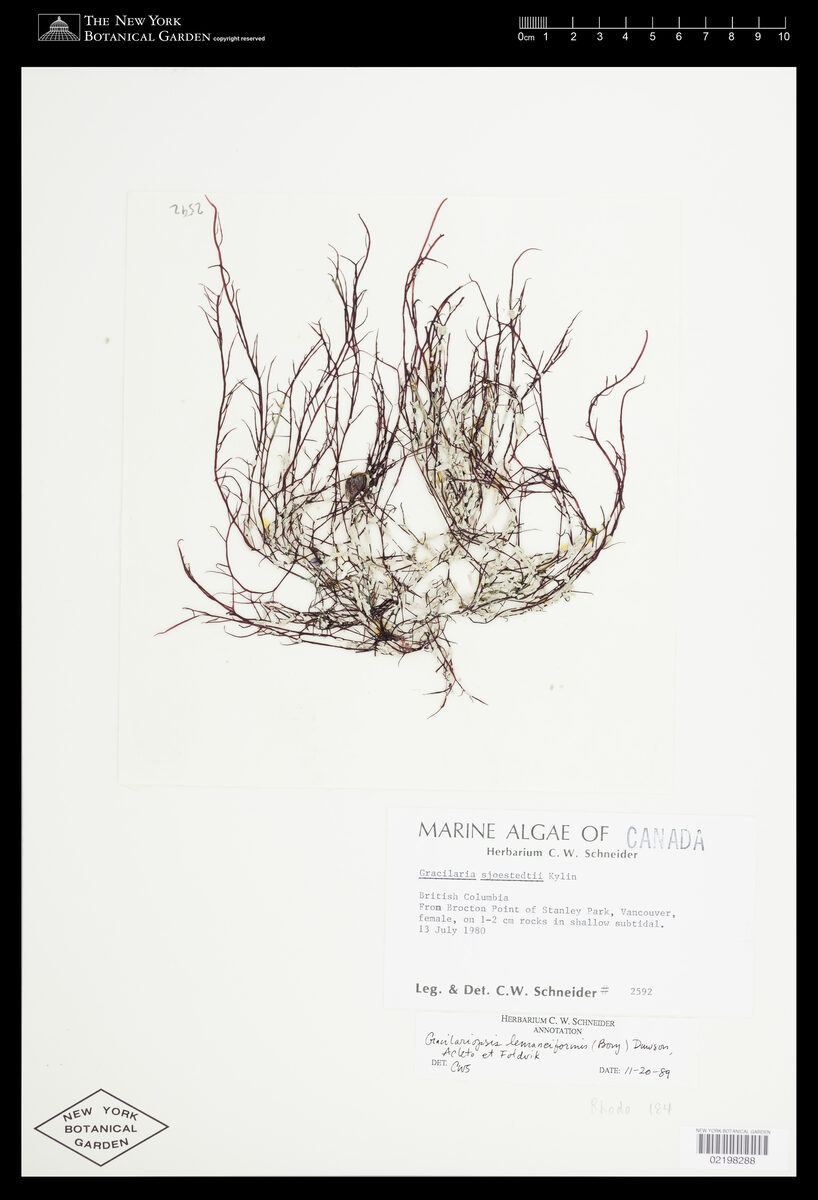
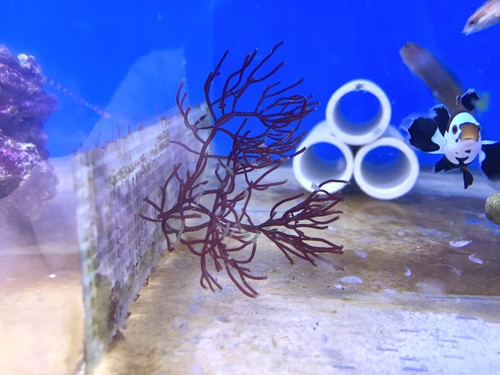
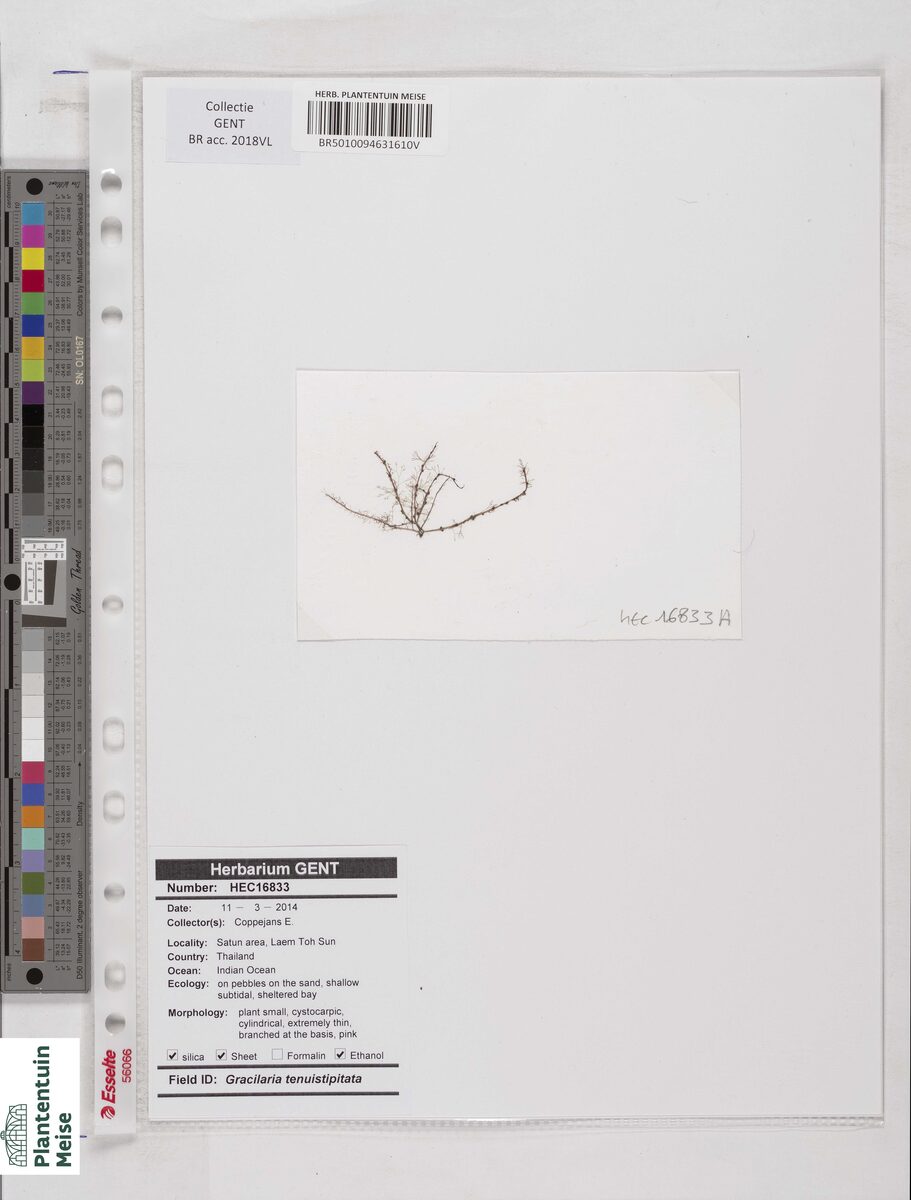
Gracilaria asiatica
Chang et Xia
Saaraai khao kwaang
gbif· cc-by-nc
University of North Carolina at Chapel Hill Herbarium; Max & Fran Hommersand Algae Herbarium: Algae (NCU-Algae)
gbif· cc-by-nc
University of North Carolina at Chapel Hill Herbarium; Max & Fran Hommersand Algae Herbarium: Algae (NCU-Algae)
gbif· cc-by-nc
University of North Carolina at Chapel Hill Herbarium; Max & Fran Hommersand Algae Herbarium: Algae (NCU-Algae)
Description
A red alga or seaweed. It is tufted and branched. It is cylindrical in shape. Some kinds have thin thread like leaves. Others have short nodes. It is succulent.
Edible Uses
The fronds are eaten raw or blanched, and are also prepared into a sour salad with roasted chopped coconut and ground dried shrimp.
Traditional Uses
It is eaten raw or blanched. It is also made into a sour salad with roasted chopped coconut and ground dried shrimp.
This uses section is brief — help expand it
Distribution
A tropical plant.
Where It Grows
Asia, China, Indochina, SE Asia, Thailand, Vietnam,
References (4)
- http://www.seavegetables.com
- Jacquat, C., 1990, Plants from the Markets of Thailand. D.K. Book House p 27
- Xia, B., and Abbott, I.A., 1987, Edible seaweeds of China and their place in the Chinese diet. Economic Botany 41:341-53
- Zemke-White, W. L. & Ohno, M., 1999, World seaweed utilisation: An end-of-century summary. Journal of Applied Phycology 11: 369-376