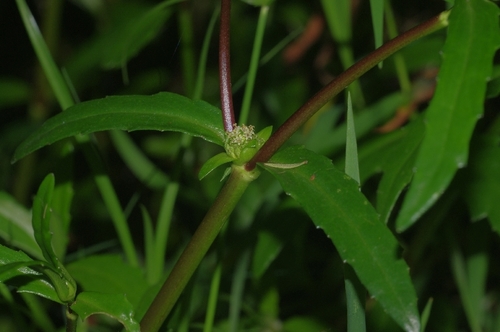
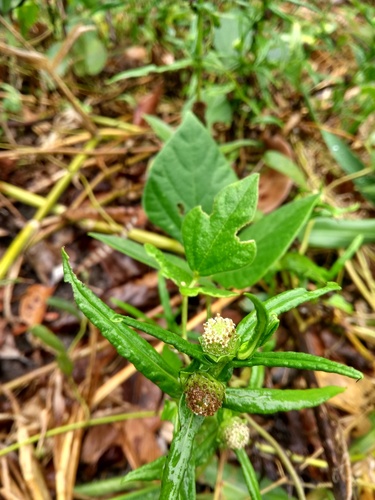
Cirsium oleraceum
(L.) Scop.
Cabbage thistle, Meadow cabbage, Vegetable thistle
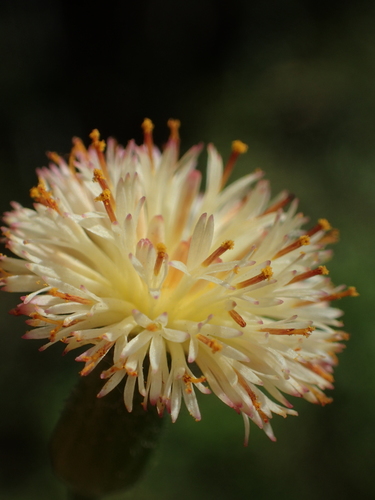
iNaturalist· cc-by-nc
(c) Marion Zöller, some rights reserved (CC BY-NC), uploaded by Marion Zöller
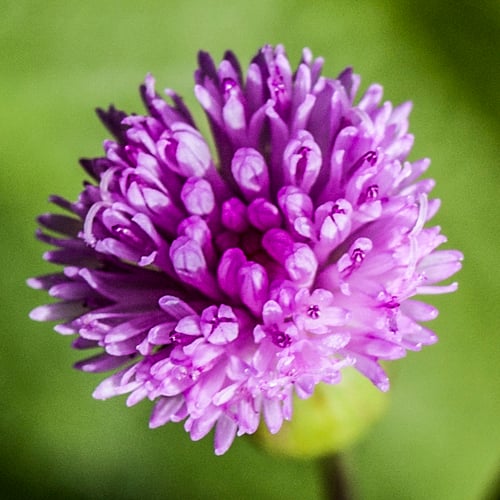
iNaturalist· cc-by-nc
(c) ggalitz, some rights reserved (CC BY-NC)
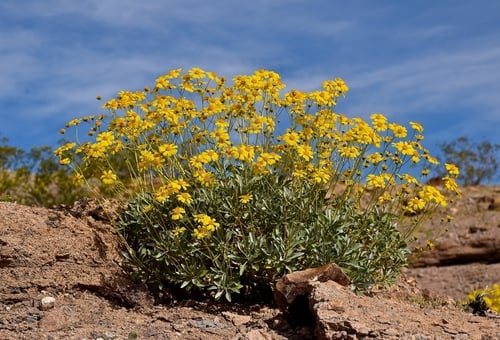
iNaturalist· cc-by-sa
(c) Grzegorz Grzejszczak, some rights reserved (CC BY-SA), uploaded by Grzegorz Grzejszczak
Summary
Source: WikipediaCirsium oleraceum, the cabbage thistle or Siberian thistle, is a species of thistle in the genus Cirsium within the family Asteraceae, native to central and eastern Europe and Asia, where it grows in wet lowland soils. Cirsium oleraceum is a herbaceous perennial plant growing to 1.5 m tall, the stems unbranched or with only a very few branches. The leaves are broad and ovoid, with a weakly spiny margin, being pinnatipartite. The flowers are produced in dense flower heads which are 2.5–4 cm diameter, pale yellow, but sometimes tinged pink. Its specific epithet oleraceum means "vegetable/herbal" in Latin and is a form of holeraceus (oleraceus).
Description
A herb. It is a thistle. It grows 1.5 m tall. The stems is usually unbranched and with few side branches. The leaves are oval with weakly spiny edges. The flowers are in dense flower heads 2.5-4 cm across. They are pale yellow.
Edible Uses
Young leaves are cooked and used as a vegetable. The root is cooked and was formerly used as a table vegetable, harvested before the plant flowers. The root is likely rich in inulin, a starch the human body cannot digest, which passes straight through the digestive system and may ferment in some people, causing flatulence.
Traditional Uses
The young shoots (stems and leaves) are cooked and eaten as a vegetable. They are boiled with milk as a soup. The swollen rootstock before flowering is cooked and eaten.
Medicinal Uses
None known.
Distribution
It is a temperate plant. It grows in wet lowland soils.
Where It Grows
Asia, Balkans, Bosnia, Britain, Estonia, Europe, France, Hungary, Italy, Lithuania, Luxembourg, Mediterranean, Poland, Russia, Siberia, Slovenia,
Propagation
Sow seed in early spring or autumn directly in situ. Germination typically occurs within 2–8 weeks at 20°C. Can also be propagated by division in spring or autumn.
Other Uses
The seed fluff can be used as a tinder. The seeds of all thistle species also yield a useful oil by expression. No details on potential yields are available.
Other Information
It is cultivated for food in India and Japan.
Notes
There are about 150-250 Cirsium species. They grow in temperate regions.
Synonyms
Also Known As
Kaposztas acat, Mehki osat, Siberian thistle
References (12)
- Cerne, M., 1992, Wild Plants from Slovenia used as Vegetables. Acta Horticulturae 318
- Denes, A., et al, 2012, Wild plants used for food by Hungarian ethnic groups living in the Carpathian Basin. Acta Societatis Botanicorum Poloniae 81 (4): 381-396
- Facciola, S., 1998, Cornucopia 2: a Source Book of Edible Plants. Kampong Publications, p 37
- Hammer, K. & Spahillari, M., 1999, Crops of European origin. in Report of a networking group on minor crops. IPGRI p 44
- Hedrick, U.P., 1919, (Ed.), Sturtevant's edible plants of the world. p 205 (As Cnicus oleraceus)
Show all 12 references Hide references
- Lim, T. K., 2015, Edible Medicinal and Non Medicinal Plants. Volume 9, Modified Stems, Roots, Bulbs. Springer p 24
- Łukasz Łuczaj and Wojciech M Szymański, 2007, Wild vascular plants gathered for consumption in the Polish countryside: a review. J Ethnobiol Ethnomedicine. 3: 17
- Luczaj, L. et al, 2012, Wild food plant use in 21st century Europe: the disappearance of old traditions and the search for new cuisines involving wild edibles. Acta Soc Bot Pol 81(4):359–370
- Paoletti, M.G., Dreon, A.L., and Lorenzoni, G.G., 1995, Pistic, Traditional Food from Western Friuli, NE Italy. Economic Botany 49(1) pp 26-30
- Plants for a Future database, The Field, Penpol, Lostwithiel, Cornwall, PL22 0NG, UK. http://www.scs.leeds.ac.uk/pfaf/
- Prakofjewa, J., et al, 2023, Boundaries Are Blurred: Wild Food Plant Knowledge Circulation across the Polish-Lithuanian-Belarusian Borderland. Biology 2023, 12, 571.
- Redzic, S. J., 2006, Wild Edible Plants and their Traditional Use in the Human Nutrition in Bosnia-Herzegovina. Ecology of Food and Nutrition, 45:189-232