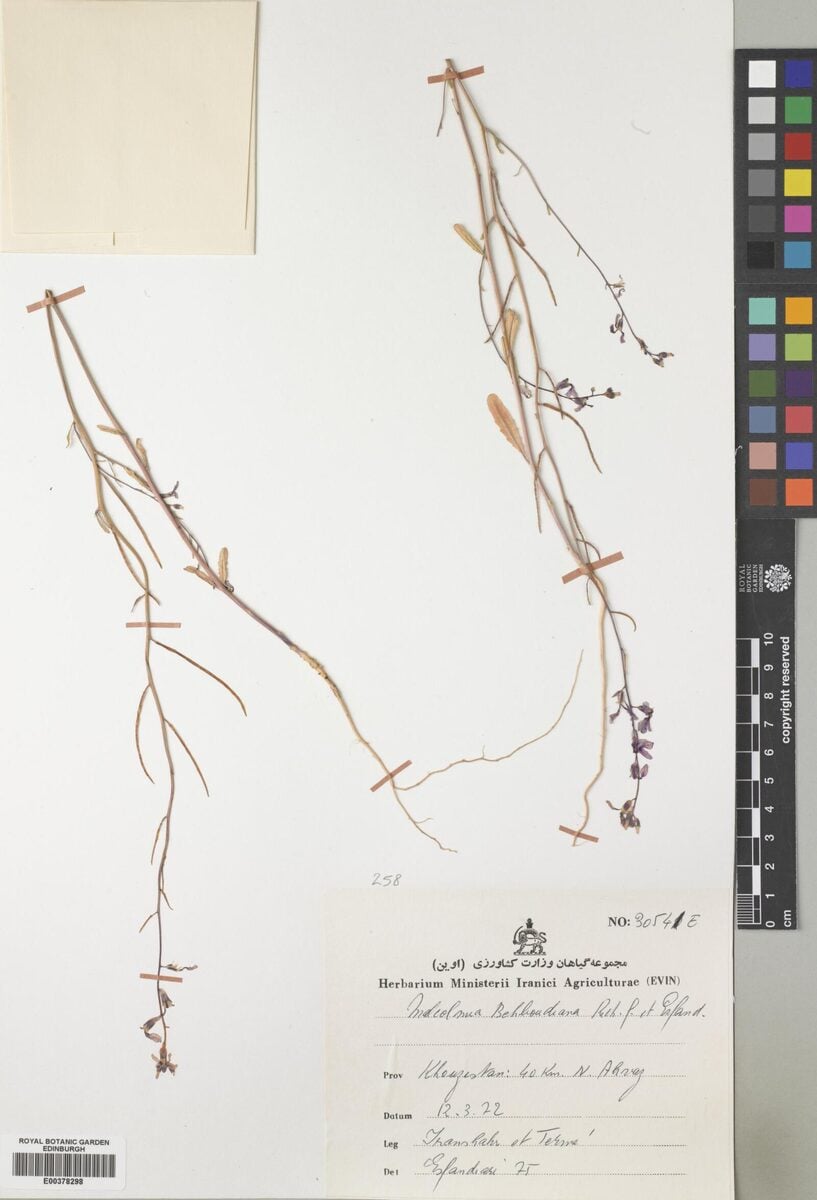
Alliaria petiolata
(M. Bieb.) Cavara and Grande
Hedge Garlic, Jack-by-the-hedge, Garlic Mustard
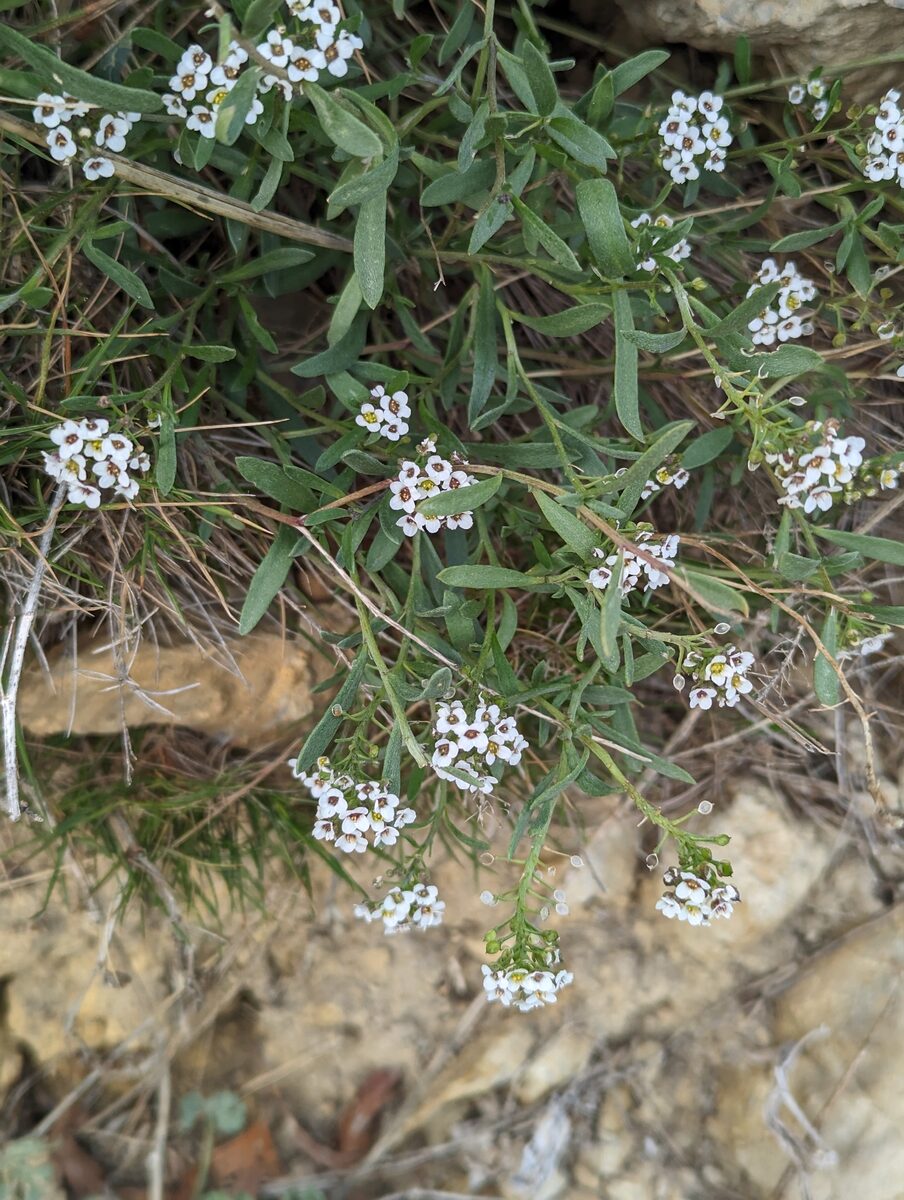
iNaturalist· cc-by-sa
(c) Douglas Goldman, some rights reserved (CC BY-SA), uploaded by Douglas Goldman
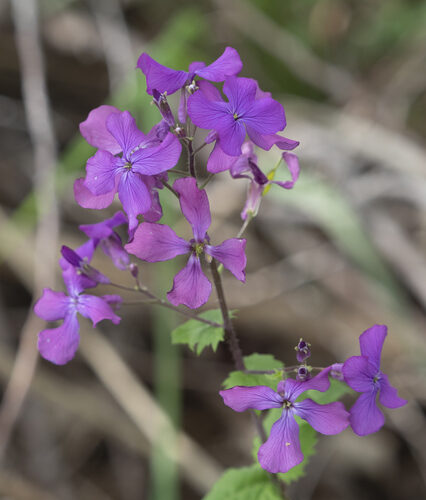
iNaturalist· cc-by-nc
(c) jonathan_mack, some rights reserved (CC BY-NC), uploaded by jonathan_mack
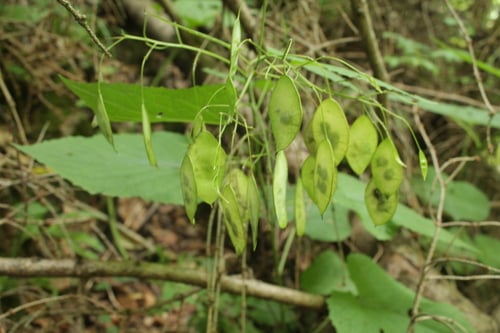
iNaturalist· cc-by-nc-sa
(c) Jason L Miller, some rights reserved (CC BY-NC-SA), uploaded by Jason L Miller
Summary
Source: WikipediaAlliaria petiolata, or garlic mustard, is a biennial flowering plant in the mustard family (Brassicaceae). It is native to Europe, western and central Asia, north-western Africa, Morocco, Iberia and the British Isles, north to northern Scandinavia, and east to northern Pakistan and Xinjiang in western China. It has now become a tenacious invasive plant across the northern U.S., in particular because of its earlier springtime emergence than many native species, often in the forest understory. In the first year of growth, plants form clumps of round, slightly wrinkled leaves, that when crushed smell like garlic. The plants flower in spring of the next year, producing cross-shaped white flowers in dense clusters. As the flowering stems bloom they elongate into a spike-like shape. When flowering is complete, plants produce upright fruits that release seeds in mid-summer. Plants are often found growing along the margins of hedges, giving rise to the old British folk name of jack-by-the-hedge. Other common names include garlic root, hedge garlic, sauce-alone, jack-in-the-bush, penny hedge and poor man's mustard. The genus name Alliaria, "resembling Allium", refers to the garlic-like odour of the crushed foliage. All parts of the plant, including the roots, have this smell.
Description
A cabbage family herb. It is a biennial plant as it takes 2 years to complete its life cycle. It grows 1 m high and 40 cm across. It gives off a strong smell of garlic. The leaves are bright green and the lower leaves are kidney shaped. The upper leaves are oval. The edges are wavy and can have rounded teeth. They are 5-15 cm across. The flowers are small and white. They are 5-10 mm across. They are in clusters at the tips of the stems and at the leaf bases. The fruit are slender pods 5 cm long. They are cylinder shaped and upright. There are many very small seeds.
Edible Uses
Young leaves can be eaten raw or cooked — as a potherb or chopped finely and added to salads for a mild garlic and mustard flavour. The leaves are available very early in the year, making them a welcome salad ingredient through winter, and are also believed to strengthen the digestive system. Flowers and young seed pods are also edible raw, with a mild, garlic-like flavour.
Traditional Uses
The young leaves are eaten raw or cooked. It tastes like mustard seed. It is finely chopped and used in salads. They can be mixed with mint leaves and made into a sauce with lamb dishes. The flowers and young seeds pods are eaten raw as a flavouring.
Medicinal Uses
Garlic mustard has seen little use in herbal medicine, though the leaves and stems have antiasthmatic, antiscorbutic, antiseptic, deobstruent, diaphoretic, vermifuge, and vulnerary properties. The leaves have been taken internally to promote sweating and to treat bronchitis, asthma, and eczema. Externally, they have been applied as an antiseptic poultice on ulcers and are effective at relieving itching from bites and stings. Leaves and stems are harvested before flowering and can be dried for later use. The roots are chopped small and heated in oil to make a chest rub for bronchitis relief. The plant's juice has an inhibitory effect on Bacillus pyocyaneum and on gram-negative bacteria of the typhoid-paratyphoid-enteritis group. Seeds have been used as a snuff to induce sneezing.
Known Hazards
Young first-year garlic mustard plants contain up to 100 ppm cyanide, a level which is toxic to many vertebrates. Once the plant is chopped up, the cyanide gas is eliminated.
Distribution
It is a temperate and Mediterranean plant. It grows naturally in damp shady places on basic soils in Britain. It is resistant to frost but sensitive to drought. It grows best on alkaline soils but can grow in a range of soils.
Where It Grows
Afghanistan, Africa, Argentina, Asia, Australia, Balkans, Belgium, Bosnia, Britain, Bulgaria, Cameroon, Canada, Central Africa, Central Asia, China, Czech Republic, Estonia, Europe, France, Germany, Himalayas, India, Ireland, Italy, Kazakhstan, Korea, Kyrgyzstan, Luxembourg, Mediterranean, Nepal, Netherlands, North Africa, North America, Norway, Pakistan, Portugal, Russia, Scandinavia, Sicily, Slovenia, South America, Spain, Sweden, Tajikistan, Turkey, Türkiye, Turkmenistan, USA, Western Asia,
Cultivation
Plants are grown from seed sown where plants are to grow. They can be grown from cuttings.
Propagation
Sow seed outdoors in situ in either spring or autumn.
Other Uses
A yellow dye can be obtained from the whole plant. The plant attracts wildlife and is suited to food forest plantings. It is also noted as a scented plant.
Other Information
It is foraged and sold for restaurants in Sweden.
Notes
There are 5 Alliaria species. There are 340 genera and 3,350 species in the Brassicaceae
Nutrition
| Part | Moisture | kJ | kcal | Protein | Vit A | Vit C | Iron | Zinc |
|---|---|---|---|---|---|---|---|---|
| Leaves | 75 | 292 | 71 | 8.6 | 12 | 190 | — | — |
| Pods - flavour | — | — | — | — | — | — | — | — |
| Flowers - flavour | — | — | — | — | — | — | — | — |
Synonyms
Also Known As
Agghialora, Cesnacek lekarsky, Cesnjaca, česnovka, Garlicwort, Lokurt, Nogn, Pedi d'asinu, Salukodrik, Sauce-alone
References (40)
- Ambasta S.P. (Ed.), 2000, The Useful Plants of India. CSIR India. p 28
- Bircher, A. G. & Bircher, W. H., 2000, Encyclopedia of Fruit Trees and Edible Flowering Plants in Egypt and the Subtropics. AUC Press. p 18 (As Alliaria officinalis)
- Bodkin, F., 1991, Encyclopedia Botanica. Cornstalk publishing, p 63
- Bremness, L., 1994, Herbs. Collins Eyewitness Handbooks. Harper Collins. p 228
- Brown, D., 2002, The Royal Horticultural Society encyclopedia of Herbs and their uses. DK Books. p 111
Show all 40 references Hide references
- Bull. Orto Bot. Regia Univ. Napoli 3:418. 1913
- Cerne, M., 1992, Wild Plants from Slovenia used as Vegetables. Acta Horticulturae 318 (As Alliaria officinalis)
- Duke, J.A., 1992, Handbook of Edible Weeds. CRC Press. p 24
- Elias, T.S. & Dykeman P.A., 1990, Edible Wild Plants. A North American Field guide. Sterling, New York p 85 (As Alliaria officinalis) Probably actually Sisymbrium.
- Ertug, F, Yenen Bitkiler. Resimli Türkiye Florası -I- Flora of Turkey - Ethnobotany supplement
- Esperanca, M. J., 1988. Surviving in the wild. A glance at the wild plants and their uses. Vol. 1. p 378 (As Alliaria officinalis)
- Facciola, S., 1998, Cornucopia 2: a Source Book of Edible Plants. Kampong Publications, p 52
- Flora of China @ efloras.org Volume 8
- Flora of Pakistan.
- Geraci, A., et al, 2018, The wild taxa utilized as vegetables in Sicily (Italy): a traditional component of the Mediterranean diet. Journal of Ethnobiology and Ethnomedicine (2018) 14:14
- Girard, N. J., 2020, Sustainable Foraging of Wild Edible Plants in Norway. A Biocultural Approach. M. Sc. thesis Norwegian University. p 129
- Guil-Guerrero, J. L., et al, 2001, Edible Wild Plants. in Recent Progress in Medicinal Plants Vol. 8 Sci. Tech publishing, Texas
- Haj, F., et al, 2012, Species Diversity and Ethno Botanical Classes of the Flora of Allai Valley District Battagram Pakistan. International Journal of Plant Research 2012, 2(4): 111-123
- Hedrick, U.P., 1919, (Ed.), Sturtevant's edible plants of the world. p 607 (As Sisymbrium alliaria)
- http://nordicfood lab/org/blog/2102/9/wild-edible-plants-an-overview
- Irving, M., 2009, The Forager Handbook, A Guide to the Edible Plants of Britain. Ebury Press p 76
- Kalle, R. & Soukand, R., 2012, Historical ethnobotanical review of wild edible plants of Estonia (1770s-1960s) Acta Societatis Botanicorum Poloniae 81(4):271-281
- Kiple, K.F. & Ornelas, K.C., (eds), 2000, The Cambridge World History of Food. CUP p 1776 (As Alliaria officinalis) Probably actually Sisymbrium
- Kiple, K.F. & Ornelas, K.C., (eds), 2000, The Cambridge World History of Food. CUP p 433, 1890
- Luczaj, L. et al, 2012, Wild food plant use in 21st century Europe: the disappearance of old traditions and the search for new cuisines involving wild edibles. Acta Soc Bot Pol 81(4):359–370
- Mabey, R., 1973, Food for Free. A Guide to the edible wild plants of Britain, Collins. p 78
- Mercy, N. A., et al, 2016, Survey of Wild Vegetables in the Lebialem Highlands of South Western Cameroon. Journal of Plant Sciences 4(6): 172-184
- Michael, P., 2007, Edible Wild Plants and Herbs. Grub Street. London. p 96
- Nedelcheva A., 2013, An ethnobotanical study of wild edible plants in Bulgaria. EurAsian Journal of BioSciences 7, 77-94
- Pasta, S., et al, 2020, An Updated Checklist of the Sicilian Native Edible Plants: Preserving the Traditional Ecological Knowledge of Century-Old Agro-Pastoral Landscapes. Frontiers in Plant Science. Volume 11|Article 388
- Plants for a Future database, The Field, Penpol, Lostwithiel, Cornwall, PL22 0NG, UK. http://www.pfaf.org
- Redzic, S. J., 2006, Wild Edible Plants and their Traditional Use in the Human Nutrition in Bosnia-Herzegovina. Ecology of Food and Nutrition, 45:189-232 (As Alliaria officinalis)
- Redzic, S., 2010, Use of Wild and Semi-Wild Edible Plants in Nutrition and Survival of People in 1430 Days of Siege of Sarajevo during the War in Bosnia and Herzegovina (1992–1995). Coll. Antropol 34 (2010) 2:551-570
- Schneider, E., 2001, Vegetables from Amaranth to Zucchini: The essential reference. HarperCollins. p 411
- Seidemann J., 2005, World Spice Plants. Economic Usage, Botany, Taxonomy. Springer. p 14
- Simkova, K. et al, 2014, Ethnobotanical review of wild edible plants used in the Czech Republic. Journal of Applied Botany and Food Quality 88, 49-67
- Tozer, F., 2007, The Uses of Wild Plants. Green Man Publishing. p 22
- Vermeulen, N, 1998, The Complete Encyclopedia of Herbs. Rebo Publishers. p 34
- Wiersema, J. H. & Leon, B., 2013, World Economic Plants. A Standard Reference CRC Press. 2nd Ed. p 33
- www.ediblewildfood.com