Glycine tomentella
Hayata
Woolly Glycine, Rusty Glycine
iNaturalist· cc0
no rights reserved, uploaded by Richard Fuller
iNaturalist· cc-by-nc
(c) amaniobrien, some rights reserved (CC BY-NC)
Summary
Source: WikipediaGlycine tomentella, called the woolly glycine or rusty glycine, is a species of soybean found in Australia, New Guinea, New Caledonia, the Philippines, Taiwan and southeast coastal China. In Australia, it is found in New South Wales, Queensland, the Northern Territory and Western Australia. Glycine tomentella is a complex of polyploid forms, with 2n=38, 2n=40, 2n=78 and 2n=80 chromosome counts detected in different populations. All four forms are found in Australia, the 40‑chromosome and 78‑chromosome forms are also found in New Guinea, and the 80‑chromosome form is found across the entire range.
Description
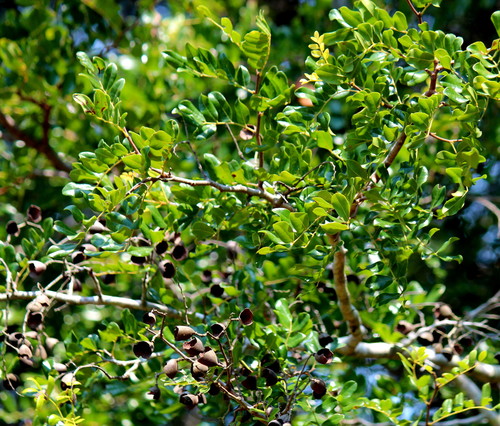
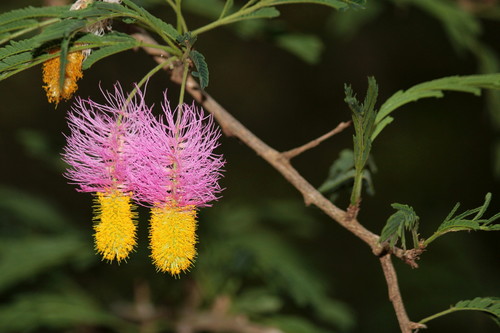
A herb with long trailing or twining stems. The stems can be covered with rusty hairs. The stems can be 1 m long and have a thick rootstock. The leaves have 3 leaflets. The leaflets are oblong and up to 6 cm long by 3.5 cm wide. They taper to a blunt tip and are rounded at the base. They are hairy on both surfaces. The flower clusters are 9 cm long and in the axils of leaves. The flowers are pea shaped and 6-7 mm long. The wing is usually red or blue. The fruit are thin pods. They are 1.8-2.8 cm long and 3-4 mm wide. They are constricted between the seeds. They split open into 2 halves. There can be 6 seeds inside.
Edible Uses
The tubers are dug up, cleaned, and roasted before eating.
Traditional Uses
The tubers are dug up, cleaned and roasted before eating.
This uses section is brief — help expand it
Medicinal Uses
The plant (probably the root) is antiinflammatory, antioxidant, hypolipidaemic and immunomodulatory. It is used in the treatment of rheumatic illness.
Distribution
A tropical plant. In Papua New Guinea it grows from 20 to 1800 m altitude. It tends to grow naturally in grassland and drier areas. Often they are on sandy soils. It does best in well drained soils and a hot sunny position.
Where It Grows
Asia, Australia, China, Pacific, Papua New Guinea, PNG, Philippines, SE Asia, Taiwan,
Cultivation
Plants can be grown by seed or cuttings.
Propagation
Pre-soak the seed for 12 hours in warm water and then sow in situ. The seed should germinate within 5 - 15 days at an optimal temperature of 25 - 33°c.
Other Uses
This species is a tertiary genetic relative of the soybean (Glycine max) and as such has potential in breeding programmes.
Production
Plants flower throughout most of the year.
Other Information
This plant is being considered important for resistance breeding with soyabean.
Notes
There are 10 Glycine species.
Synonyms
References (10)
- Elliot, W.R., & Jones, D.L., 1992, Encyclopedia of Australian Plants suitable for cultivation. Vol 4. Lothian. p 371
- Hymowitz, T., 1979, Soybeans, in Simmonds N.W.,(ed), Crop Plant Evolution. Longmans. London. p 159
- Icon. pl. formos. 9:29. 1920
- Kenneally, K.E., Edinger, D. C., and Willing T., 1996, Broome and Beyond, Plants and People of the Dampier Peninsula, Kimberley, Western Australia. Department of Conservation and Land Management. p 156
- Lazarides, M. & Hince, B., 1993, Handbook of Economic Plants of Australia, CSIRO. p 122
Show all 10 references Hide references
- Melzer, R. & Plumb, J., 2011, Plants of Capricornia. Belgamba, Rockhampton. p 370
- Paczkowska, G . & Chapman, A.R., 2000, The Western Australian Flora. A Descriptive Calatogue. Western Australian Herbarium. p 432
- Verdcourt, B., 1979, Manual of New Guinea Legumes. Botany Bulletin No 11, Division of Botany, Lae, Papua New Guinea. p 492
- Wheeler, J.R.(ed.), 1992, Flora of the Kimberley Region. CALM, Western Australian Herbarium, p 406 (Drawing)
- Yunupinu Banjgul, Laklak Yunupinu-Marika, et al. 1995, Rirratjinu Ethnobotany: Aboriginal Plant Use from Yirrkala, Arnhem Land, Australia. Northern Territory Botanical Bulletin No 21. Parks and Wildlife Commission of the Northern Territory. p 44