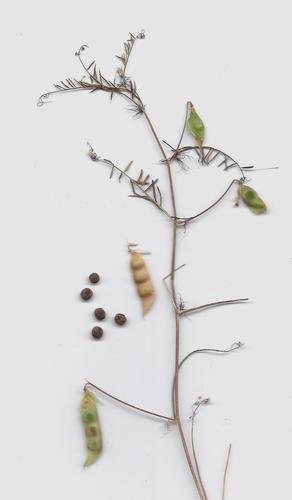
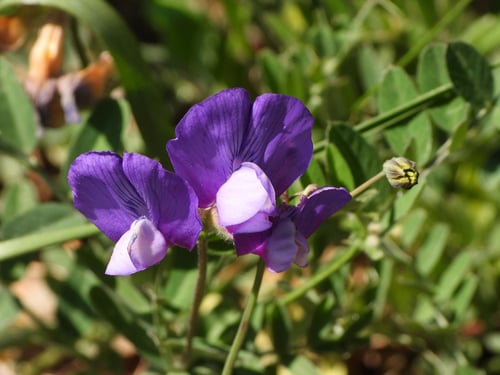
Hymenaea reticulata
Ducke
gbif· cc-by
The New York Botanical Garden
gbif· cc-by
Royal Botanic Gardens, Kew
gbif· cc-by-nc
Arizona State University Vascular Plant Herbarium (ASU-Plants)
Description
A tropical tree in the legume family (Fabaceae) that produces fruit with edible pulp.
This description is brief — help expand it
Edible Uses
The odoriferous, powdery fruit pulp is edible. Hymenaea reticulata is very similar to Hymenaea courbaril and was at one time treated as part of that species. It is very likely that the various uses of Hymenaea courbaril can also be applied to this species. Those uses are:- Fruit - raw or cooked. The dry, whitish-yellow pulp around the seed has a sweet flavour and is commonly eaten raw; it is also used in making custards and ice cream; and is fermented into an alcoholic beverage. It is eaten like sweets by children in Jamaica. The protein content is high for a fruit. The pulp contains 3.2% sugar, 1.1% fat, and 35.8% crude fibre. It has its own peculiar smell and sweet flavour, slightly reminiscent of bananas, and is generally considered pleasant but not very attractive. The texture is that of dry flour turning to a paste in the mouth, and some people find this unpleasant. It is very dry and largely starchy, so it is a good source of calories. The fruit is an indehiscent oblong pod, 5 - 15cm long and 3-5cm wide, containing 3 - 4 large seeds. A tea made from the bark is a quite popular drink for lumberjacks working in the forests in Brazil, because it is a natural energy tonic.
Traditional Uses
The pulp of the fruit is eaten.
This uses section is brief — help expand it
Medicinal Uses
Hymenaea reticulata is very similar to Hymenaea courbaril and was at one time treated as part of that species. It is very likely that the various uses of Hymenaea courbaril can also be applied to this species. Those uses are:- The bark is analgesic, astringent, balsamic, depurative, febrifuge, haemostatic, pectoral, stomachic, tonic and vermifuge. It is commonly used in local folk medicine as a cure-all, being especially useful for coughs. Besides being used to give energy and stamina, a tea made from the bark has been used for centuries as a tonic for the respiratory and urinary systems by the indigenous people of the Amazon Basin. The tea is also used internally to treat stomach problems and back pains, as well as externally for athlete’s foot and foot fungus. It is known for its ability to fight fungus and yeast infections such as Candida albicans. The macerated bark is used as a treatment for diarrhoea. The bark, sap or resin, and leaves are used medicinally for cystitis, hepatitis, prostatitis and cough. The sap is used for treating coughs and bronchitis. The resin and sap exuding from bore-holes in the bark is considered fortifying. It is used for treating chronic cystitis, urine retention, anaemia, prostatitis, blennorrhagia and chronic bronchitis. The resin and sap are used externally for treating fresh wounds. The solid resin found at the base of the tree is balsamic, bechic, stomachic, tonic and vermifuge. The fruit has a mild laxative effect. It is also used to treat mouth ulcers. The leaves and wood are used in the treatment of diabetes.
Distribution
It is a tropical plant.
Where It Grows
Amazon, Brazil, Colombia, Peru, South America,
Cultivation
Although many species within the family Fabaceae have a symbiotic relationship with soil bacteria, this species is said to be devoid of such a relationship and therefore does not fix atmospheric nitrogen.
Propagation
Seed - it has a hard seedcoat and benefits from scarification before sowing to speed up and improve germination. This can usually be done by pouring a small amount of nearly boiling water on the seeds (being careful not to cook them!) and then soaking them for 12 - 24 hours in warm water. By this time they should have imbibed moisture and swollen - if they have not, then carefully make a nick in the seedcoat (being careful not to damage the embryo) and soak for a further 12 hours before sowing. Sow the treated seed in a partially shaded position in individual containers.
Other Uses
Hymenaea reticulata is very similar to Hymenaea courbaril and was at one time treated as part of that species. It is very likely that the various uses of Hymenaea courbaril can also be applied to this species. Those uses are:- The roots and trunk yield a pale yellow or red resin-like gum known commercially as 'South American copal'. The gum obtained from tapping the trunk is soft and considered to be of lower quality - it is used mainly for medicinal purposes. The best quality gum is quite old - it is found in hard lumps that have become buried in the soil at the base of a tree or at the site of a dead tree. Sometimes as much as a barrel of gum has been found around the roots of a large tree or at the site of a former tree. The gum is used mainly in making varnishes but also for incense and local medicines. The copal is also used for patent leather, as an adhesive for crockery and in stains for tin ware. About 35 tonnes/year are collected in Brazil for local use. The thick bark is a good source of tannin. The sap is burned as an illuminant. The bark was traditionally used to make lightweight canoes. The bark of old trees is thick and can be removed in long sheets. The stripped bark is then sown together at the ends and the seams waterproofed with a gum. A few wooden crosspieces are added in order to maintain the shape. Large canoes, capable of carrying 25 - 30 people can be made this way. The hard, durable, tough wood is one of the best from the region. The heartwood is salmon pink to orange-brown when fresh, becoming russet to reddish-brown when seasoned, often marked with dark streaks; it is clearly demarcated from the 3 - 12cm wide band of white, grey, or pinkish sapwood. Texture is medium to rather coarse; grain mostly interlocked; lustre is golden; it is without distinctive odour or taste. The wood is heavy to very heavy; hard to very hard; elastic; durable, even in contact with the soil, being resistant to fungi, dry wood borers and termites. It seasons normally, with only a slight risk of checking and distortion; once dry it is moderately stable to stable in service. The wood has a fairly high blunting effect, stellite-tipped and tungsten carbide tools are recommended; except in planing, it can be machined to a smooth surface; nailing and screwing are good, but require pre-boring; gluing is correct for interior use only, but needs to be done with care because of the density of the wood. The wood has a wide range of applications, including for high class furniture, cabinet making, construction, heavy duty flooring, ship building, carving, turnery, tool handles etc. The wood is used as a fuel and to make charcoal.
Also Known As
Azucar huayo, Jatoba
References (2)
- Kermath, B. M., et al, 2014, Food Plants in the Americas: A survey of the domesticated, cultivated and wild plants used for Human food in North, Central and South America and the Caribbean. On line draft. p 429
- Kew Plants of the World On line