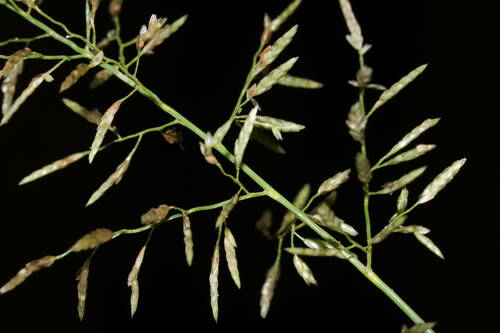
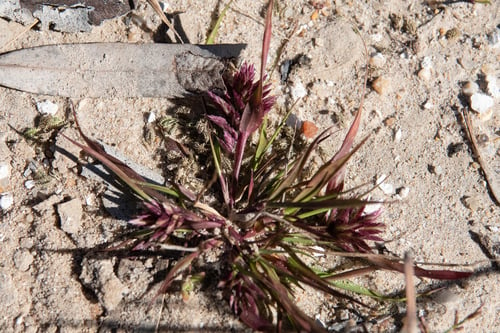
Glyceria fluitans
(L.) R.Br.
Floating manna grass, Manna grass
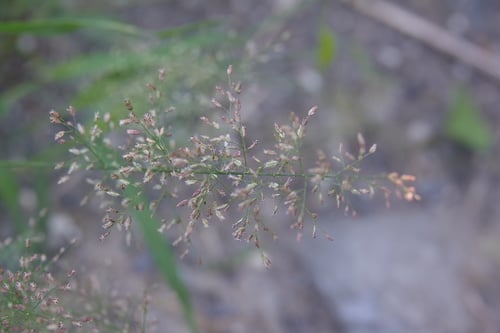
iNaturalist· cc-by-nc
(c) Martin Grimm, some rights reserved (CC BY-NC), uploaded by Martin Grimm
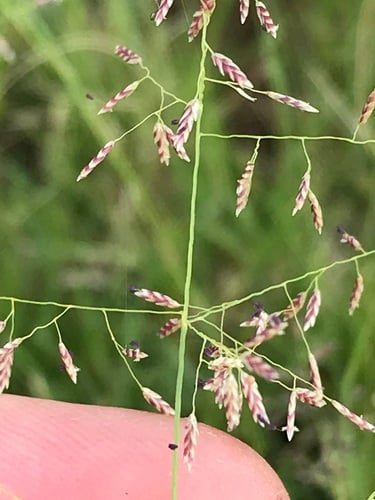
iNaturalist· cc-by-nc
(c) Юрій Бенгус, some rights reserved (CC BY-NC)
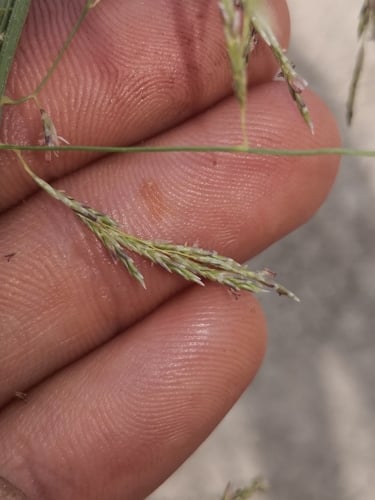
iNaturalist· cc-by-nc
(c) Юрій Бенгус, some rights reserved (CC BY-NC)
Summary
Source: WikipediaGlyceria fluitans (syns Festuca fluitans, Poa fluitans, Panicularia fluitans), known as floating sweet-grass and water mannagrass, is a species of perennial grass in the genus Glyceria native to Europe, the Mediterranean region and Western Asia and occurring in wet areas such as ditches, riverbanks and ponds. It has a creeping rootstock, a thick stem which rises to one metre. The leaves are long, narrow and pale green, rough on both sides, often folded at the keel which lies on the surface of the water. The species epithet fluitans is Latin for "floating".
Description
An erect grass. It has rhizomes and keeps growing from year to year. It has stems that creep underwater. The flowering stems are upright.
This description is brief — help expand it
Edible Uses
The seeds can be eaten raw or cooked and have a sweetish taste. They were considered a delicacy in parts of Europe and were traded commercially well into the 20th century. Flour made from the seed produces a bread said to be little inferior to wheat bread, and can also be used as a thickener in soups, where it imparts a sweet, delicate flavour. Unfortunately the seed is very small, making the plant relatively unproductive.
Traditional Uses
The seeds are used in porridge and soups. They should be soaked until they are swollen then baked or boiled. The flour can be used for bread. The seeds are also chewed.
Medicinal Uses
None known
Distribution
A temperate plant. It grows in northern temperate regions. Tasmanian Herbarium.
Where It Grows
Africa, Albania, Algeria, Australia, Austria, Balkans, Belarus, Belgium, Britain, Bulgaria, Canada, Czech Republic, Denmark, Estonia, Europe, Finland, France, Georgia, Germany, Greece, Hungary, Iceland, India, Ireland, Italy, Latvia, Lithuania, Luxembourg, Mediterranean, Moldova, Morocco, Netherlands, North Africa, North America, Norway, Poland, Portugal, Romania, Russia, Scandinavia, Slovakia, Spain, Sweden, Switzerland, Tasmania, Tunisia, Turkey, Türkiye, Ukraine, USA, Yugoslavia,
Propagation
Sow seed in spring in a greenhouse in a pot standing in 3–5cm of water, surface-sowing or barely covering the seed. Germination should occur within 3 weeks. Prick seedlings into individual pots when large enough to handle and plant out in early summer. Where sufficient seed is available, it can also be sown directly outdoors in situ in mid to late spring. Division in spring is straightforward; larger clumps can go directly into permanent positions, though smaller clumps are better potted up and grown on in a cold frame until rooting well before planting out in spring.
Other Uses
The leaves have been burnt as an incense.
Other Information
It is cultivated in Poland.
Synonyms
Also Known As
Floating meadow grass, Floating sweet grass, Mannik, Mayna, Poland manna
References (19)
- Ambasta, S.P. (Ed.), 2000, The Useful Plants of India. CSIR India. p 239
- Curtis, W.M., & Morris, D.I., 1994, The Student's Flora of Tasmania. Part 4B St David's Park Publishing, Tasmania, p 229
- Denes, A., et al, 2012, Wild plants used for food by Hungarian ethnic groups living in the Carpathian Basin. Acta Societatis Botanicorum Poloniae 81 (4): 381-396
- Facciola, S., 1998, Cornucopia 2: a Source Book of Edible Plants. Kampong Publications, p 176
- Hedrick, U.P., 1919, (Ed.), Sturtevant's edible plants of the world. p 330
Show all 19 references Hide references
- Irving, M., 2009, The Forager Handbook, A Guide to the Edible Plants of Britain. Ebury Press p 329
- Kolosova, V., et al, 2020, Foraging in Boreal Forest: Wild Food Plants of the Republic of Karelia, NW Russia. Foods 2020, 9, 1015; p 35
- Łukasz Łuczaj and Wojciech M Szymański, 2007, Wild vascular plants gathered for consumption in the Polish countryside: a review. J Ethnobiol Ethnomedicine. 3: 17
- Łuczaj, L., et al, 2013, Wild edible plants of Belarus: from Rostafiński’s questionnaire of 1883 to the present. Journal of Ethnobiology and Ethnomedicine 2013, 9:21
- Menninger, E.A., 1977, Edible Nuts of the World. Horticultural Books. Florida p 148
- Moerman, D. F., 2010, Native American Ethnobotany. Timber Press. p 248
- Plants for a Future database, The Field, Penpol, Lostwithiel, Cornwall, PL22 0NG, UK. http://www.scs.leeds.ac.uk/pfaf/
- Prodr. 179. 1810
- Romanowski, N., 2007, Edible Water Gardens. Hyland House. p 58
- Simkova, K. et al, 2014, Ethnobotanical review of wild edible plants used in the Czech Republic. Journal of Applied Botany and Food Quality 88, 49-67
- Tasmanian Herbarium Vascular Plants list p 85
- USDA, ARS, National Genetic Resources Program. Germplasm Resources Information Network - (GRIN). [Online Database] National Germplasm Resources Laboratory, Beltsville, Maryland. Available: www.ars-grin.gov/cgi-bin/npgs/html/econ.pl (10 April 2000)
- Wiersema, J. H. & Leon, B., 2013, World Economic Plants. A Standard Reference CRC Press. 2nd Ed. p 326
- World Checklist of Useful Plant Species 2020. Royal Botanic Gardens, Kew