Digitaria iburua
Stapf
Black acha, Black fonio
wikimedia· cc-by-sa
Wikimedia Commons - Krzysztof Golik
wikimedia· cc-by-sa
Krzysztof Golik (via Wikimedia Commons)
Summary
Source: WikipediaDigitaria iburua, commonly known as iburu, is a grass species native to west and west-central tropical Africa, which is cultivated as a grain crop known as black fonio. Iburu (D. iburua) is closely related to white fonio (D. exilis), a cereal that is more widely grown across West Africa. However, Iburu is taller than fonio, but has smaller grain than fonio. This makes harvesting the grains very labor-intensive. Iburu is mainly grown in the Middle Belt of central Nigeria, as well as in Zinder, Niger.
Description
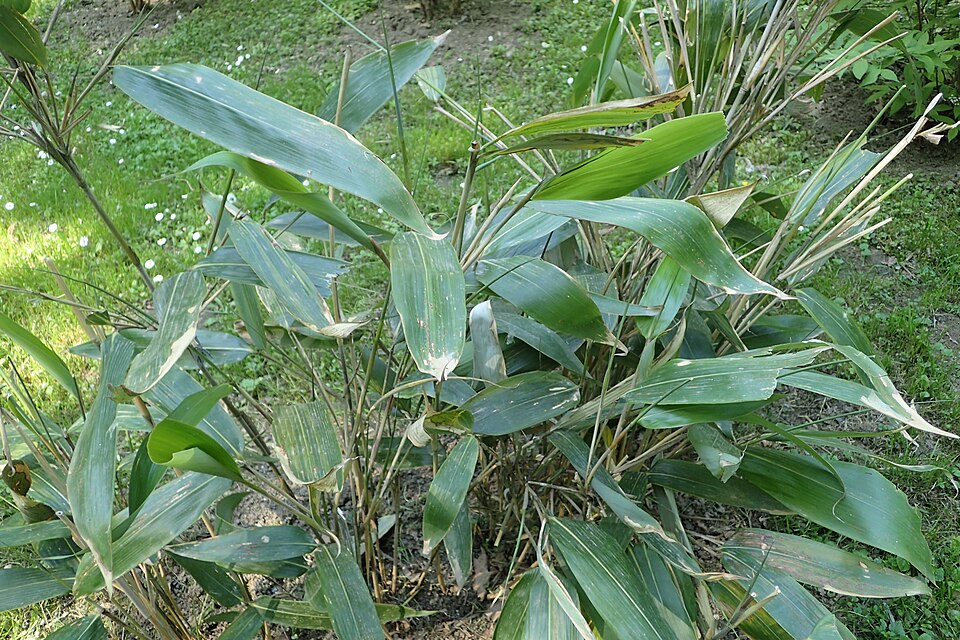
A wild millet grass. It is slightly taller than Fonio (Digitaria exilis). It forms loose tufts. It grows 1.4 m high. It has 4 to 10 racemes per inflorescence. The spikelets are dark brown but the grain is white.
Edible Uses
The seeds are used as a cereal grain, prepared into a couscous locally known as wusu-wusu and also used to prepare beer.
Traditional Uses
It is used in the preparation of a couscous locally known as wusu-wusu. It is used to prepare beer.
This uses section is brief — help expand it
Distribution
A tropical plant. It is cultivated as a cereal in the Hausa region in northern Nigeria. It grows between 400-1,000 m altitude in West Africa. It grows in areas with a rainfall of 900-1,000 mm per year. It grows in the savannah.
Where It Grows
Africa, Benin, Burkina Faso, Central Africa, Congo, Côte d'Ivoire, Ghana, Guinea, Guinée, Ivory Coast, Mali, Niger, Nigeria, Sahel, Togo, West Africa,
Cultivation
It is often grown intercropped with sorgum or pearl millet. It is also grown mixed with fonio (Digitaria exilis).
Propagation
Seed - best sown in situ, only just covering the seed. The seed normally germinates 2 - 4 days after sowing and grows rapidly.
Other Information
It is important on the Jos plateau in Nigeria. It is a cultivated plant in some places.
Notes
There are about 250 Digitaria species.
Nutrition
| Part | Moisture | kJ | kcal | Protein | Vit A | Vit C | Iron | Zinc |
|---|---|---|---|---|---|---|---|---|
| Seeds raw | 10.3 | 1470 | 343 | 8.9 | — | — | 10 | — |
| Seeds cooked | 62.6 | 622 | 147 | 3.7 | 0 | — | 4.1 | 0.82 |
Synonyms
Also Known As
Aburu, Afio-warun, Fonio-ga, Iburo, Iburu, Ipoaga
References (18)
- Akinola, R., et al, 2020, A Review of Indigenous Food Crops in Africa and the Implications for more Sustainable and Healthy Food Systems. Sustainability 2020, 12, 3493;
- Brink, M., 2006. Digitaria iburua Stapf. [Internet] Record from Protabase. Brink, M. & Belay, G. (Editors). PROTA (Plant Resources of Tropical Africa), Wageningen, Netherlands. < http://database.prota.org/search.htm>. Accessed 15 October 2009.
- Bull. Misc. Inform. Kew 1915:382, fig. 1. 1915
- Burkill, H. M., 1985, The useful plants of west tropical Africa, Vol. 2. Kew.
- Facciola, S., 1998, Cornucopia 2: a Source Book of Edible Plants. Kampong Publications, p 175
Show all 18 references Hide references
- Jardin, C., 1970, List of Foods Used In Africa, FAO Nutrition Information Document Series No 2.p 2
- Kiple, K.F. & Ornelas, K.C., (eds), 2000, The Cambridge World History of Food. CUP p 1775
- National Research Council, 1996, Lost Crops of Africa. Volume 1: Grains. National Academy Press, Washington, D.C. p 59
- Peters, C. R., O'Brien, E. M., and Drummond, R.B., 1992, Edible Wild plants of Sub-saharan Africa. Kew. p 21
- PROSEA (Plant Resources of South East Asia) handbook Volume 10 Cereals. p 152
- Segnon, A. C. & Achigan-Dako, E. G., 2014, Comparative analysis of diversity and utilization of edible plants in arid and semi-arid areas in Benin. Journal of Ethnobiology and Ethnomedicine 2014, 10:80
- Small, E., 2009, Top 100 Food Plants. The world's most important culinary crops. NRC Research Press. p 270
- Ulian, T., et al, 2020, Unlocking plant resources to support food security and promote sustainable agriculture. Plants, People, Planet. 2020;2:421–445.
- Uphof,
- USDA, ARS, National Genetic Resources Program. Germplasm Resources Information Network - (GRIN). [Online Database] National Germplasm Resources Laboratory, Beltsville, Maryland. Available: www.ars-grin.gov/cgi-bin/npgs/html/econ.pl (10 April 2000)
- van Wyk, B., 2005, Food Plants of the World. An illustrated guide. Timber press. p 175
- Wiersema, J. H. & Leon, B., 2013, World Economic Plants. A Standard Reference CRC Press. 2nd Ed. p 246
- World Checklist of Useful Plant Species 2020. Royal Botanic Gardens, Kew