Digitaria sanguinalis
(L.) Scop.
Summer grass, Large Crabgrass
iNaturalist· cc-by
(c) Patrick Hacker, some rights reserved (CC BY)
iNaturalist· cc-by
(c) Patrick Hacker, some rights reserved (CC BY)
iNaturalist· cc-by
(c) Patrick Hacker, some rights reserved (CC BY)
Summary
Source: WikipediaDigitaria sanguinalis is a species of grass known by several common names, including hairy crabgrass, hairy finger-grass, large crabgrass, crab finger grass, purple crabgrass. It is one of the better-known species of the genus Digitaria, and one that is known nearly worldwide as a common weed. It is used as animal fodder, and the seeds are edible and have been used as a grain in Germany and especially Poland, where it is sometimes cultivated. This has earned it the name Polish millet.
Description
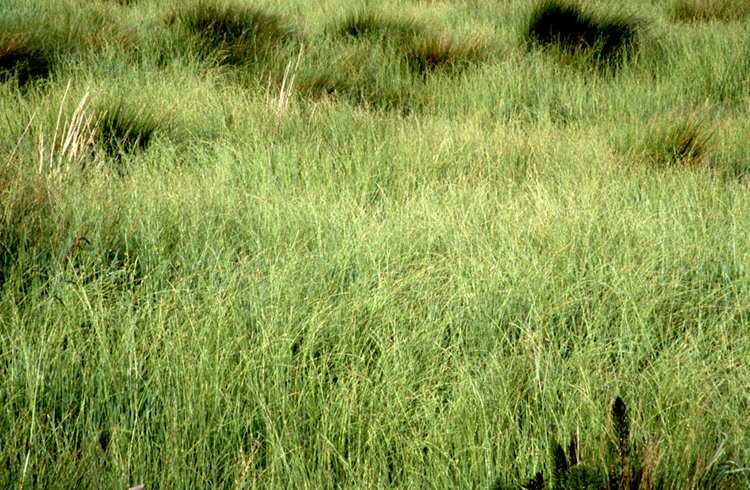
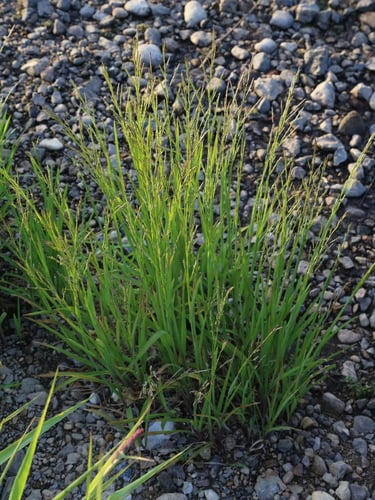
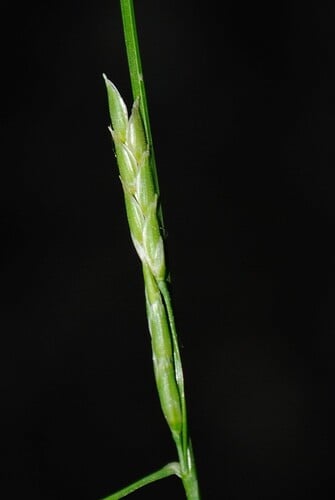
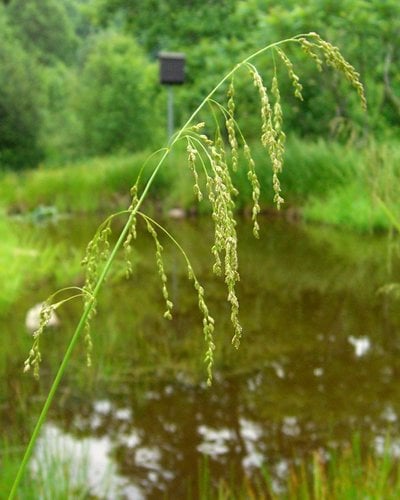
A millet grass. It is an annual grass. It can be 10-80 cm tall. It tends to lie along the ground and root at the nodes. The nodes and leaf sheaths are covered with fine hairs. The leaf blades are 5-20 cm long. The flower spike spreads out like fingers on a hand. The spikelets are usually in pairs. They are on short stalks of unequal length.
Edible Uses
The seeds are ground into flour. The flour has excellent keeping qualities, is fine and white, and can be used for semolina.
Traditional Uses
The seeds are used as a cereal. They are ground into flour.
This uses section is brief — help expand it
Medicinal Uses
A decoction of the plant is used in the treatment of gonorrhoea. It is also a folk remedy for cataracts and debility and is said to be emetic.
Distribution
It grows in warm temperate and upland subtropical regions. It needs summer moisture. It is a cereal crop in Russia and Kashmir. In Argentina it grows between sea level and 2,000 m above sea level. Tasmanian Herbarium.
Where It Grows
Afghanistan, Africa, Antilles, Argentina, Asia, Australia, Bolivia, Botswana, Brazil, Central Asia, Chile, China, Cuba, Czech Republic, East Africa, Europe*, France, Greece, Haiti, India, Italy, Jamaica, Kashmir, Lesser Antilles, Luxembourg, Madagascar, Malawi, Malaysia, Mediterranean, Mexico, Mozambique, North America, Pacific, Pakistan, Paraguay, Poland, Polynesia, Portugal, Russia, SE Asia, Slovenia, Southern Africa, South America, Spain, Taiwan, Tajikistan, Tasmania, Tibet, Tonga, Turkey, Türkiye, Uruguay, USA, West Indies, Zambia, Zimbabwe,
Propagation
Best sown in situ in spring, barely covering the seed.
Other Uses
A fibre obtained from the plant is used in making paper. The plant is also used as fodder and forage.
Other Information
It was used as a cereal in southern Europe during Roman times. It is a minor cereal in the Caucasus of Russia and in Kashmir. It is cultivated.
Notes
There are about 250 Digitaria species.
Synonyms
Also Known As
Ahipody, Capim-colchao, Capim-de-colchao, Finger grass, Gramilla, Gramilla de cuaresma, Garranchudo, Hairy finger grass, Krvavordeča srakonja, Ma tang, Manna grit, Pastoa blanco, Pastoa chato, Pastoa colchon, Pasto de cuaresma, Polish millet
References (26)
- Ambasta, S.P. (Ed.), 2000, The Useful Plants of India. CSIR India. p 172
- Arora, R. K., 2014, Diversity in Underutilized Plant Species - An Asia-Pacific Perspective. Bioversity International. 203 p.
- Blamey, M and Grey-Wilson, C., 2005, Wild flowers of the Mediterranean. A & C Black London. p 527
- Curtis, W.M., & Morris, D.I., 1994, The Student's Flora of Tasmania. Part 4B St David's Park Publishing, Tasmania, p 346
- Duke, J.A., 1992, Handbook of Edible Weeds. CRC Press. p 86
Show all 26 references Hide references
- Flora of Australia Volume 49, Oceanic Islands 1, Australian Government Publishing Service, Canberra. (1994) p 491
- Fl. carniol. ed. 2, 1:52. 1771
- Flora of Pakistan. www.eFloras.org
- Hedrick, U.P., 1919, (Ed.), Sturtevant's edible plants of the world. p 462 (As Pancium sanguinale)
- Hussey, B.M.J., Keighery, G.J., Cousens, R.D., Dodd, J., Lloyd, S.G., 1997, Western Weeds. A guide to the weeds of Western Australia. Plant Protection Society of Western Australia. p 52
- Kiple, K.F. & Ornelas, K.C., (eds), 2000, The Cambridge World History of Food. CUP p 118
- Lamp, C & Collet F., 1989, Field Guide to Weeds in Australia. Inkata Press. p 103
- Lamp, C.A., Forbes, S.J. and Cade, J.W., 1990, Grasses of Temperate Australia. Inkata Press. p 138
- Lazarides, M. & Hince, B., 1993, Handbook of Economic Plants of Australia, CSIRO. p 81
- Low, T., 1992, Bush Tucker. Australia’s Wild Food Harvest. Angus & Robertson. p 88
- Malezas Comestibles del Cono Sur, INTA, 2009, Buernos Aires
- Menninger, E.A., 1977, Edible Nuts of the World. Horticultural Books. Florida p 149 (As Pancium sanguinale)
- Paczkowska, G. & Chapman, A.R., 2000, The Western Australian Flora. A Descriptive Catalogue. Western Australian Herbarium. p 102
- Plants for a Future database, The Field, Penpol, Lostwithiel, Cornwall, PL22 0NG, UK. http://www.scs.leeds.ac.uk/pfaf/
- Plants of Haiti Smithsonian Institute http://botany.si.edu/antilles/West Indies
- Simkova, K. et al, 2014, Ethnobotanical review of wild edible plants used in the Czech Republic. Journal of Applied Botany and Food Quality 88, 49-67
- Tasmanian Herbarium Vascular Plants list p 84, p 87 (As Pancium sanguinale)
- van Wyk, B., 2005, Food Plants of the World. An illustrated guide. Timber press. p 175
- World Checklist of Useful Plant Species 2020. Royal Botanic Gardens, Kew
- Yuncker, T.G., 1959, Plants of Tonga, Bernice P. Bishop Museum, Hawaii, Bulletin 220. p 57
- Zeven, A. C. & de West, J. M. J., 1982, Dictionary of cultivated plants and their regions of diversity. Wageningen. p 73