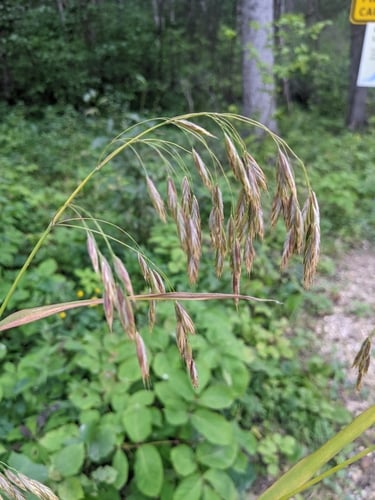
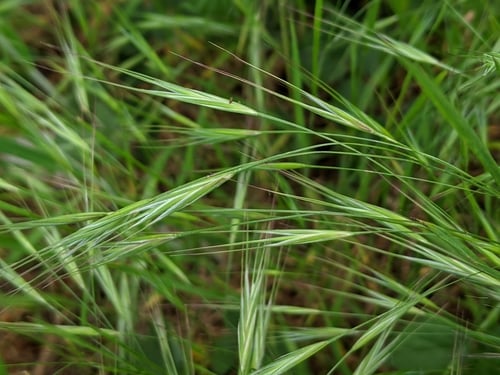
Gigantochloa thoi
K.M. Wong
gbif· cc0
President and Fellows of Harvard College
gbif· cc0
President and Fellows of Harvard College
gbif· cc0
President and Fellows of Harvard College
Description
A tropical bamboo in the grass family (Poaceae) that is occasionally cultivated as a vegetable crop.
This description is brief — help expand it
Edible Uses
The shoots are eaten as a vegetable.
Distribution
It is a tropical plant.
Where It Grows
Asia, Malaysia, SE Asia,
Cultivation
A plant of the moist, tropical lowlands. Young shoots mainly develop during the rainy season. Bamboos have an interesting method of growth. Each plant produces a number of new stems annually - these stems grow to their maximum height in their first year of growth, subsequent growth in the stem being limited to the production of new side branches and leaves. In the case of some mature tropical species the new stem could be as much as 30 metres tall, with daily increases in height of 30cm or more during their peak growth time. This makes them some of the fastest-growing species in the world. Bamboos in general are usually monocarpic, living for many years before flowering, then flowering and seeding profusely for a period of 1 - 3 years before usually dying. Bamboos in general are usually monocarpic, living for many years before flowering, then flowering and seeding profusely for a period of 1 - 3 years before usually dying. This pattern can vary - sometimes flowering is sporadic, with plants flowering annually and not dying; at other times it is gregarious with all the plants in a specific species coming into flower at the same time. Flowering occurs in just a few culms in the clump, or can sometimes involve an entire clump. Reproductive culms senesce after flowering but regeneration from rhizomes in clumps that have senesced is possible. Flowering extends over many months in a fertile clump, but no seed has been found thus far.
Propagation
Seed - Rhizome cuttings (offsets). Culm cuttings. Cultivated clumps from which new shoots are frequently removed for food develop rooted rhizome-like swellings at branch bases. Such 'aerial rhizomes' may be useful as vegetative planting material.
Other Uses
Although the culms are large and strong, they are not taken for any industry, probably because culms from adequately abundant wild populations of two other Gigantochloa bamboos, Gigantochloa scortechinii Gamble and Gigantochloa wrayi Gamble, are available, whereas Gigantochloa thoii has not yet been planted as such a resource.
Other Information
It is occasionally cultivated as a vegetable.
Synonyms
References (6)
- Arora, R. K., 2014, Diversity in Underutilized Plant Species - An Asia-Pacific Perspective. Bioversity International. p 40
- Dransfield, S. & E. A. Widjaja, eds. 1995. Bamboos. In: Faridah Hanum, I. & L. J. G. van der Maesen, eds., Plant Resources of South-East Asia (PROSEA). (Pl Res SEAs) 7:123–124.
- Sandakania 1:18. 1992
- USDA, ARS, National Genetic Resources Program. Germplasm Resources Information Network - (GRIN). [Online Database] National Germplasm Resources Laboratory, Beltsville, Maryland. Available: www.ars-grin.gov/cgi-bin/npgs/html/econ.pl (10 April 2000)
- Wiersema, J. H. & Leon, B., 2013, World Economic Plants. A Standard Reference CRC Press. 2nd Ed. p 323
Show all 6 references Hide references
- World Checklist of Useful Plant Species 2020. Royal Botanic Gardens, Kew