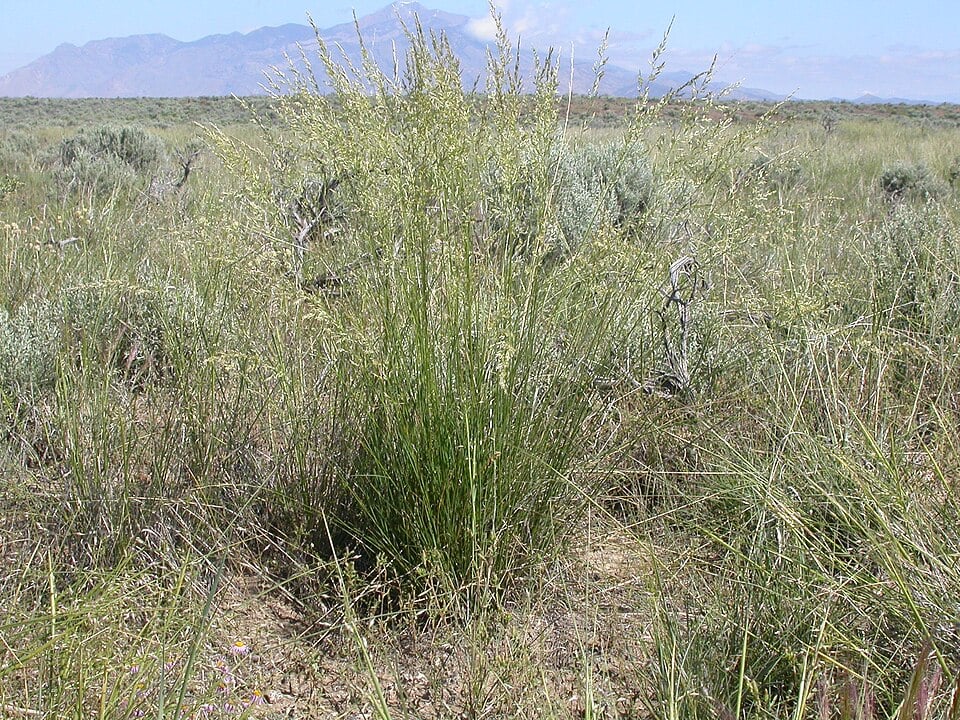
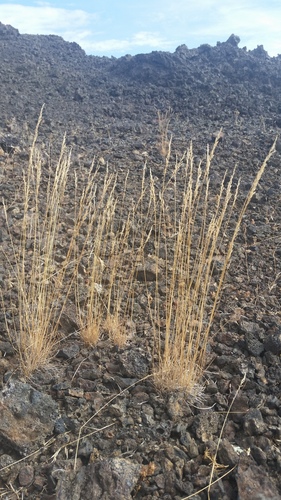
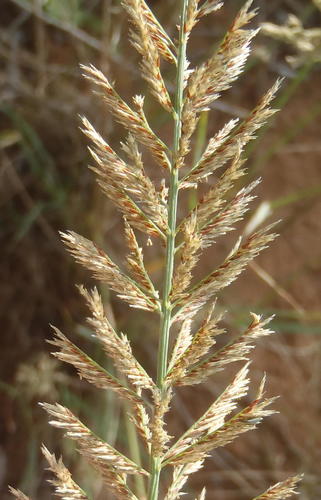
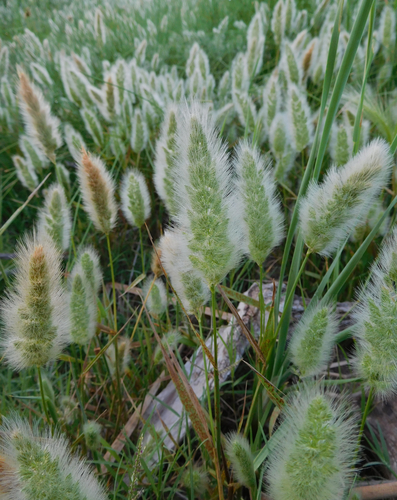
Gigantochloa apus
(Schult. & Schult. f.) Kurz ex Munro
Tabashir Bamboo
iNaturalist· cc-by-sa
(c) Wie146, some rights reserved (CC BY-SA)
iNaturalist· cc-by-sa
(c) Wie146, some rights reserved (CC BY-SA)
iNaturalist· cc-by-nc-sa
(c) Cheryl Gilbert, some rights reserved (CC BY-NC-SA), uploaded by Cheryl Gilbert
Summary
Source: WikipediaGigantochloa apus is a fast-growing evergreen bamboo reaching 20 m tall and 6 m wide. Wind-pollinated and hardy to UK zone 10. Adapts to light, loamy, or clay soils with well-drained conditions and tolerates mildly acidic, neutral, or mildly alkaline pH. Grows in semi-shade to full sun, preferring moist soil.
Description
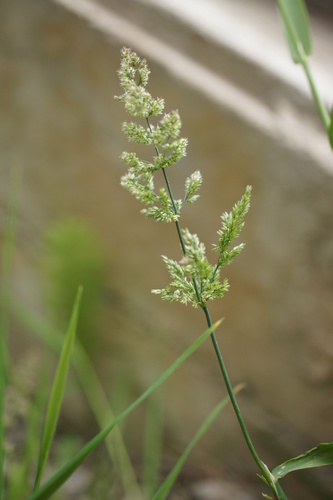
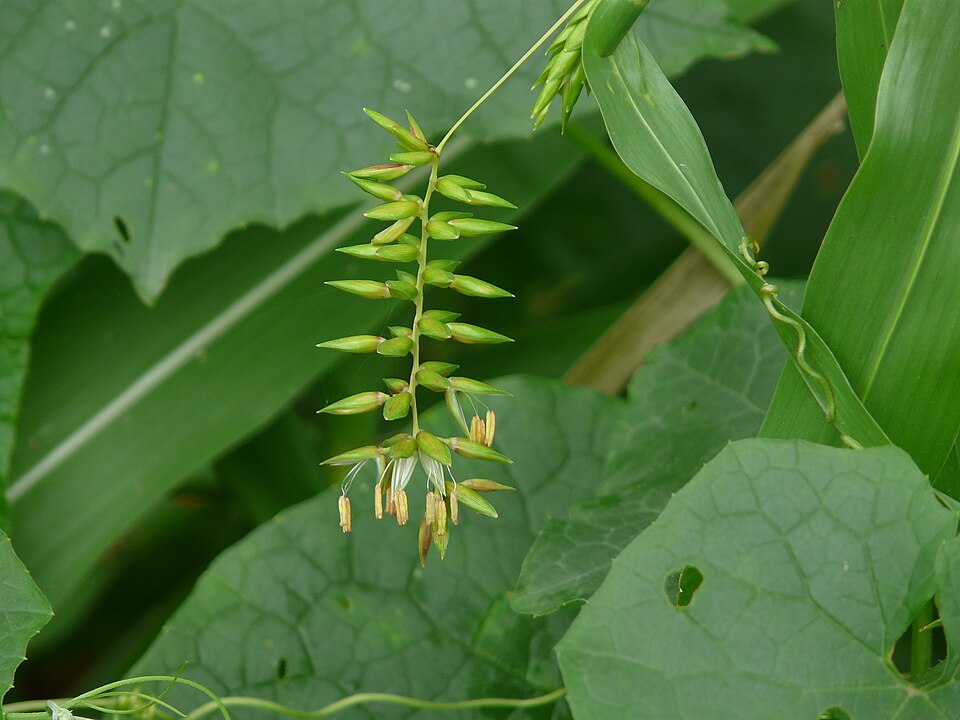
A bamboo. It is an erect plant and forms tillers. It grows 10-20 m tall. The young culms have dense hairs. These stems can be 3-15 cm across. The walls can be 1 cm thick. The internodes are 30-65 cm long. The angles of the leaf sheath is rounded on the upper section. The leaves are oval or sword shaped and are unequal at the base. They are dark green above and lighter underneath. They are 9-40 cm long by 2-6 cm wide. The flowering shoot does not have leaves. The groups of flowers are 1-9 cm apart. There are many flowering spikes in the group.
Edible Uses
Young shoots are cooked and eaten as a vegetable, though they are very bitter. In Java, freshly cut shoots are buried in mud for 3–4 days to remove the bitter taste before consumption.
Traditional Uses
The young shoots are used as a vegetable. They are bitter so are harvested and then buried for 3-4 days in moist soil or a pool. It is then washed and cooked and eaten.
Medicinal Uses
None known
Distribution
A tropical plant. In Java it grows from the lowlands to the high mountains. It is best in a fertile, clay soil and a moist climate. In the Cairns Botanical Gardens. It is cultivated as a food in Indonesia.
Where It Grows
Asia, Australia, Brazil, China, India, Indochina, Indonesia, Laos, Malaysia, Myanmar, Northeastern India, SE Asia, Singapore, South America, Thailand,
Cultivation
It is grown from sections of the rhizome or underground stem. These are planted 2-3 m apart.
Propagation
Rhizome cuttings consist of fragments of young rhizomes bearing 1–2 culm buds, raised in a nursery and transplanted to the field at a spacing of 5–7 m² once well rooted. Culm cuttings consist of culm segments or whole culms; good results have been obtained with one-year-old culm segments bearing 2 buds each, set upright or at an angle with the node well covered with soil. Propagating vegetatively from flowering clumps is not advisable, as the resulting plants will also begin flowering soon after planting.
Other Uses
The culms are durable, growing 8–30 metres long, 4–13cm in diameter, with walls up to 15mm thick and internodes 20–60cm long. They are used as building material for roofs, walls, scaffolding, and bridges. The culms can be split into fine strips for weaving hats, baskets, and other objects; when split finely and bent, the surface does not chip off. The species is sometimes used to make musical instruments in the absence of more suitable alternatives, though the tonal quality is inferior. It is unsuitable for mechanically producing chopsticks or toothpicks due to its overlapping fibres.
Production
The shoots are ready to harvest 5-7 years after planting.
Other Information
It is cultivated.
Synonyms
Also Known As
Bambu apus, Bambu tali, Buluh telur, Goba-wa, Mai lai, Wa-do
References (13)
- A Rapid Participatory Biodiversity Assessment. 2007, Southern Lao PDR. IUCN p 42
- Bircher, A. G. & Bircher, W. H., 2000, Encyclopedia of Fruit Trees and Edible Flowering Plants in Egypt and the Subtropics. AUC Press. p 53 (As Bambusa apus)
- Hedrick, U.P., 1919, (Ed.), Sturtevant's edible plants of the world. p 328
- Hibbert, M., 2002, The Aussie Plant Finder 2002, Florilegium. p 111
- http://www.plantnames.unimelb.edu.au/sorting/Bamboos_Edible.html
Show all 13 references Hide references
- Ochse, J.J. et al, 1931, Vegetables of the Dutch East Indies. Asher reprint. p 315
- Ong, H. C., Mojiun, P. F. J., & Milow, P., 2011, Traditional knowledge of edible plants among the Temuan villagers in Kampung Guntor, Negeri Sembilan, Malaysia. African Journal of Agricultural Research Vol. 6(8), pp. 1962-1965, 18 April, 2011 (As Gigantochloa kurzii)
- Purseglove, J.W., 1972, Tropical Crops. Monocotyledons. Longmans p 133
- Sukarya, D. G., (Ed.) 2013, 3,500 Plant Species of the Botanic Gardens of Indonesia. LIPI p 842
- Trans. Linn. Soc. London 26:126. 1868
- van Wyk, B., 2005, Food Plants of the World. An illustrated guide. Timber press. p 174
- World Checklist of Useful Plant Species 2020. Royal Botanic Gardens, Kew
- Zeven, A. C. & de West, J. M. J., 1982, Dictionary of cultivated plants and their regions of diversity. Wageningen. p 53