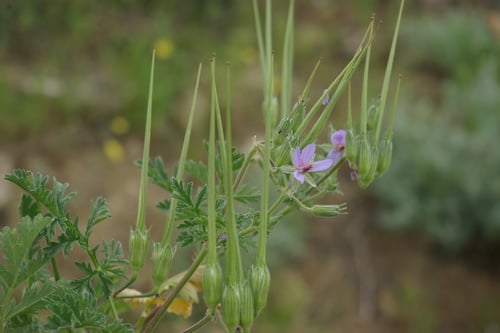
Geranium erianthum
DC.
Woolly geranium
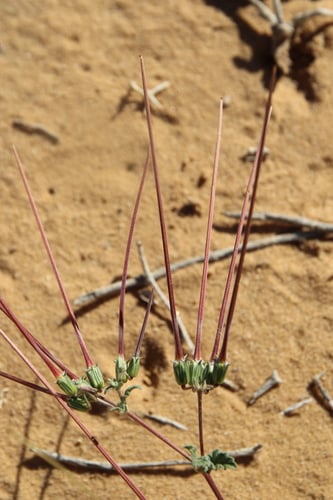
iNaturalist· cc-by-nc
(c) margomb, some rights reserved (CC BY-NC)
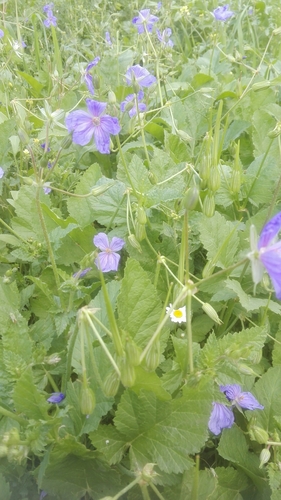
iNaturalist· cc-by-nc
(c) kentvanvuren, some rights reserved (CC BY-NC)
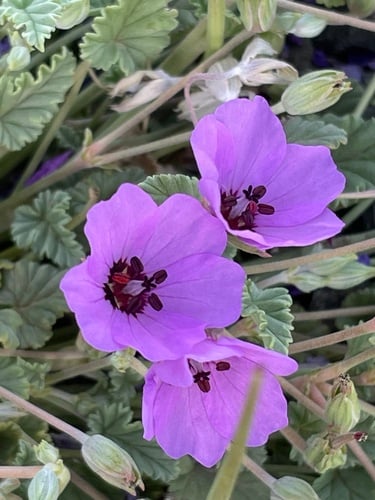
iNaturalist· cc-by-nc
(c) Jonathan Sellman, some rights reserved (CC BY-NC)
Summary
Source: WikipediaGeranium erianthum, the woolly geranium, is a flowering plant found in China, Japan, Russia, North America and England . Within its range, it is often known as "wild geranium" or "cranesbill", but note that these common names are also used for several other species within the genus Geranium.
Description
A herb plant that forms a clump. It keeps growing from year to year. It has erect stems and grows to 60 cm tall. The leaves are light green and deeply lobed and have teeth around the edge. The flowers are in clusters and are saucer shaped. They are violet. They are 2.5-4 cm across.
Edible Uses
The leaves can be eaten raw or cooked, though they are not considered choice. The flowers can be eaten raw.
Medicinal Uses
The whole plant, but especially the roots, is astringent, salve, and styptic. It can be used as a gargle for sore throats.
Distribution
It is a temperate plant. It suits hardiness zones 3-9.
Where It Grows
Alaska, Asia, Australia, Canada, China, Japan, North America*, Russia, Siberia, Tasmania, USA,
Cultivation
Succeeds in any moderately fertile retentive soil in a sunny position. Tolerates a range of soil types. Plants are hardy to about -20°c. Members of this genus are rarely if ever troubled by browsing deer or rabbits.
Propagation
Sow seed in spring in a cold frame. Once seedlings are large enough to handle, prick them out into individual pots and plant out during summer. Divide plants in spring or autumn. Larger clumps can be replanted directly into permanent positions, though smaller clumps are better potted up and grown on in a cold frame until rooting well, then planted out in spring.
Other Uses
None known.
Notes
There are about 300-400 Geranium species. They are mostly temperate.
References (5)
- Bowser, M., 2017, Handout on Edible Plants of the Kenai Peninsula. USFWS Kenai National Wildlife Refuge p 14
- Hibbert, M., 2002, The Aussie Plant Finder 2002, Florilegium. p 109
- MacKinnon, A., et al, 2009, Edible & Medicinal Plants of Canada. Lone Pine. p 222
- Plants for a Future database, The Field, Penpol, Lostwithiel, Cornwall, PL22 0NG, UK. http://www.scs.leeds.ac.uk/pfaf/
- Prodr. 1:641. 1824