Euphorbia caducifolia
Haines
Thor
iNaturalist· cc-by-nc
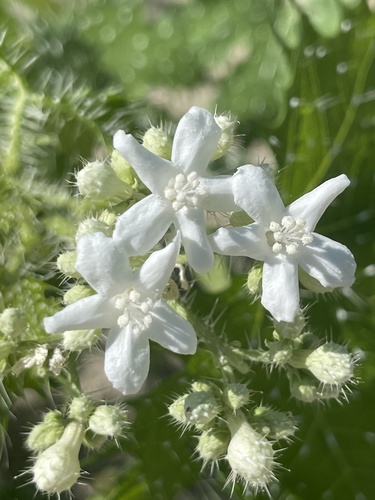
(c) Massimiliano Finzi, some rights reserved (CC BY-NC), uploaded by Massimiliano Finzi
iNaturalist· cc0
no rights reserved
iNaturalist· cc-by
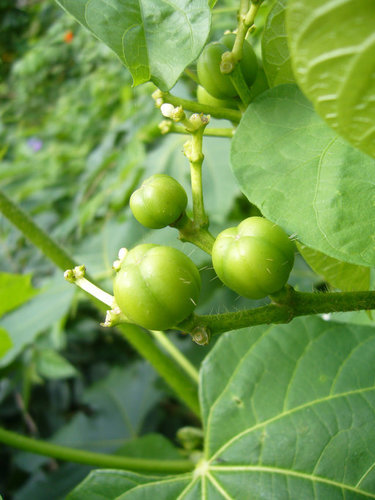
(c) Mittal Gala, some rights reserved (CC BY)
Summary
Source: WikipediaEuphorbia caducifolia is a subtropical succulent species of flowering plant in the spurge family Euphorbiaceae. It is found in the arid regions of northwestern Indian subcontinent. In India it is known as the leafless milk hedge.
Description
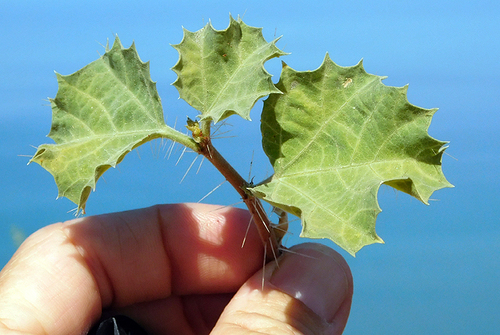
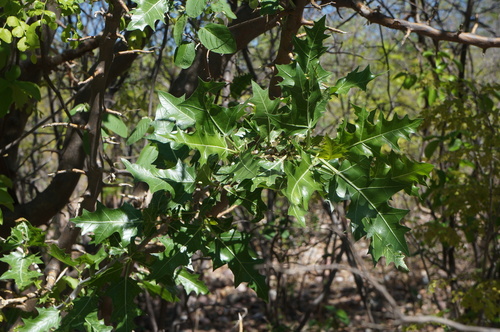
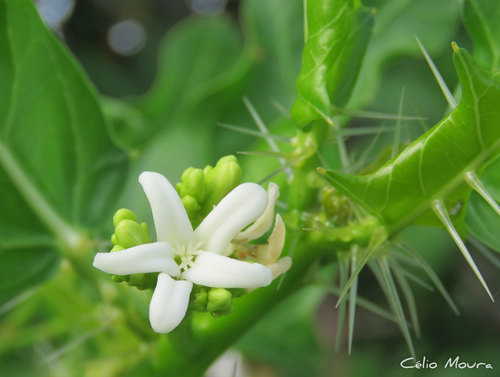
A shrub. It has many stems. It forms thickets. It grows up to 3 m high. The leaves are 3-8 cm long by 2-5 cm wide. It has spines.
This description is brief — help expand it
Edible Uses
Young leaves are boiled with the water discarded before eating.
Traditional Uses
Caution: All Euphorbias or spurges have irritating sap and many have chemicals that can cause cancer. The young leaves are boiled and the water discarded then the leaves eaten.
Known Hazards
As with all Euphorbiaceae species, when broken or cut, the tissue of Euphorbia caducifolia bleeds a profuse white, latex-like, phorbol-containing sap (among other alkaloids) which may be particularly painful if contact is made with mucous membranes—such as in the eyes, mouth or nose, or if it drips into a fresh cut. If sap dries on one's bare hands and it is not promptly washed off, care must be taken not to touch the eyes or mouth. Accidental ingestion of the plant can produce untold gastrointestinal effects. However, despite its irritating and potentially poisonous qualities, it has long been used in Pakistan as an anti-tumour agent, and the roots are also said to have similar anti-tumour properties. Interestingly, the plant's latex has also been used to promote the healing of wounds, and research has shown that it does indeed exhibit significant wound healing activity, likely due to the hardening of the latex sap as it dries when exposed to air. The plant is also a rich source of hydrocarbons (C-15 compounds) that can be processed to produce a biodiesel fuel.
Distribution
It is a temperate plant. In Pakistan it grows in stony ground on coastal plains and hills near the sea level and up to 800 m altitude.
Where It Grows
Asia, India, Pakistan,
Notes
There are about 2000 Euphorbia species. Most Euphorbias have sap which irritates the skin.
Synonyms
References (6)
- Dobriyal, M. J. R. & Dobriyal, R., 2014, Non Wood Forest Produce an Option for Ethnic Food and Nutritional Security in India. Int. J. of Usuf. Mngt. 15(1):17-37
- Flora of Pakistan. www.eFloras.org
- Indian Forester 40:154. 1914
- SAXENA,
- SHANKARNARAYAN & SAXENA,
Show all 6 references Hide references
- World Checklist of Useful Plant Species 2020. Royal Botanic Gardens, Kew