Gaultheria hispida
R. Br.
Copperleaf snowberry, Tasmanian Waxberry
iNaturalist· cc-by-nc
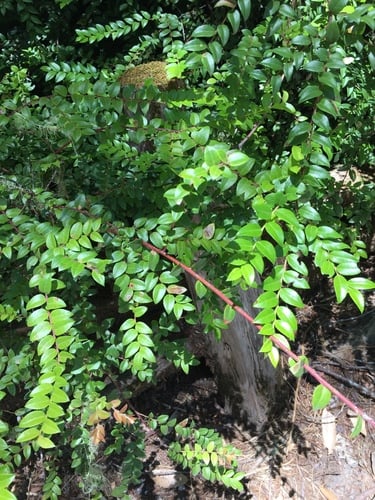
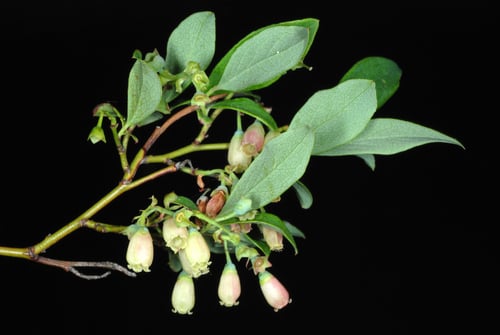
(c) linger, some rights reserved (CC BY-NC)
iNaturalist· cc-by-nc
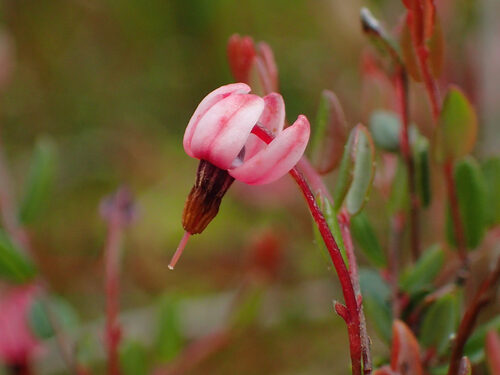
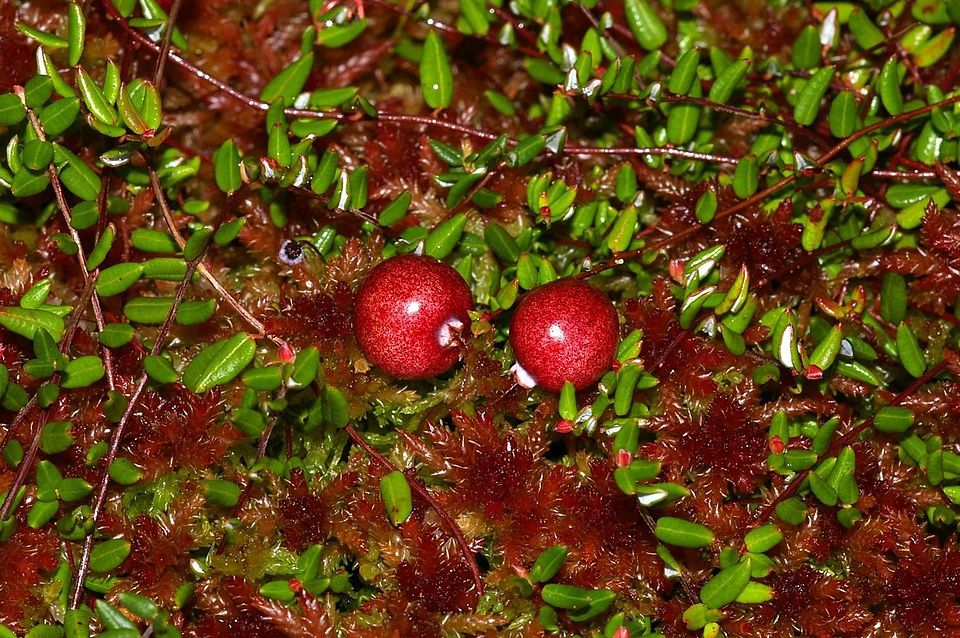
(c) clivestr, some rights reserved (CC BY-NC)
iNaturalist· cc-by-nc
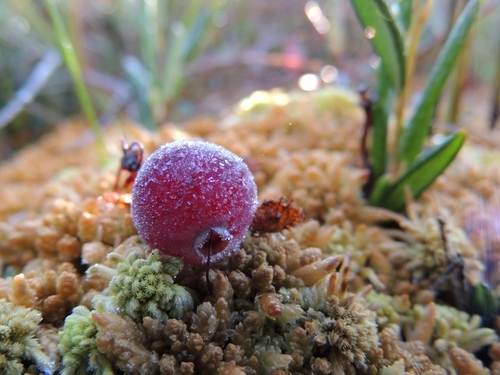
(c) clivestr, some rights reserved (CC BY-NC)
Summary
Source: WikipediaGaultheria hispida, commonly known as the copperleaf snowberry, is an endemic eudicot of Tasmania, Australia. It is an erect multi-branched shrub, that can be found in wet forests and alpine woodlands. Its berries appear snowy white and leaves are tipped with a copper tinge, hence the common name.
Description
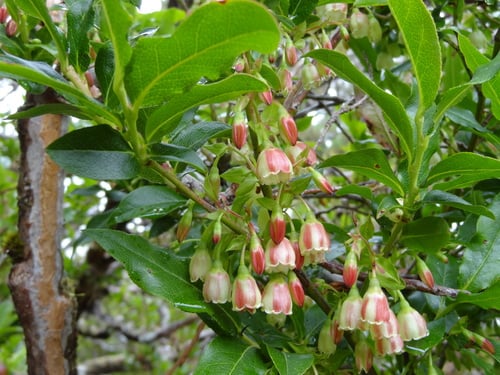
A small shrub. It can be erect or spreading. The young growth is slightly hairy. It has many branches. The branches are covered with coarse red bristles. The leaves are 4-8 cm long by 1.5 cm wide. They are sword shaped with teeth along the edge. The leaves are glossy. There is a fine point at the tip and this is often curved backwards. The flowers are like tubes. They are 0.8 cm long and white. The fruit is a dry capsule with a large succulent calyx around it. The fruit is 1.2 cm across. The fruit are white.
Edible Uses
The fruit can be eaten raw or cooked. It is somewhat bitter but not unpleasant — when cooked it tastes similar to gooseberries, though with a slight residual bitterness. Each fruit is about 8–10mm across.
Traditional Uses
The fruit can be eaten raw or cooked.
This uses section is brief — help expand it
Medicinal Uses
The plant is said to be useful in the treatment of cancer.
Distribution
It is a warm temperate plant. It grows in wet forests between 300-1100 m altitude. They need light shade and cool moist soils. They can tolerate most frosts. It is known to grow naturally only in Tasmania. It suits hardiness zones 8-10. Tasmania Herbarium. Arboretum Tasmania.
Where It Grows
Australia*, Britain, Europe, Ireland, North America, Tasmania*, USA,
Cultivation
Plants are grown from seed, cuttings or layering. The seeds are very small. The seeds can be sown in a potting mix and pricked out when small. They can then later be transplanted out.
Propagation
Seed requires cold stratification — pre-chill for 4–10 weeks, then surface sow in lime-free compost in a shady part of the greenhouse, keeping the compost moist. Germination usually occurs within 1–2 months at 20°C, but seedlings are prone to damping off. Water carefully, ensure good ventilation, and consider watering with a garlic infusion to reduce damping off. Prick out seedlings into individual pots at about 25mm tall and grow on in light shade in the greenhouse for at least the first winter. Plant out in late spring or early summer. Protect from spring frosts for the first few years outdoors, as seedlings are susceptible. Leaves remain very small for the first few years. Cuttings of half-ripe wood, 3–6cm long, taken July/August in a shaded frame; roots form in late summer or spring, with a good success rate. Divide in spring just before new growth begins — larger clumps can go straight to permanent positions, though smaller clumps are best potted up in a cold frame until rooting well, then planted out in spring. Layering is also possible.
Other Uses
None known.
Notes
There are about 170 Gaultheria species.
Synonyms
References (19)
- Bodkin, F., 1991, Encyclopedia Botanica. Cornstalk publishing, p 488
- Bonney, N., 2012, Edible Wild Native Plants for Southern Australia. p 123
- Cameron, M., (Ed.) 1981, A Guide to Flowers & Plants of Tasmania. Reed p 34
- Collier, P., 1992, Rainforest Plants of Tasmania. Plant Identikit. Society for growing Australian Plants. Tasmania. p 12
- Cribb, A.B. & J.W., 1976, Wild Food in Australia, Fontana. p 36
Show all 19 references Hide references
- Cundall, P., (ed.), 2004, Gardening Australia: flora: the gardener's bible. ABC Books. p 626
- Curtis, W.M., 1963, The Students Flora of Tasmania Vol 2 p 417
- Elias, T.S. & Dykeman P.A., 1990, Edible Wild Plants. A North American Field guide. Sterling, New York p 153
- Elliot, W.R., & Jones, D.L., 1992, Encyclopedia of Australian Plants suitable for cultivation. Vol 4. Lothian. p 349
- Facciola, S., 1998, Cornucopia 2: a Source Book of Edible Plants. Kampong Publications, p 95
- Hibbert, M., 2002, The Aussie Plant Finder 2002, Florilegium. p 108
- Kirkpatrick, J., 1997, Alpine Tasmania, An Illustrated guide to the flora and vegetation. Oxford, p 37
- Lord, E.E., & Willis, J.H., 1999, Shrubs and Trees for Australian gardens. Lothian. p 165
- Low, T., 1991, Wild Food Plants of Australia. Australian Nature FieldGuide, Angus & Robertson. p 70
- Minchin, R.F., Tasmanian Wildflowers. A Field Guide. Volume one. Regal Publications, Launceston p 86
- Plants for a Future database, The Field, Penpol, Lostwithiel, Cornwall, PL22 0NG, UK. http://www.scs.leeds.ac.uk/pfaf/
- Prodr. 559. 1810
- Tasmanian Herbarium Vascular Plants list p 28
- Whiting, J. et al, 2004, Tasmania's Natural Flora. Tasmania's Natural Flora Editorial Committee PO Box 194, Ulverstone, Tasmania, Australia 7315 p 154