Vaccinium corymbosum
L.
Highbush blueberry
wikimedia· cc0
rawpixel.com (via Wikimedia Commons)
wikimedia· cc-by-sa
Photo (c)2007 Derek Ramsey (Ram-Man) (via Wikimedia Commons)
wikimedia· cc-by-sa
Photo (c)2007 Derek Ramsey (Ram-Man) (via Wikimedia Commons)
iNaturalist· cc-by-nc-nd
(c) mamiles, some rights reserved (CC BY-NC-ND), uploaded by mamiles
iNaturalist· cc-by-nc
(c) Brian Charles, some rights reserved (CC BY-NC), uploaded by Brian Charles
iNaturalist· cc-by-nc-sa
(c) Annkatrin Rose, some rights reserved (CC BY-NC-SA)
Summary
Source: WikipediaVaccinium corymbosum is a North American species of blueberry that became commonly cultivated as a fresh fruit crop in the 20th century. Dozens of commercial cultivars exist. It has several common names, including highbush blueberry and rabbiteye blueberry. It can be used as an ornamental hedge and food source for humans and wildlife.
Description
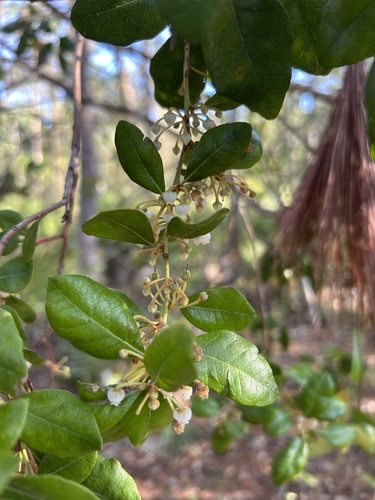
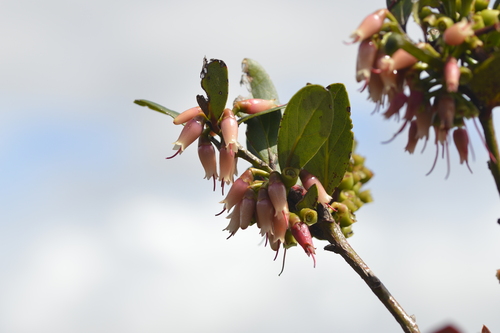
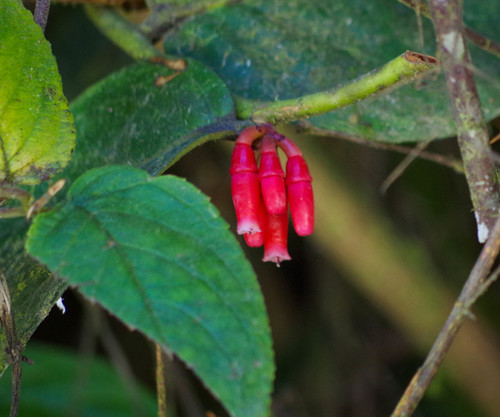
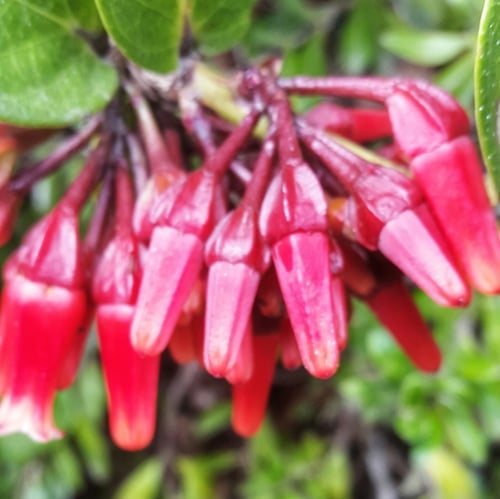
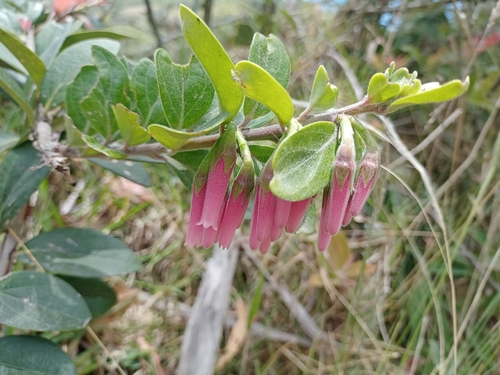
A spindly shrubby bush. It grows to 2 m high. It spreads 1.5 m wide. It can send out suckers. It loses its leaves during the year. The leaves are oval and pointed. They are 2.5-8 cm long. The leaves turn rich red and orange in autumn. Flowers normally develop before leaves. The flowers are in short pink or white racemes. They are tube shaped. The fruit are large black berries. They are 12 mm across. They are edible.
Edible Uses
The fruit can be eaten raw or cooked — typically sweet and juicy, though flavour can vary. It works well in pies, pastries, cereals, and jellies, and can also be dried for use like raisins. The fruit is rich in vitamin C and measures about 15mm in diameter. A tea can be brewed from the leaves and dried fruit.
Traditional Uses
The fruit are eaten as a dessert fruit and also in fruit salads, juices, syrups and other foods and drinks. They are used in jams, tarts and muffins. They can be frozen.
Medicinal Uses
The plant is astringent and pectoral.
Distribution
It is a temperate plant. It needs heavy frost to enhance the flavour of the fruit. Plants need cold treatment during winter. Some varieties need 750 hours below 7°C. Without a cold treatment plants can remain evergreen and produce light crops of fruit throughout the year. They can grow in very acid soils with pH of 4.2-4.5. In Hobart Botanical gardens. It suits hardiness zones 2-9.
Where It Grows
Asia, Australia, Brazil, Britain, Canada, Colombia, Chile, Denmark, Europe, Finland, Germany, Himalayas, Japan, Lithuania, Mediterranean, Netherlands, New Zealand, North America, Poland, Portugal, Romania, Scandinavia, South Africa, Southern Africa, South America, Spain, Switzerland, Tasmania, USA*,
Cultivation
Requires a moist but freely-draining lime free soil, preferring one that is rich in peat or a light loamy soil with added leaf-mould. Prefers a very acid soil with a pH in the range of 4.5 to 6, plants soon become chlorotic when lime is present. Succeeds in full sun or light shade though it fruits better in a sunny position. Requires shelter from strong winds. Hardy to about -25°c. Often cultivated for its edible fruit in America, it is the most common and successful blueberry to be cultivated in Britain. There are many named varieties. A very variable plant, it usually blossoms freely in Britain. Plants are at least partially self-sterile, more than one variety is required in order to obtain good yields of fruit. Dislikes root disturbance, plants are best grown in pots until being planted out in their permanent positions. leave the fruit on the shrub until the last minute, as the fruit is very acidic and will not ripen after being picked. Does not grow well with blackberries or raspberries. Closely related to V. atrococcum and V. virgatum. Plants in this genus are notably resistant to honey fungus.
Propagation
Sow seed in late winter in a greenhouse using a lime-free potting mix, barely covering the seed. Stored seed may need up to 3 months of cold stratification. Alternatively, sow fresh seed in a greenhouse as soon as it is ripe. Prick seedlings out into individual pots once they reach about 5cm tall, and grow them on in a lightly shaded greenhouse position for at least their first winter. Plant out in late spring or early summer after the last expected frosts. Greenwood cuttings can be taken in May or June and rooted in a shady position in a peat-containing compost. Half-ripe cuttings, 5–8cm with a heel, can be taken in August and rooted in a frame, though this is slow and difficult. Mature wood cuttings can be harvested in November, stored in a fridge, and planted in a frame in March. Layering can be done in late summer or early autumn — or in spring according to some sources — and takes 18 months. Suckers can be divided in spring or early autumn.
Other Uses
Suitable for food forest planting.
Production
Plants from cuttings bear 2 years after planting out. Seedling bushes take 3-4 years.
Other Information
It is cultivated. Over 40,000 tons are produced each year.
Dangerous Lookalikes
This plant can be confused with the following toxic species. Always verify identification carefully before consuming any wild plant.
Deadly Nightshade
Atropa belladonna
Joan Simon from Barcelona, España
Highbush blueberry
Vaccinium corymbosum
rawpixel.com (via Wikimedia Commons)
Deadly Nightshade: Tall herbaceous plant (1-2m), single shiny black cherry-sized berries, star-shaped calyx, large oval leaves, sweet but dangerous taste.
Highbush blueberry: Low woody shrub, berries in clusters with crown/remnant calyx ring, sweet taste.
Nutrition
| Part | Moisture | kJ | kcal | Protein | Vit A | Vit C | Iron | Zinc |
|---|---|---|---|---|---|---|---|---|
| spp - Fruit | 84.6 | 234 | 56 | 0.67 | 10 | 13 | 0.2 | 0.1 |
Synonyms
Also Known As
American blueberry, Blueberry, Huckleberry, Mirtilo-highbush, Swamp blueberry
References (38)
- Arora, R. K., 2014, Diversity in Underutilized Plant Species - An Asia-Pacific Perspective. Bioversity International. p 90
- Beckstrom-Sternberg, Stephen M., and James A. Duke. "The Foodplant Database." http://probe.nalusda.gov:8300/cgi-bin/browse/foodplantdb.(ACEDB version 4.0 - data version July 1994)
- Bodkin, F., 1991, Encyclopedia Botanica. Cornstalk publishing, p 1003
- Brickell, C. (Ed.), 1999, The Royal Horticultural Society A-Z Encyclopedia of Garden Plants. Convent Garden Books. p 1039
- Brito, A., et al, 2014, Anthocyanin Characterization, Total Phenolic Quantification and Antioxidant Features of Some Chilean Edible Berry Extracts. Molecules 2014, 19, 10936-10955
Show all 38 references Hide references
- Cheifetz, A., (ed), 1999, 500 popular vegetables, herbs, fruits and nuts for Australian Gardeners. Random House p 253
- Cundall, P., (ed.), 2004, Gardening Australia: flora: the gardener's bible. ABC Books. p 1453
- Elias, T.S. & Dykeman P.A., 1990, Edible Wild Plants. A North American Field guide. Sterling, New York p 164
- Esperanca, M. J., 1988. Surviving in the wild. A glance at the wild plants and their uses. Vol. 2. p 11
- Facciola, S., 1998, Cornucopia 2: a Source Book of Edible Plants. Kampong Publications, p 97
- Flowerdew, B., 2000, Complete Fruit Book. Kyle Cathie Ltd., London. p 66
- Glowinski, L., 1999, The Complete Book of Fruit Growing in Australia. Lothian. p 158
- Gouldstone, S., 1983, Growing your own Food-bearing Plants in Australia. Macmillan p 81
- Hakkinen, S. H., et al, 1999, Content of the Flavonols Quercetin, Myricetin, and Kaemferol in 25 Edible Berries. Journal of Agricultural and Food Chemistry. 47: 2274-2279
- Hedrick, U.P., 1919, (Ed.), Sturtevant's edible plants of the world. p 666
- Hibbert, M., 2002, The Aussie Plant Finder 2002, Florilegium. p 305
- INFOODS:FAO/INFOODS Databases
- Jackes, D. A., 2007, Edible Forest Gardens
- John, L., & Stevenson, V., 1979, The Complete Book of Fruit. Angus & Robertson p 84
- Kermath, B. M., et al, 2014, Food Plants in the Americas: A survey of the domesticated, cultivated and wild plants used for Human food in North, Central and South America and the Caribbean. On line draft. p 892
- Kiple, K.F. & Ornelas, K.C., (eds), 2000, The Cambridge World History of Food. CUP p 1734
- Kremer, B.P., 1995, Shrubs in the Wild and in Gardens. Barrons. p 115
- Lazarides, M. & Hince, B., 1993, Handbook of Economic Plants of Australia, CSIRO. p 244
- Lord, E.E., & Willis, J.H., 1999, Shrubs and Trees for Australian gardens. Lothian. p 268
- Lorenzi, H., Bacher, L., Lacerda, M. & Sartori, S., 2006, Brazilian Fruits & Cultivated Exotics. Sao Paulo, Instituto Plantarum de Estuados da Flora Ltda. p 409
- MacKinnon, A., et al, 2009, Edible & Medicinal Plants of Canada. Lone Pine. p 114
- Moerman, D. F., 2010, Native American Ethnobotany. Timber Press. p 583
- Plants for a Future database, The Field, Penpol, Lostwithiel, Cornwall, PL22 0NG, UK. http://www.scs.leeds.ac.uk/pfaf/
- Plants for a Future database, The Field, Penpol, Lostwithiel, Cornwall, PL22 0NG, UK. http://www.scs.leeds.ac.uk/pfaf/ (As Vaccinium constablaei)
- Roa, J. A. G. & Boada, D. S. G., 2018, Fundación para el Fortalecimiento de la Fruticultura y Plantas Alimenticias no Convencionales en Colombia.
- Slocum, P.D. & Robinson, P., 1999, Water Gardening. Water Lilies and Lotuses. Timber Press. p 138
- Smith, P.M., 1979, Blueberry, in Simmonds, N.W., (ed), Crop Plant Evolution. Longmans. London. p 307
- Sp. pl. 1:350. 1753
- Toupal, R. S. & Hollenback, K., 2009, An Ethnobotany of Indiana Dunes National Lakeshore: Plant Uses of the Ojibwa People. Bureau of Applied Research in Anthropology. University of Arizona
- Trehane, J., 2004, Blueberries, Cranberries and Other Vacciniums. Timber Press. p 101
- van Wyk, B., 2005, Food Plants of the World. An illustrated guide. Timber press. p 373
- Wiersema, J. H. & Leon, B., 2013, World Economic Plants. A Standard Reference CRC Press. 2nd Ed. p 709
- World Checklist of Useful Plant Species 2020. Royal Botanic Gardens, Kew