Gardenia megasperma
F. Muell.
Wild gardenia
iNaturalist· cc-by-nc
(c) atwebb, some rights reserved (CC BY-NC)
iNaturalist· cc-by-nc
(c) Torbjorn von Strokirch, some rights reserved (CC BY-NC)
iNaturalist· cc-by-nc
(c) Torbjorn von Strokirch, some rights reserved (CC BY-NC)
Summary
Source: WikipediaGardenia megasperma is a species of plant in the family Rubiaceae native to northern Australia.
Description
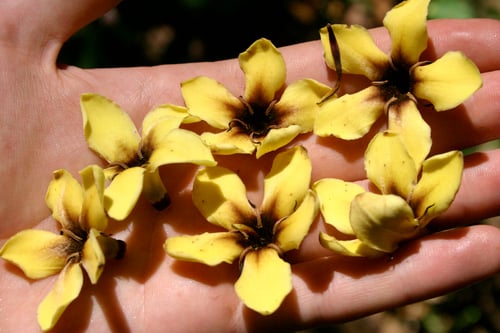
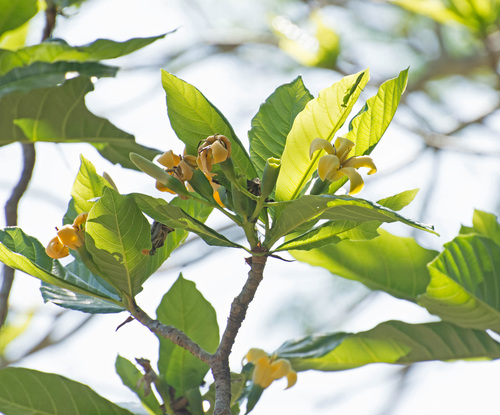
A small tree. It grows 3-6 m high. The branches are crooked. It loses many of its leaves during the dry season of the year. The leaves are crowded towards the end of branches. The leaves are broad and oval. They are 9-18 cm long by 6-13 cm wide. They are shiny green above and paler underneath. The flowers are large and white. They are 3-5 cm across. They have a sweet scent. They occur singly at the ends of branches. The fruit is hard and oblong. It is 5-7 cm long by 2.5-3 cm wide. They are brown and soft and sweet smelling when ripe. They have many seeds. The juice of the fruit is edible.
Edible Uses
The juice of the fruit is edible, and the seeds are sucked for their sweet sticky juice.
Traditional Uses
The seeds are sucked for the sweet sticky juice.
This uses section is brief — help expand it
Distribution
It is a tropical plant. It grows in open forest on gravely soils. They need good drainage and a sunny aspect.
Where It Grows
Australia*,
Cultivation
Plants can be grown from seed. Seed should be sown fresh.
Notes
There are about 200 Gardenia species.
Also Known As
Anbarlbbirr
References (8)
- Brock,J., 1993, Native Plants of Northern Australia, Reed. p 194
- Cherikoff V. & Isaacs, J., The Bush Food Handbook. How to gather, grow, process and cook Australian Wild Foods. Ti Tree Press, Australia p 200
- Elliot, W.R., & Jones, D.L., 1992, Encyclopedia of Australian Plants suitable for cultivation. Vol 4. Lothian. p 333
- Garde, M., et al, 2003, A Preliminary List of Kundedjnjenghmi Plant Names. Northern Land Council. (Arnhem Land, Australia)
- Hardwick, G., 2001, Economically Useful Plants for Northern Australia: Master Species List. Crusader eBooks.
Show all 8 references Hide references
- Morley, B.D., & Toelken, H.R., (Eds), 1983, Flowering Plants in Australia. Rigby. p 257
- Paczkowska, G . & Chapman, A.R., 2000, The Western Australian Flora. A Descriptive Calatogue. Western Australian Herbarium. p 513
- Wheeler, J.R.(ed.), 1992, Flora of the Kimberley Region. CALM, Western Australian Herbarium, p 910
More from Rubiaceae
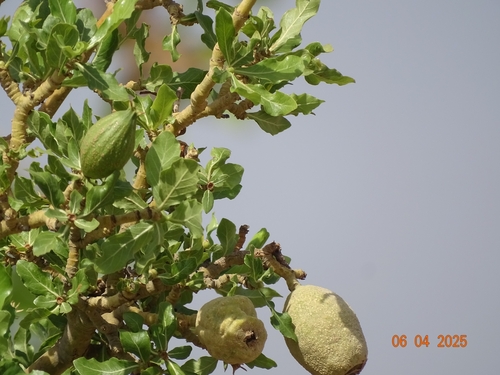
Gardenia ternifolia
Large-leaved common gardenia
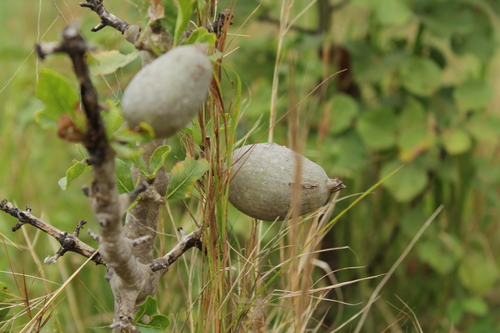
Gardenia ternifolia subsp. jovis-tonantis
Powder-bark gardenia
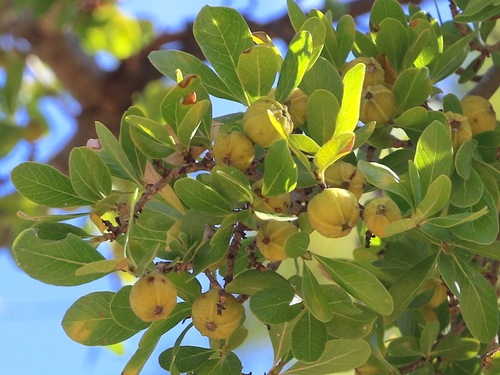
Gardenia vilhelmii
Leichhardt’s Bread-Tree, Bread-Tree of the Lynd, Breadfruit tree
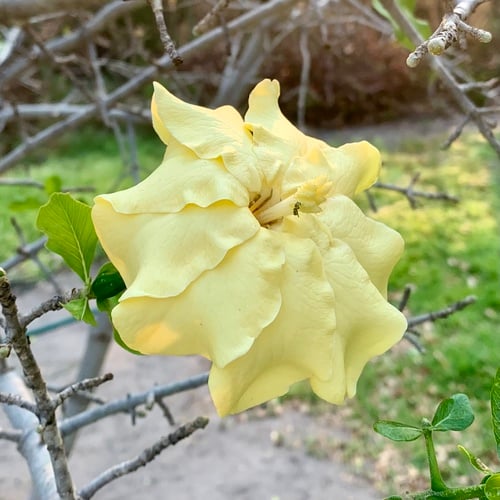
Gardenia volkensii subsp. spatulifolia
Cape jasmine, Woodland gardenia
Genipa americana
Genipa
Genipa infundibuliformis
Smooth genip