Fadogia elskensii
De Wild.
gbif· cc-by
Royal Botanic Gardens, Kew
gbif· cc-by
Meise Botanic Garden
gbif· cc-by
Meise Botanic Garden
Description
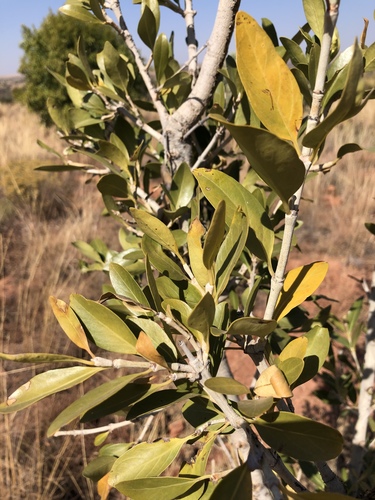
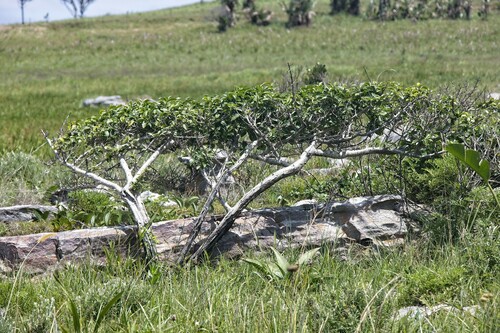
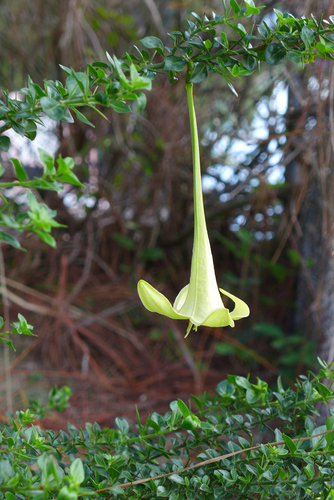
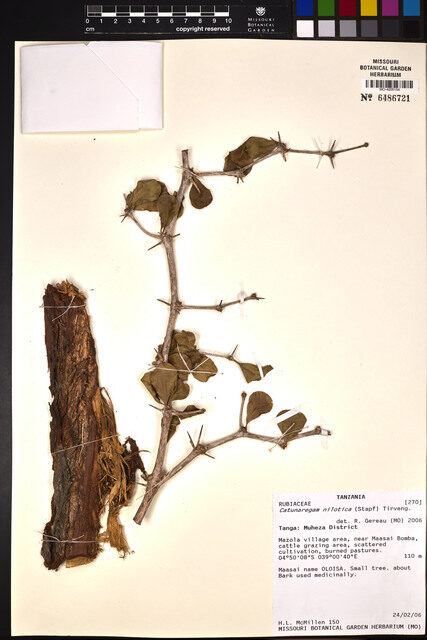
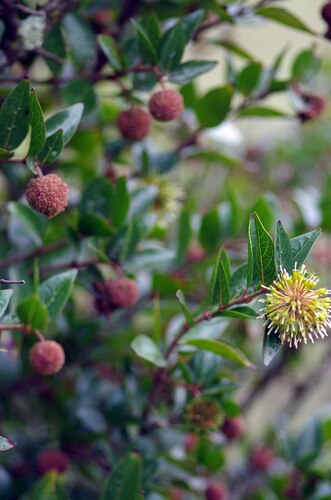
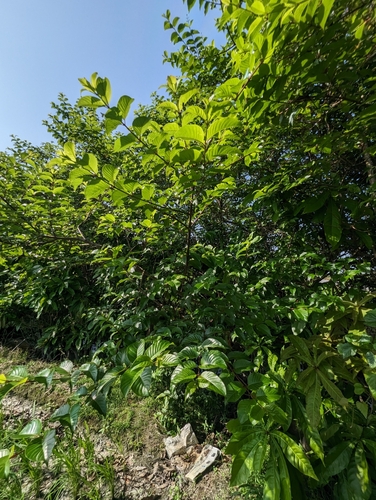
A shrubby herb. It has a woody rootstock. Several unbranched stems arise from the rootstock. The upper stems are 4 angled. The stems are 25-90 cm tall. The leaves are in rings of 3-4. They have a round base and sharp tip. They are hairy underneath. The flowers are small and yellow to green. They are in groups or 1-5 in the axils of leaves. The fruit are round, shiny and black. They have 5 rough seeds.
Edible Uses
Fruit - raw. A sweet flavour.Ripe fruit have a sweet flavour. The rounded, shiny, black fruit is about 10mm in diameter, containing up to 5 rough seeds. The nectar from the flower is sweet and sucked by children.
Traditional Uses
The ripe fruit are sweet and eaten raw. The nectar from the flowers is sucked by children.
This uses section is brief — help expand it
Medicinal Uses
The roots are boiled with porridge and the whole is taken to treat infertility in women.
Distribution
It is a tropical plant. It grows in woodland and grassland subject to seasonal burning. In Tanzania it grows between 1,000-1,800 m above sea level.
Where It Grows
Africa, Burundi, Central Africa, Congo, East Africa, Malawi, Tanzania,
Cultivation
Plants can be grown from seeds and also from cuttings of the rootstock.
Propagation
Seed - Stem base cuttings.
Production
The ripe fruit are collected from October to January.
Also Known As
Booami, Kindokoli, Madunguli, Nakalondo
References (2)
- Ruffo, C. K., Birnie, A. & Tengnas, B., 2002, Edible Wild Plants of Tanzania. RELMA p 314
- World Checklist of Useful Plant Species 2020. Royal Botanic Gardens, Kew