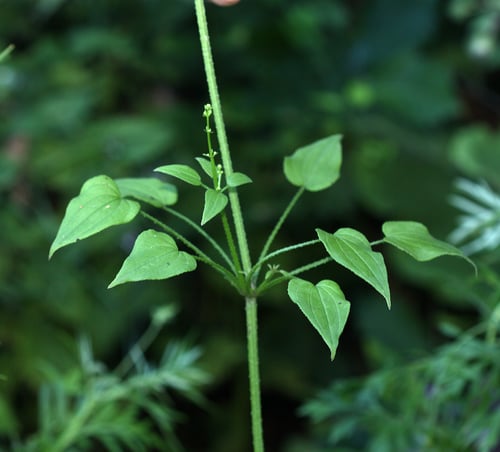
Oldenlandia capensis
L. f.
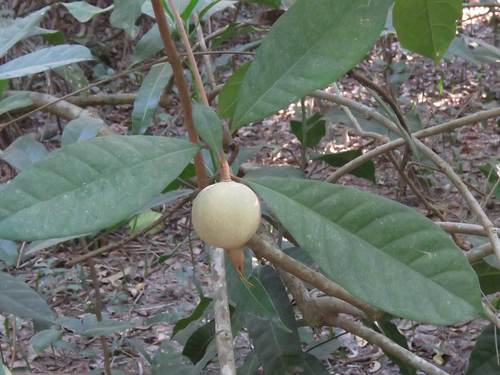
iNaturalist· cc-by-nc
(c) Nick Helme, some rights reserved (CC BY-NC), uploaded by Nick Helme
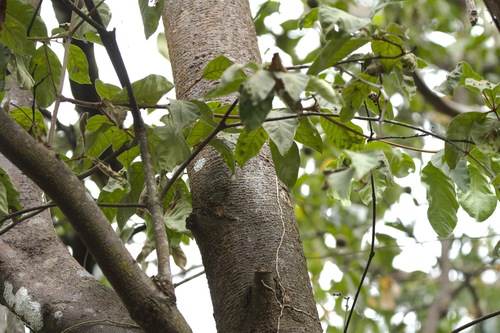
iNaturalist· cc-by
(c) Dave Richardson, some rights reserved (CC BY), uploaded by Dave Richardson
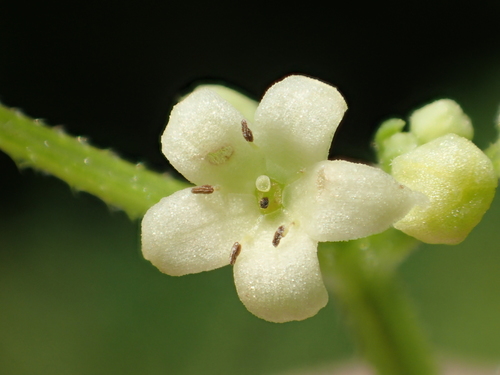
iNaturalist· cc-by-nc
(c) Ron Frumkin, some rights reserved (CC BY-NC), uploaded by Ron Frumkin
Description
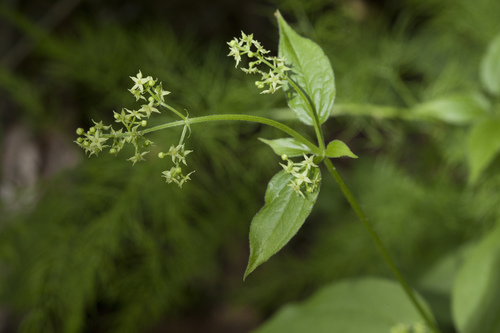
An annual herb. It can extend upwards or lie along the ground. It grows 8-22 cm tall. It can form mats. The leaves are 1-3 cm long by 1-5 mm wide. They are narrowly oval. They taper to the tip and are wedge shaped at the base. The flowers can be of 2 or 3 forms. They can occur singly or in small groups. The fruit is a capsule about 2 mm long. The seeds are brown and 0.3 mm long.
Edible Uses
The leaves are eaten.
Distribution
It is a subtropical plant. It grows along river banks and in cracks in rocks and well as in grassland. It grows from sea level to 910 m above sea level.
Where It Grows
Africa, Botswana, Burkina Faso, Central Africa, East Africa, Egypt, Gabon, Madagascar, Malawi, Mediterranean, Morocco, Mozambique, North Africa, Sierra Leone, South Africa, Southern Africa, West Africa, Zambia, Zimbabwe,
Notes
There are about 100 Oldenlandia species.
Synonyms
Also Known As
Iteka
References (4)
- East African Herbarium records, 1981,
- Flora Zambesiaca. http://apps.kew.org/efloras
- Fowler, D. G., 2007, Zambian Plants: Their Vernacular Names and Uses. Kew. p 57
- Peters, C. R., O'Brien, E. M., and Drummond, R.B., 1992, Edible Wild plants of Sub-saharan Africa. Kew. p 172