Garcinia warrenii
F. Muell.
Warren’s mangosteen
iNaturalist· cc-by
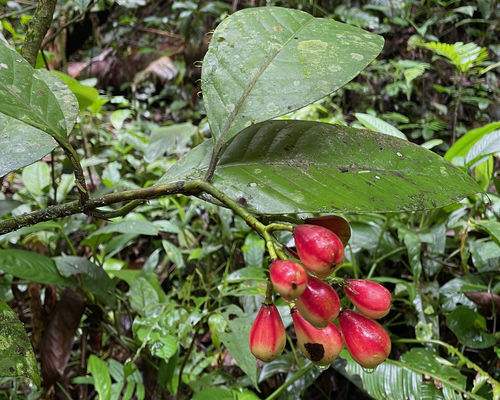
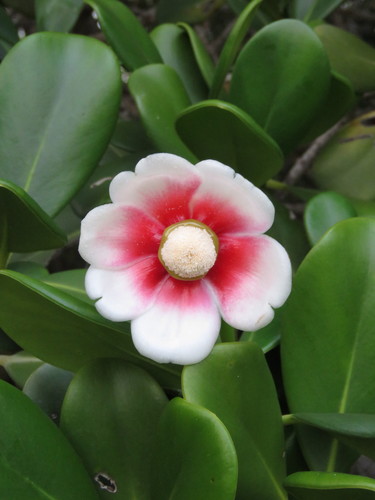
(c) coenobita, some rights reserved (CC BY), uploaded by coenobita
iNaturalist· cc-by-nc
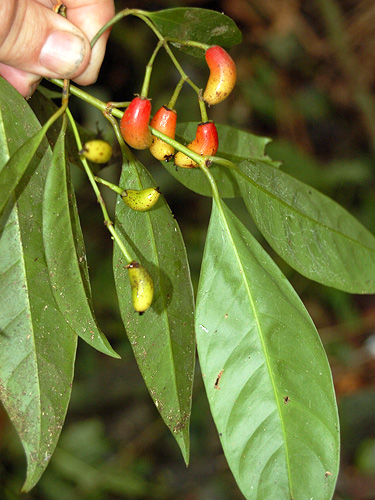
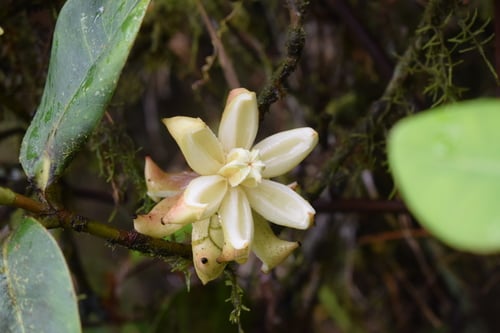
(c) lfullmann, some rights reserved (CC BY-NC)
iNaturalist· cc-by-sa
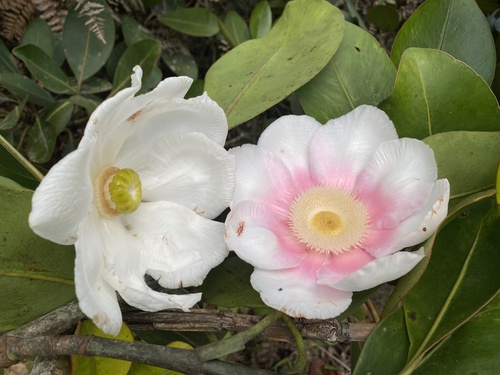
(c) Steve Fitzgerald, some rights reserved (CC BY-SA), uploaded by Steve Fitzgerald
Summary
Source: WikipediaGarcinia warrenii, commonly known as native mangosteen or Warren's mangosteen, a is a fruit-bearing tree up to 15 metres in height of the mangosteen family Clusiaceae. It is found in the tropical rainforests of northern and north-eastern Australia and New Guinea. The genus Garcinia includes about 200 species found in the Old World tropics, mostly in Asia and Africa. Garcinia warrenii is indigenous to New Guinea, the Torres Strait Islands, northeastern Queensland from Cape York Peninsula south to Babinda, and a small, isolated population on Melville Island in the Northern Territory, Australia. Garcinia warrenii is found in rain forest, littoral rainforest and riparian forest from 0 to 780 m.
Description
A tall shrub or small bushy tree. It grows to 6-13 m high and spreads 1-3 m wide. When the tree is damaged it produces a yellow exudate. The small branches are angular. The leaves are 10-16 cm long by 4-5 cm wide and leathery. They are dark green and have short thick leaf stalks. Flushes of new growth are often red. The flower cluster is produced in the axils of leaves. It is branched and stiff. The flowers are about 1 cm across and white. They have a strong scent. There are 4 thick petals. The fruit is a berry 3-3.5 cm across. It is oval, purple and fleshy. Two seed occur in a fruit. The seed are 3 cm by 2 cm. The flesh of the fruit is edible.
Edible Uses
There are five species of native Garcinia in north Queensland forests but Garcinia warrenii is the only edible one. While the fruits are edible, they are not widely sought after.
Traditional Uses
The fruit is eaten.
This uses section is brief — help expand it
Distribution
It is a tropical plant. It occurs in rainforest. Often it is near streams or on flood plains. They need good drainage. They can grow in full sunlight or partial shade. It will grow in subtropical regions but young plants are sensitive to frost.
Where It Grows
Australia*, Pacific, Papua New Guinea, PNG, SE Asia, Singapore,
Cultivation
Plants can be grown from seed. The seed needs to be sown fresh.
Production
Plants are slow growing. In Australia, fruit are mature in November to January.
Notes
There are about 300 Garcinia species.
Synonyms
References (9)
- Beasley, J., 2011, Plants of Tropical North Queensland - the compact guide. Footloose publications. p 90
- Cherikoff, V. & Isaacs, J., The Bush Food Handbook. How to gather, grow, process and cook Australian Wild Foods. Ti Tree Press, Australia p 200
- Cooper, W & Cooper W T, 1994, Fruits of the Rain Forest. RD Press p 146
- Cooper, W. and Cooper, W., 2004, Fruits of the Australian Tropical Rainforest. Nokomis Editions, Victoria, Australia. p 124
- Elliot, W.R., & Jones, D.L., 1992, Encyclopedia of Australian Plants suitable for cultivation. Vol 4. Lothian. p 331
Show all 9 references Hide references
- Jackes, B.R., 2001, Plants of the Tropics. Rainforest to Heath. An Identification Guide. James Cook University. p 47
- Jones, D. L., 1986, Ornamental Rainforest Plants in Australia, Reed Books, p 221, 340
- Townsend, K., 1994, Across the Top. Gardening with Australian Plants in the tropics. Society for Growing Australian Plants, Townsville Branch Inc. p 221
- World Checklist of Useful Plant Species 2020. Royal Botanic Gardens, Kew